Languages
Saturday, November 21, 2026



News and Views from the Global South
Africa
AFRICA: Proving Ground For International Criminal Court?
The International Criminal Court (ICC) is using Africa as a guinea pig, and is too selective when it comes to arresting, indicting and prosecuting perpetrators of war crimes and crimes against humanity. This was one of the opinions raised during a recent seminar in Cape Town organised by the Centre for Conflict Resolution (CCR).
ZAMBIA: Mwanawasa Leaves Mixed Legacy
More than two months after suffering a stroke while at the African Union (AU) summit in Egypt, Zambian President Levy Mwanawasa died Monday in hospital in France.
TRADE-TANZANIA: Cheap Imitation Goods Are Flooding Markets
The mishmash of shops in Tanzania's central Kariakoo market in Dar es Salaam stock an infinite array of brand name fakes. Throngs of customers snap up mobile phones, designer gear, high-tech electronics and gadgets - all imitations being sold at unbelievably low prices.
REFUGEES-ZAMBIA: Making a Home For Themselves
Zambia is home to over 90,000 refugees, many of whom have been in the country for up to 15 years. A voluntary repatriation programme is now drawing to a close, but many of the refugees will likely remain in a country where they have established themselves.
DEVELOPMENT-ZAMBIA: Sharing the Copper Windfall
Australian mining giant Equinox Minerals is developing the Lumwana Copper Mine (LCM) to take advantage of strong prices for copper on the international market. When it opens later this year, the mine will be the largest in Africa, but critics say Zambia's share of the profits of minerals is smaller than it should be.
ZIMBABWE: Farmers Can't Afford to Leave Markets – Literally
It is a wintry Tuesday evening at one of the tobacco auction floors in the Zimbabwean capital Harare. A group of small-scale tobacco farmers are preparing food for the night.POLITICS-SOUTHERN AFRICA: Ground-breaking Gender Protocol Signed
Gender activists breathed a sigh of relief when a long-delayed gender protocol was signed at the Southern African Development Community (SADC) summit this weekend. Women bear the brunt of social injustice and problems on the African continent, ranging from access to clean water, poor health care, access to economic opportunities or adequate protection before the law.DEVELOPMENT-UGANDA: Looming Problems With Kampala's Water
The water supply for two million residents of the Ugandan capital Kampala is threatened by a combination of ill-planned urbanisation and changing rainfall patterns.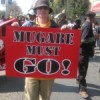
POLITICS-ZIMBABWE: Civil Society Demands More From Talks
A barrage of banners denouncing Zimbabwe president Robert Mugabe greeted passersby in the well-manicured gardens of Johannesburg's Sandton Convention Centre, where that country's political crisis is high on the agenda of the Southern African Development Community (SADC) summit.ENVIRONMENT-CAMEROON: Operation Green Sahel Resumes
"I have come to plant trees - that is why I have left my jacket and tie in Yaoundé" declared Cameroon's Minister of Forest and Wildlife, Elvis Ngolle Ngolle, as he launched the tree planting at a small village near the town of Kousseri, in the north of the country. In four minutes, the minister and his staff planted a hundred trees as a bulwark against rapidly encroaching desert.
POLITICS-SOUTHERN AFRICA: SADC Summit Under Way
A free trade agreement is one of the main points on the agenda at the Southern African Development Community (SADC) summit presently under way in Johannesburg, South Africa. The summit will also discuss political problems in Zimbabwe, Malawi and Lesotho and consider protocols on gender and poverty eradication.ZIMBABWE: No Joy As Talks Drag On
As Zimbabwe's tripartite talks dragged on this week, the public remained in the dark about progres. Frustration is running high on the streets as protracted talks could mean further tough times ahead as the economy continues its free fall.
SIERRA LEONE: Partisan Politics Threatens Peace
A violent showdown on August 13 in the heart of Freetown, Sierra Leone's capital, demonstrated the political tension that has been brewing between the country's two main political parties, the ruling All People's Congress (APC) and the main opposition Sierra Leone's People's Party (SLPP).
DEVELOPMENT-AFRICA: Retailer Creates Jobs With Green Practices
Seven years ago, 54 subsistence farmers in the Umbumbulu district on the KwaZulu-Natal coast of South Africa were struggling to feed their families. They could barely pay their children’s school fees.DEVELOPMENT-KENYA: People, Not Electricity, Make Growth Possible
Conventional wisdom holds that a shortage of affordable and reliable energy is a key factor in perpetuating low levels of development in countries like Kenya. But the country's chief energy regulator argues that Kenya has all the power it needs, and growth in generation need not precede growth in demand.
POLITICS-ANGOLA: Ambitious Plans For Women's Participation
Nearly a third of candidates in Angola's upcoming parliamentary elections are female, thanks to a new quota imposed by the government. The 30 percent rule was designed to bring more women into the country's parliament, but as campaigning gets under way, women continue to stay in Angola's political shadows, barely visible at rallies and with few holding senior party positions.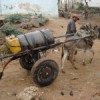
DEVELOPMENT-SOMALIA: Finding Water in Mogadishu
Pipes, reservoirs and water treatment plants in south and central Somalia have been extensively vandalised in the years since the collapse of Siad Barre's government in 1991. In the long absence of central authority, Mogadishu's residents have devised their own informal water distribution systems, but there are many shortcomings.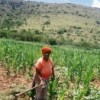
SOUTHERN AFRICA: Digging for Hope in Land Reform
Through the difficulties facing the land reform process in Zimbabwe, South Africa and Namibia, glimmers of hope are emerging. The challenge now is to seek lessons which enable newly settled farmers to create a livelihood.
TRADE: Malawi Still Hopeful That Investment Will Come
Malawi is on the prowl to extend its trade connections to different corners of the world, west and east. The small southern African country is hoping foreign investment will help it to become a producer and exporter rather than a consumer and importer economy, as is presently the case.HEALTH-UGANDA: Fight Against AIDS Faltering?
Uganda's approach to the fight against HIV/AIDS is under scrutiny by activists. The country has won international acclaim for its 20-year campaign against the AIDS pandemic, but the latest numbers lead some activists believe Uganda is now losing ground.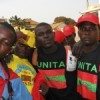
POLITICS-ANGOLA: Test of Lasting Peace – Campaigning Begins
Angola may not have had an election for 16 years, but it certainly knows how to campaign.« Previous Page — Next Page »


The Week with IPS

NEXT STOP - SDGs
Tracking global progress towards a sustainable world
Tracking global progress towards a sustainable world
