Languages
Saturday, November 21, 2026



News and Views from the Global South
Africa
RIGHTS-GUINEA: “We Can Forgive, But We Have To Know The Truth”
Kadiatou Diallo Sylla shares a shack with her family in Bambeto, a Conakry suburb. She is haunted by memories of her 14-year-old son, an only child: he was killed by the military during anti-government demonstrations in January 2007.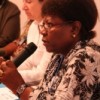
WORLD-DEVELOPMENT: ‘‘It’s the Same Talking and Talking’’
About a 1,000 delegates are expected to take up their seats tomorrow at a high level forum on the effectiveness of aid that opens in Ghana’s capital, Accra. But their arrival has been met with mixed reactions.
DEVELOPMENT: Peace Baskets Bring Hope to Rwandan Women
In the courtyard of a red brick home in the district of Gitarama outside Kigali, three women sit together on a bench, laughing and gossiping as they wrap lengths of crimson twine around a curl of bunched straw. While it may seem like little more then Rwandan tradition, these weavers represent an economic success the tiny landlocked country has earned by the hands of its women.ECONOMY-NAMIBIA: Plans Afoot as Diamonds Dwindle after 100 years
Namibia’s once rich diamond deposits are dwindling after a century of exploitation, forcing miners to look for the hard stones offshore while the country’s fledgling cutting and polishing sector could shrink as fewer and smaller stones are found.
DEVELOPMENT-ZIMBABWE: Ground Realities Stall Basket Fund Take Off
In 2006, there was shared concern among donors and women’s organisations over the fragmented approaches to gender and women’s empowerment programmes in Zimbabwe.
POLITICS-ANGOLA: Some Parties More Equal Than Others
It seems like a playground game. Every day, Angola’s main opposition party sends teams out across Luanda to hang flags, posters and pictures of their leader Isaías Samakuva.RIGHTS-SIERRA LEONE: Activists Will Accept Only Full Abolition
Sierra Leonean rights activists have served notice on the government that they will campaign against any attempt to retain the death penalty in the new constitution and insist the recommendations of the Truth and Reconciliation Commission are fully adopted.
Q&A: "They Mobilised Violence For Their Own Reasons"
The text of the Kenyan National Dialogue and Reconciliation Accord, brokered by former UN chief Kofi Annan in March this year and released to the press in full last Sunday, identifies land as one of the central issues creating "economic, social, political and environmental problems" in the country.RIGHTS-SWAZILAND: Women Challenge King Mswati
Hard on the heels of the signing of the Gender Protocol at the Southern African Development Community (SADC) heads of state summit, Swazi women have challenged King Mswati III on the monarchy's lavish lifestyle in the face of abject poverty and disease.SIERRA LEONE: Commission Launches First Human Rights Report
A barefoot girl watches expressionless as men clad in expensive suits and women in designer clothes make their way on foot to the Community Centre in Kroo Bay, Freetown. They are here to launch the first ever State of Human Rights Report for Sierra Leone; Zainab, 12, is in the midst of another day on the narrow, muddy streets of the area, selling groundnuts to help support her family.SOUTH AFRICA: Rights Work Hampered by Closure Threat
The University of KwaZulu-Natal (UKZN) last week lifted a funding ban on its Centre for Civil Society (CCS) after national and international intellectuals protested loudly against the leftist centre’s potential closure. Yet, the uncertainty of the past few weeks has already impacted negatively on CCS’ operations.DEVELOPMENT: Africa Still Hampered by Lack of Geographical Data
Geographic Information Systems (GIS) could play a vital role in improving agriculture and boosting food security in Africa. However, only a few African countries are capable of developing such systems, partly because of a lack of basic geographical data.SIERRA LEONE: Activists Cry Foul Over Mining Policy
In December 2007, unrest broke out in the diamond mining region of Kono in the east, between kimberlite mining corporation Koidu Holdings and locals in the lease area. The company had promised to relocate hundreds of community residents to make way for its mining operation but the slow pace of implementation of this pledge, coupled with the repeated blasts of dynamite in underground mining sites set the company and its hosts on a collision course.
ETHIOPIA: Choosing Among One's Own Amid Food Crisis
The global food crisis has forced families to make grievous choices. When Mulu Baboche travelled from the Ethiopian capital to visit her home town in the drought-stricken southern countryside, she found her brother weakened, his animals emaciated and his nine children wilting from hunger.RIGHTS-ZIMBABWE: Hard Times Continue As Talks Drag On
There was jubilation at Gokwe Centre in Zimbabwe's Midlands province when the Herald newspaper published a story headlined "Deal Sealed" on August 13 - a clear indication of the hopes Zimbabweans have pinned on the deadlocked talks over power-sharing between ZANU-PF and the two MDC formations.
TRADE-SOUTHERN AFRICA: FTA Will ‘‘Choke’’ Small Business
The Free Trade Agreement (FTA) that Southern African Development Community (SADC) governments agreed to will boost large South African companies’ reach in the region at the expense of small-scale producers and shops.Q&A: Finding New Ways To Reach Farmers
When beekeepers in central and eastern Uganda got vouchers to go online at internet cafés, their most popular query was how to treat bee stings. A local agricultural information provider replied in Baganda, the local language.RIGHTS-ZIMBABWE: Towards Parity For Women In Politics
In a highly contested election marred by violence and held under very difficult economic conditions, Zimbabwean women politicians defied the odds to participate as candidates in the March 29th elections.POLITICS-COTE D'IVOIRE: Anti-Xenophobia Law Gets Lukewarm Reception
Human rights organisations are wary of a new law against xenophobia, racism and tribalism adopted by the Ivorian parliament. Certain organisations fear it will lead to infringements on freedom of speech.SOUTH AFRICA: Measuring the Carbon Footprint of Fruit and Wine
In an effort to stay competitive in a global market where increasing demands are made by consumers for 'green' products, South African fruit and wine farmers have launched an initiative to determine the environmental impact of their industries. The research could challenge the idea that exported products from the developing world have a higher environmental cost.
KENYA: Gathering Storm of Expectations in Nairobi Slum
For the first time in its 60 years of existence, there is a ray of hope for the one million inhabitants of Kibera, one of the world's most densely-populated slums. After spending most of his life on opposition benches - or in prison - as a champion of the poor, the member of parliament for this desperately poor constituency is now the prime minister of Kenya.« Previous Page — Next Page »


The Week with IPS

NEXT STOP - SDGs
Tracking global progress towards a sustainable world
Tracking global progress towards a sustainable world
