Languages
Saturday, November 21, 2026



News and Views from the Global South
Africa
POLITICS-ZIMBABWE: Power-Sharing Deal Signed
Zimbabwe's political leaders signed a long overdue power sharing deal late on Thursday night.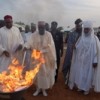
CULTURE-NIGERIA: Writers, Film-makers Defy Censors
"I don't sell cocaine," says the video vendor in Kano's Rimi market when I ask for Adam Zango's music video CD Bahaushiya. He is not referring to the white powder, but instead a new illegal substance - Hausa films that have not passed through the Kano State Censors Board.
DEVELOPMENT-MALAWI: Irrigation Promises to Increase Food Security
Wyson Chandanga, a small-holder Malawian farmer from the northern district of Mzimba, does not care if the country receives enough rain this year. He is also not concerned on whether the rains come on time or not.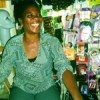
TRADE-SOUTHERN AFRICA: The Deal’s Signed But Where’s The Action?
Cross-border trader Florence Tjani is sceptical about the free trade agreement (FTA) recently signed by southern African states.SOUTH AFRICA: Will Gender Protocol Help Business Women?
South African women in business welcomed the recently-signed South African Development Community (SADC) Gender and Development Protocol, but are sceptical about its ability to truly achieve greater gender equality in business and trade.NIGERIA: Niger Delta Conflict Hurting Local Economy
A thriving business climate appears to be the main casualty as armed groups agitate for the control of oil proceeds in Nigeria’s Niger Delta region.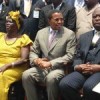
AFRICA: Civil Society Gains Strength at AU
The launch of the African Union’s official civil society council may strengthen the continent’s ability to address human rights violations and tackle poverty, activists say.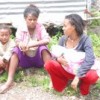
DEVELOPMENT-ETHIOPIA: Understanding Poverty's Impact on Children
When the school bell rings, Alemtsehay and her three younger sisters rush home to change out of their school uniforms and into tattered clothes to go out begging around Bole Road, one of Addis Ababa's smarter areas.
TRADE-KENYA: A Woman Navigating the Obstacles to the ‘Big Money’
‘‘I enjoy the trade,’’ says Sonia Gateri as she ushers me into her office next to the Yaya Centre in the Kenyan capital. It is a hot afternoon and she has been busy most of the morning, preparing for a trip to Tanzania later in the evening.ECONOMY: Increased Nuclear Energy Demand Boosts Namibia
The worldwide scramble for energy sources due to dwindling fossil fuel reserves has placed renewed emphasis on nuclear energy as solution for future needs. As a result, Namibia in south-western Africa is experiencing a uranium boom.RIGHTS-ZIMBABWE: NGO Activity Still Limited
Despite the Aug. 29 lifting of a ban on the operations of non-governmental organisations (NGOs) in Zimbabwe, representatives of civil society report they are still unable to operate freely.
Q&A: "We Will Write About Them"
While formal publishing companies in Nigeria languished through the economic crises that accompanied the structural adjustment programmes of the late 1980s and early 1990s, young Hausa writers began writing about their lives and contemporary problems they faced. Bypassing formal publishers, they self-published their novels, often with the help of a writers' cooperative.AGRICULTURE-MALAWI: Going Against the Grain on Subsidies
In each of the past three growing seasons, the family of Bernadette Banda, in Chidambo village in the central region of Malawi, has doubled the maize harvest from the family plot, thanks to a government input subsidy programme.
RIGHTS: Swazi Law And Custom Under Pressure
When the women's movement in the southern African kingdom of Swaziland took to the streets in August to challenge what they called extravagance by the royal family, Swazi traditionalists were livid.
RIGHTS-SOMALIA: Building Women’s Leadership
The moderator raps her pen on the table to hush the boisterous assembly of Somali women gathered in Bagamoyo, on the Indian Ocean coast of Tanzania. Their voices drop for a moment before the sound level rises again to a heated crescendo.DEVELOPMENT-AFRICA: Why The Richest Continent Is Also The Poorest
The ecological impact of natural resource exploitation on the lives of the poor in Africa and other regions is not being addressed sufficiently in aid effectiveness and development discussions, aid experts say.
Q&A: 'Our Voices Have Been Heard'
As the Third High Level Forum on Aid Effectiveness draws to a close in the Ghanaian capital, gender activists are reflecting on the way ahead.
DEVELOPMENT-CAMEROON: Microfinance Succeeding Despite Obstacles
Mrs Adjoumi Hamidou is the President. One of three surviving widows of Ali Hamidou, she heads Akoldiningnal, a collective that runs a multi-cereal mill at Gashiga village, 15 kilometres from the capital of Cameroon's North Province, Garoua.
POLITICS-ANGOLA: Economy Weighing On Voters’ Minds
Angola's economy may be booming on the back of high oil prices and strong diamond exports, but six years after a peace deal ended the 27-year civil war, unemployment stands at around 65 percent.DEVELOPMENT-SWAZILAND: Don't Blame Donor Dependency
What happens to a nation whose people depend on the largesse of international donor agencies for their existence, once support is withdrawn?
SIERRA LEONE: Building Peace
Sierra Leone has been a major recipient of foreign aid since the end of a devastating 11-year civil war in 2002. But government, donors and citizens are all questioning how effectively this aid is being used.« Previous Page — Next Page »


The Week with IPS

NEXT STOP - SDGs
Tracking global progress towards a sustainable world
Tracking global progress towards a sustainable world
