Languages
Saturday, November 7, 2026



News and Views from the Global South
Global

Clash of Cultures – Is it Real or a Smokescreen?
The notion of “Clash of Cultures” is most frequently used as a justification for anti-immigrant prejudice and, particularly in Europe and in the USA, for islamophobia. The reasoning goes as follows: immigrants, especially Muslims, have a deeply different culture from the hosting communities and these differences create unsurmountable tensions and conflicts.
The Invisible Women in Energy: Biomass Producers Who Deserve More Recognition
As the world looks to address issues of gender equity, development and climate change, the importance of increasing the participation of women in the energy sector is gaining attention. To date, this topic has generally been framed around the underrepresentation of women in the energy workforce.
Overcoming COVID-19: World Leaders Must Finance a More Equal World to Beat Pandemics
Leaders at this year’s World Bank/IMF Spring Meetings (April 5-11) will determine how best to recover from one of the biggest crises the institutions have faced since their founding in 1944—COVID-19’s impact and its economic aftermath.
A Post-COVID-19 Recovery will not be Possible if Water, Sanitation & Hygiene are not High on the Agenda
This World Health Day, G20 finance ministers will meet in Rome, Italy, to discuss how they will build back from the pandemic. The global economy is and concerted effort, coordination and imagination is needed to enable not only a worldwide recovery but also to ensure that the world’s poorest people are not left behind.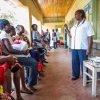
On World Health Day, a Call for Equity, Justice & the End of Paternalism
The past year has forced many of us to address difficult truths about how we treat and take care of each other — among them is a reckoning with racism and injustice.
Transforming Global Food Systems
Jose Graziano da Silva on the Path to Zero Hunger
The battle for the future of food has grown contentious, and José Graziano da Silva has become a lightning rod for criticism. In 2014, as Director General of the United Nations Food and Agriculture Organization (FAO), he presided over the institution’s first International Agroecology Symposium, opening what he called “a new window in the Cathedral of the Green Revolution.” The FAO has since then formalized support for “Scaling Up Agroecology” while continuing to promote the kinds of chemical-intensive agriculture associated with the Green Revolution.

Disability Discrimination at the World Bank: Is it Immunity or Impunity?
The 15,900-strong World Bank, which has funded over 12,000 development projects worldwide since 1947, is an international institution with a superlative reputation for its sustained efforts to end poverty in the developing world—with loans, interest-free credit and outright grants.
IMF, World Bank Must Support Developing Countries’ Recovery
The COVID-19 pandemic continues to take an unprecedented human and economic toll, wiping away years of modest and uneven progress towards the Sustainable Development Goals (SDGs). Developing countries now need much more support as progress towards the SDGs was ‘not on track’ even before the pandemic.
Three Ways the US Can Promote Equity in Ending the COVID-19 Pandemic Globally
As richer western nations continue hoarding COVID-19 vaccines to the detriment of poorer nations, there is some light on the horizon. On April 15, 2021, the U.S. will join the Global Vaccine Alliance (GAVI) and co-host the launch of the Investment Opportunity for COVAX Advance Market Commitment.
Should the 2021 Climate Summit in Glasgow Still Take Place?
Among the COVID-19 pandemic’s many damaging impacts, could a halt to international progress on environmental issues be added to the list?
UN Leadership Necessary for Fairer Tax Cooperation
Illicit financial flows (IFFs) hurt all countries, both developed and developing. But poor countries suffer relatively more, accounting for nearly half the loss of world tax revenue. IFFs refer to cross-border movements of money and other financial assets obtained illegally at source, e.g., by corruption, smuggling, tax evasion, etc. This often involves trade mis-invoicing and transnational corporations’ (TNCs) transfer pricing via ‘creative’ accounting or book-keeping.
Generation Equality: Women’s Leadership as a Catalyst for Change, Say 49 UN Women Envoys
March, women’s history month, closes with the Generation Equality Forum in Mexico and against the background of significant setbacks on the empowerment of women caused by the COVID-19 pandemic.
Developing Countries COVID-19 Debt Crisis Could Put SDGs & Climate Agreement Completely Out of Reach
The inability of developing nations to spend on post COVID-19 recovery and resilience has placed the world on the "the verge of a debt crisis". “We face the spectre of a divided world and a lost decade for development,” United Nations Secretary-General António Guterres said on Monday, Mar. 29, during a high-level meeting on financing development post COVID-19.
Identities
IMF, World Bank Must Urgently Help Finance Developing Countries
COVID-19 has set back the uneven progress of recent decades, directly causing more than two million deaths. The slowdown, due to the pandemic and policy responses, has pushed hundreds of millions more into poverty, hunger and worse, also deepening many inequalities.
After the Ever Given: What the Ship Wedged in the Suez Canal Means for Global Trade
In the early hours of March 23, the container ship Ever Given was blown off course by high winds on its way through the Suez Canal. At 400 metres long, the Ever Given is longer than the canal is wide, and the ship became wedged firmly in both banks, completely blocking traffic.
Humanitarian & Food Aid Can Never be Enough to Manage Cascading Disasters
The intersection of crisis, climate change and COVID-19 has resulted in a “rapid rise in hunger”, according to United Nations World Food Programme (WFP) Deputy Executive Director Amir Abdullah.
Debt Moratoria in the Next Pandemic: Be Prepared, and Be Fair
Imagine it is 2025 and that, unfortunately, another pandemic is sweeping the world. Much like in the 2020 crisis, borrowers have seen their livelihoods upended and are struggling to repay loans.
Centering Equity: A Vision for Global Health in 2021
2020 will be remembered as the year that changed the world, as COVID-19 spared no country, no community, and no person. As the pandemic continues in 2021, there is recognition that some groups are impacted more than others, not just by the virus itself, but also by the socio-economic and access inequities exacerbated by global shutdowns. Globally, countries, and organisations are seeking to build back better and address inequities.
Hope & Numbers: What will it take to Tip the Scales on Climate Action?
We should be well on the way to solving the climate crisis by now. According to the Paris Agreement, last year should have been the year that all countries presented their commitments to cut carbon emissions for limiting global climate heating to within 1.5oC of pre-industrial levels.
End Vaccine Apartheid Before Millions More Die
At least 85 poor countries will not have significant access to coronavirus vaccines before 2023. Unfortunately, a year’s delay will cause an estimated 2.5 million avoidable deaths in low and lower-middle income countries. As the World Health Organization (WHO) Director-General has put it, the world is at the brink of a catastrophic moral failure.« Previous Page — Next Page »





The Week with IPS

NEXT STOP - SDGs
Tracking global progress towards a sustainable world
Tracking global progress towards a sustainable world
