Languages
Monday, November 9, 2026



News and Views from the Global South
Global

Bretton Woods Institutions: Enforcers, Not Saviours?
According to their own internal evaluations, both the World Bank (WB) and the International Monetary Fund (IMF) have huge credibility deficits due to the policy conditionalities and advice they have dispensed to developing countries in recent decades.
Canada Effectively Addresses Children in Armed Conflict
More than 24,000 violations have been committed against children across the globe, including recruitment into armed forces, abduction, sexual violence, deprivation of basic needs, attacks on schools and hospitals-- and even murder.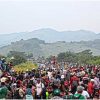
Environmental Migration a Global Challenge
The Atlas of Environmental Migration, which gives examples dating as far back as 45,000 years ago, shows that environmental changes and natural disasters have played a role in how the population is distributed on our planet throughout history.
Communication is Key to Overhauling Safeguarding
The term ‘safeguarding’ has been squarely in the spotlight in recent times and is now used to refer to all areas relating to prevention of and protection against sexual exploitation and abuse, harassment and bullying. Heightened use of the word is a direct result of the abuses that came to light in the last few years, which shook the sector and prompted an overhaul of systems, policies, procedures and entire organisations.
Saudi Arabia Easing Male Guardianship: But More is Needed
It comes as welcome news that authorities in Saudi Arabia have taken important steps towards dismantling the repressive male guardianship system, which treats women in the country as minors.
Extreme Weather Events are Just the Tip of Rapidly Melting Icebergs
First August. It is the middle of summer in the northern hemisphere. We are witnessing not only record global warming but global political tensions are also heating up.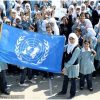
UNRWA Faces Donor Backlash Amidst Charges of Sexual Misconduct & Nepotism
The UN Relief and Works Agency (UNRWA), which has been undermined by a sharp cut in US contributions, has been embroiled in a scandal that threatens to jeopardize its very future.
Europeans Mobilising for New IMF Head
In the grand European political reshuffle of 2019, it turned out that Christine Lagarde was the answer to the conundrum of who should replace Mario Draghi at the European Central Bank. But her move opens another question. Who succeeds Lagarde at the International Monetary Fund?
Tackling Inequality: A Focus on Cities can Improve Upward Economic Mobility
Tackling inequality in the 21st century requires us to understand and address barriers to upward mobility that segments of people face within countries. In a world with high and increasing levels of urbanization, the conversation on challenges to mobility must start with cities.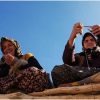
Social Norms & Women’s Access to Financial Services
How do financial services providers (FSPs) shape gender norms that restrict or expand women’s access to financial services? In more ways than you might think, and there are good reasons why FSPs should be aware of this.
Businesses Crucial to the Success of SDGs
We all know that the UN Sustainable Development Goals are ambitious and will take huge collaborative and international effort to achieve. Government action alone is not enough. So how can the private sector actively contribute – and what can be done to ramp up the participation of businesses around the world?
Bretton Woods Institutions: From Solution to Problem
July 2019 saw the 75th anniversary of the historic conference of 44 countries held at the Bretton Woods (BW) resort in New Hampshire during July 1-22, 1944. Conference At BW, John Maynard Keynes, representing the UK, and Harry Dexter White, for the USA, both sought a new international monetary system following the Great Depression, which many attributed to the functioning of the gold standard before World War II.
Power is a Privilege & a Responsibility: Q&A with Justin Trudeau, Prime Minister of Canada
It’s on all of us to make gender equality a reality – which means harnessing our collective power to build a gender equal world. By empowering girls and women, realizing sexual and reproductive health and rights, tackling gender-based violence, and confronting the combinations of sexism, misogyny, racism, and colonialism, we can take steps towards true gender equality.
The Age of Digital Geopolitics & Proxy War Between US and China
The geopolitical significance of key digital technologies now takes centre stage in a new global conflict between the US and China. The dispute over the Chinese technology group Huawei exemplifies this situation.
Is Civil Society Arguing Itself out of Political Space?
As some of you will know I have a new book out Stakeholder Democracy: Represented Democracy in a Time of Fear. (other contributors to the book were: Jan-Gustav Strandenaes, Carolina Duque Chopitea, Minu Hemmati, Susanne Salz, Bernd Lakemeier, Laura Schmitz, and Jana Borkenhagen).
Women, Power, & Changing Face of Political Representation in Latin America & the Caribbean
Gender inequality is about power asymmetries. In the late 1970s, Robert Putnam reflected on the status of women in policy decisions in his comparative study on political elites. Quoting Elizabeth Vallance, he concluded that, “where power is, women aren’t.”.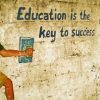
The Role of Education in Breaking down the Walls of Ignorance
Education constitutes an important building block to enhance inter-faith dialogue, cultural exchange between ethnic and linguistic groups, counter violent extremist narratives and promote peaceful and inclusive societies. The founder of Modern India, Mahatma Gandhi, once said:
Human Rights Watch Disappoints on Human Rights
On 22 July 2019, Kenneth Roth published an article in Publico, Lisbon, entitled: “UN Chief Guterres has disappointed on Human Rights”.
As SDGs Falter, the UN Turns to the Rich and Famous
The Sustainable Development Goals (SDGs) are in trouble. United Nations officials are concerned and say so publicly. Secretary-General António Guterres joined in raising an alarm in mid-July when he introduced the most recent official UN report.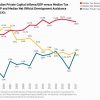
Foreign Private Investment in Low-Income Countries: More Important Than You Think
In a world of stagnating public aid, limited fiscal space, and rising public debt in low-income countries (LICs), can they realistically expect to rely more on private finance from foreigners? What does the evidence suggest?
Malnutrition in Humanitarian Settings
As the rain hammers down, Aparo Dorin sits on the damp floor of her one-room hut in zone 12, block 5A, of the Palabek refugee camp in northern Uganda.« Previous Page — Next Page »





The Week with IPS

NEXT STOP - SDGs
Tracking global progress towards a sustainable world
Tracking global progress towards a sustainable world
