Languages
Monday, November 9, 2026



News and Views from the Global South
Global

Could the Election of Qu Dongyu as FAO´s General-Director be a Turning-point for Sustainable Agricultural Development?
Agriculture is the bedrock of sedentary human civilization, without it we would have no governments or nations. It was food surplus generated by agriculture that enabled people to live in cities and form regimes able to organize food production in such a manner that some community members could engage in other activities than direct food production and thus give rise to the ideologies, techniques and goods which now constitute and govern our existence.
Is there a Co-Relation Between Human Development & SDGs?
“People are the real wealth of nations,” began the first Human Development Report (HDR). That 1990 report marked a turning point in the global development debate.
Indigenous Rights Approach a Solution to Climate Change Crisis
The Global Landscapes Forum (GLF) was held in Bonn, Germany to rally behind a new approach to achieving a future that is more inclusive and sustainable than the present – through the establishment of secure and proper rights for all.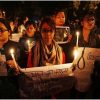
India’s Criminal Justice System is Failing Victims of Sexual Violence
Early in 2018, India was shaken by the horrific details surrounding the abduction, gang rape, and murder of an 8-year-old girl in Kathua, a district in the north Indian state of Jammu and Kashmir.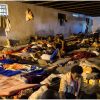
“Unimaginable Horrors” in Libya’s Migrant Detention Centers
For over 10,000 migrants fleeing to Libya from war and violence, their fate often comes down to the mercy of human traffickers or the dark unknown awaiting in detention centers.
Will “UN@75” Revive Multilateralism?
Despite the polarization and stasis that characterizes so much of the present politics at the United Nations, Secretary-General António Guterres is betting that the 75th anniversary of the organization, in 2020, will provide an opportunity for the international community to begin to address the “crisis in multilateralism,” and to shape a more robust and effective organization.
We Cannot Save the World from Climate Catastrophe if Largest Emitters of CO2 Don’t Step up Now
SUVA, Fiji, 27 June 2019 (IPS) -- Are the most climate-vulnerable nations of the world right to demand that developed and major economies commit to carbon neutrality by 2050? Should the poorest nations of the world insist that the “haves” put their significant economic and political resources behind aggressive efforts to combat climate change?
A Roadmap for Children as Victims, not Terrorists
The feeling in the air at a recent meeting of the United Nations Office on Drugs and Crime (UNODC) was one of compassion and benevolence. The focus was on children as Foreign Terrorist Fighters (FTFs), a subject that everyone at the panel discussion argued is delicate and politically sensitive.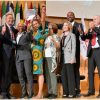
How Effective is a Non-Binding Treaty Aimed at Ending Harassment at Work Places?
Against the back drop of widespread charges of sexual abuse and harassment at workplaces-- including the United Nations-- the International Labour Conference (ILC) last week adopted a “Convention” and a set of “Recommendations” to protect workers and employees worldwide.
Looking to the Land in the Climate Change Race
The international community still has a long way to go to chart a new, sustainable course for humanity. But the upcoming climate change meetings provide a renewed opportunity to tackle climate change head on.
A Bad Free Trade Agreement Is Worse than Nothing
With growing economic conflicts triggered by US President Donald Trump’s novel neo-mercantilist approach to overcoming his nation’s economic malaises, many voices now argue that bad free trade agreements are better than nothing. After US withdrawal following Trump’s inauguration in early 2017, there is considerable pressure on signatory governments to quickly ratify the Comprehensive and Progressive Trans-Pacific Partnership (CPTPP), the successor to the TPP.
Is Inclusive Growth an Oxymoron?
After participating in two events on inequality at the Spring Meetings – Making Growth Work for the Poor and Income Inequality Matters: How to Ensure Economic Growth Benefits the Many and Not the Few, I received a surprising number of emails asking whether my remarks on the importance of addressing rising inequality meant I had abandoned growth as the main priority for developing countries.
Liberalism and Developing Countries
As China rapidly replaces Europe and the USA as the key player in developing countries, the Western press is full of articles about the dangers of dealing with the Chinese.
World’s Poorest Nations Weighed Down by Fastest Growing Populations
With a new report projecting a rise in population, specifically in Asia and Africa, the United Nations has warned that continued rapid population growth presents enormous challenges for sustainable development in the world’s 134 developing nations.
From Tony Blair to Mette Frederiksen
Social Democrats, who had been steadily disappearing following the crisis of 2008, have been making a small comeback in the last year. Now they are in power in Spain, Portugal, Sweden, Finland and, most recently, in Denmark.
Low-Income Countries Pay Over 20 Times More for Generic Drugs
A recently-released report by the Washington-based Center for Global Development (CGD) shows that generic drugs, like omeprazole (used to treat heartburn), can cost 20-30 times more in low and middle-income countries than in high-income countries.
More Megacities, More Pressure on Forests
With two-thirds of the world’s population projected to be living in cities by 2050, increasing pressure continues to be placed on forests which are being cleared to make way for agricultural production.
Put Survivors Front and Centre
Sexual violence is still all too common and continues to threaten peace and security worldwide. How can we do better? Put survivors at the centre.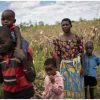
SDGs, Currently Off-Track, Need Bold Decisive Action
It has been four years since governments agreed on the most ambitious set of international commitments to fight poverty and inequality to date. The Sustainable Development Goals (SDGs), otherwise known as the Global Goals, are ‘a universal call to action to end poverty, protect the planet and ensure that all people enjoy peace and prosperity.’ The goals ambitiously aim to “Leave No One Behind.”
An Economic No-Brainer: Empower Women, Empower Economies
As the first woman to lead the International Monetary Fund (IMF), and a leader in advocating for increased investment and action toward gender equality, Christine Lagarde helps Deliver for Good explore the steps needed to build sustainable financing & economic opportunities for girls and women.
The Immense Cost 200 Million Migrant Workers Pay to Rescue their Families
Straight to the point: while right and far-right politicians keep marketing their image with intensive campaigns of hatred, discrimination and stigmatisation against migrants, 200 million migrant workers worldwide will sacrifice over half a trillion dollars from their hard-earned money, to rescue 800 million members of their impoverished families. And that’s only this year 2019.« Previous Page — Next Page »





The Week with IPS

NEXT STOP - SDGs
Tracking global progress towards a sustainable world
Tracking global progress towards a sustainable world
