Languages
Monday, November 9, 2026



News and Views from the Global South
Global

Preventing Antibiotic Resistance: Look to the Livestock Industry
Antimicrobial resistance is quickly becoming a global crisis and risks reversing a century of progress in health. Some organisations have already geared up and are tackling the issue from its roots.
Public-Private Partnerships Fad Fails
After the failure and abuses of privatization and contracting-out services from the 1980s, there has been renewed appreciation for the role of the state or government. Earlier promoters of privatization have taken a step backward, only to take two more forward to instead promote public-private partnerships (PPPs).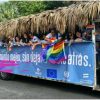
Partnerships to Promote Equality for LGBTI People
As states and civil society organizations are increasingly acting to address stigma, discrimination and human rights violations targeting lesbian, gay, bisexual, transgender and intersex (LGBTI) people, dialogues and alliances jointly tackle these challenges.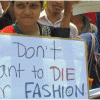
Putting Water at the Heart of Sustainable Fashion
The Copenhagen Fashion Summit celebrated its tenth anniversary last week. The summit, which is often referred to as the Davos of fashion, is a key date in the fashion diary for those businesses with a pioneering vision to highlight issues and create solutions for a more sustainable industry.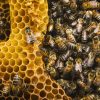
Long Life to Their Majesties, the Bees!
Amazingly organised social communities, bees ensure food chain. ‘Bee’ grateful to them… at least on their World Day!
UN’s Mandate to Protect Human Rights Takes Another Hit
The UN’s longstanding mandate to promote and protect human rights worldwide –- undermined recently by right-wing nationalist governments and authoritarian regimes – has taken another hit.
Stop The War on Children
Too many children are dying as a result of explosive weapons, and the international community must step up to protect and declare children off limits in war.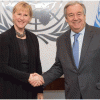
Growing Authoritarianism, Social Inequalities Often a Prelude to Conflict
I want to talk about peacebuilding and inclusive peace. My main point is that peace begins in the minds of people, and people, communities, societies must be allowed to participate in peace for it to be sustainable. Peace means a lot more than just the absence of war.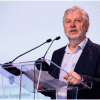
Do We Need a Global Convention of Common Principles for Building Peace?
When the Stockholm International Peace Research Institute (SIPRI) concluded a three-day forum on “Peace and Development” on May 16, the primary focus was the daunting challenges threatening global security, including growing military interventions, spreading humanitarian emergencies, forced migration, increasing civil wars, extreme weather conditions triggered by climate change and widespread poverty and conflict-related hunger.
Women Human Rights Defenders Face Greater Risks Because of their Gender
Does the name Ihsan Al Fagiri ring a bell? How about Heba Omer or Adeela Al Zaebaq? It’s likely that these names, among countless others, are not known to the average news consumer. But their tireless and dangerous work, however, has made news headlines as protests led to historic political change in Sudan.
Citizenship & Growth: Inclusive Citizenship Laws Tend to Foster Economic Development
The notion of citizenship has evolved over time. Historically, allegiance was typically to an ethnic group or a feudal lord. With the birth of the nation-state in the 19th century came the need to distinguish between those who belonged to the state and those who didn’t, and therefore to create a legal distinction between nationals and foreigners.
Unlocking the Power of Women
This June, thousands will flock to Vancouver for a global dialogue on how to accelerate progress for girls and women under the banner of power, progress and change.
Privatization Solution Worse than Problem
Privatization has not provided the miracle cure for the problems (especially inefficiencies) associated with the public sector. The public interest has rarely been well served by private interests taking over from the public sector. Growing concern over the mixed consequences of privatization has spawned research worldwide.
Spotlighting the ‘Abilities’ in ‘Disabilities’
The power of sport can help make global sustainable development a reality, and such power transcends cultural, linguistic and even physical barriers.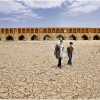
Urgent Action Vital to Stop Twin Crises of Nature’s Destruction & Climate Change
The Intergovernmental Platform on Biodiversity and Ecosystem Services’ report on the global state of biodiversity is shocking but not entirely surprising. The question is, how much more evidence and repeated warnings will it take for governments, companies and financial institutions to wake up to the urgency and act?
America First as a Threat to Mulitlateralism
On 25 April, Joseph Biden announced his candidacy for the US presidency, declaring that his decision was based on fears of Trump being re-elected:
Rise of Right-wing Nationalism Undermines Human Rights Worldwide
The rise of right-wing nationalism and the proliferation of authoritarian governments have undermined human rights in several countries in Europe, Asia, Africa, the Middle East and Latin America.
An Urgent Need to Advance Peace
Let us be blunt: the world is in crisis. Peace, human rights, our planetary ecosystem, and our systems of conflict management and global governance are under enormous strain.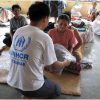
Aid Organisations Welcome New Development Chief
International aid organisations have reacted positively to the appointment of new UK International Secretary of State for Development, Rory Stewart.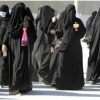
Campaign to Whitewash Saudi Arabia’s Image Does Little for Women in the Kingdom
Amid a high-profile public relations campaign to convince the world just how much the Kingdom of Saudi Arabia is modernising – highlighted in last year’s lifting of the ban on women driving – Saudi authorities continue their relentless persecution of women human rights defenders.
Leaving No One Behind: Young People’s Participation at UN
Walking down 44th street towards UNICEF House was a poignant moment for me: having sought out resources, gone through strenuous immigration processes and having had my assumptions unraveled with the realities of New York City (NYC). This was it.« Previous Page — Next Page »





The Week with IPS

NEXT STOP - SDGs
Tracking global progress towards a sustainable world
Tracking global progress towards a sustainable world
