Languages
Monday, November 9, 2026



News and Views from the Global South
Global
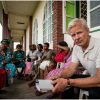
World’s Displacement Crises Worsened by Lack of Funds, Political Will or Media Attention
The world’s 10 most under reported displacement crises— which have rendered millions of people homeless– have continued to worsen due either to political neglect, a shortage of funds or lack of media attention, according to a new report released by the Norwegian Refugee Council (NRC).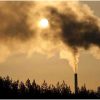
We Must do More to Speed up Ending Fossil Fuel Subsidies
Fossil fuels—oil, gas, coal and their derivatives—pollute the atmosphere and emit the greenhouse gases that are ramping up global heating to dangerous levels. But did you know that governments around the world are subsidizing this pollution?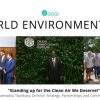
Standing up for the clean air we deserve!
(GGGI) - Air pollution has become the number one environmental problem affecting people’s health, impacting 300 million children worldwide and contributing to the premature death of 600 thousand children every year.
Transforming Society, Financialization Destroys Social Solidarity
Finance has not stopped at dominating the real economy. The tentacles of finance have reached into significant, if not most parts of society. Gerald Davis characterises modern society, where finance is dominant, as a ‘portfolio society’, in which aspects of social life have been securitized and transformed into a kind of capital or investment to be managed.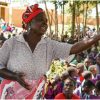
We Won’t Achieve Gender Equality Until We Address the Lack of Water, Sanitation & Hygiene
Giving birth is a life changing moment for women. It can be - when women have a safe and caring environment, positive and empowering - a moment to find a previously untapped inner strength.
An Escalating War on Reproductive Rights
Abortion has long been a contentious issue across the world, and the debate is only heating up, prompting women to stand up and speak out for their reproductive rights.
Watch Out: Your Money Is Being Used to Destroy the World!
Perhaps the most direct way to introduce this tough issue is what the United Nations Secretary-General, António Guterres, stated just one week ahead of the 5 June World Environment Day, which focuses this year on air pollution, caused chiefly by the use of fossil fuels both in transport, industry and even household cooking, heating, etc.
Exploitation and Acculturation
There are several means to make profitable use of other human beings, an endeavour that tends to turn others into tools by depriving them of their roots and self-respect. This happened in concentration - and work camps, where individuals were reduced to mere numbers.
Pakistani and Afghan Refugees Seek Safe Haven in Sri Lanka
Thirteen-year-old Bariea, a Pakistani asylum seeker in Sri Lanka, is taking shelter at a mosque in the city of Negombo, where an uneasy mix of high anxiety and extreme boredom hover over the room.
We Can’t Halt Extinctions Unless We Protect Water
Global biodiversity loss has reached critical levels. One million species of plants and animals are now estimated to be at risk of extinction. The window for action is closing, and the world needs to urgently take note.
Lost in Globalisation
Do not panic! This is not about telling you how bank accounts and pension funds have been used to finance the production of nuclear bombs (they call it ‘investment’).
The New Face of Activism: Youth
Rather than waiting for adults to act, more young girls and boys are standing up and speaking out on the world’s pressing issues.
Water Research & Education Needs to Flow Towards Developing World
Post-secondary education relevant to the global water crisis is concentrated in wealthy countries rather than the poorer, developing places where it is needed most.
A Call for Concrete Changes to Achieve a More Gender Equal World
On the eve of the Women Deliver conference in Vancouver June 3-6, Princess Sarah Zeid of Jordan interviewed Dr. Olfat Mahmoud, a Palestinian refugee and women’s rights advocate.
These Aliens Are Here to Stay (And They Are Dangerous)
No, no, no. Nothing to do with what US and Europe’s far-right fanatics now use to vociferate, saying once and again that “migrants come here to destroy our democracy, our civilisation, and our life-style”.
Finance’s New Avatar
Over recent decades, the scope, size, concentration, power and even the purpose and role of finance have changed so significantly that a new term, financialization, was coined to name this phenomenon. Financialization refers to a process that has not only transformed finance itself, but also, the real economy and society. The transformation goes beyond the quantitative to involve qualitative change as finance becomes dominant, instead of serving the needs of the real economy.
Within a Parallel Universe – Monsters of the Dark Web
Human existence includes dreams, thoughts, ideas, music, stories, religion, and other immaterial ”things”. They constitute an important part of our habitat, i.e. the dwelling place of any living organism, consisting of both organic and inorganic surroundings. I learned this when I many years ago found myself among the undulating heights of Cordillera Central, which rise diagonally across the island of Hispaniola, shared by Haiti and the Dominican Republic.
The Time is Now: End Sexual and Gender-Based Violence
It’s time to end sexual and gender-based violence once and for all, participants of a two-day conference said.
Class Analyst: Global Income Inequality
As a child growing up in Communist Yugoslavia, Branko Milanovic witnessed the protests of 1968, when students occupied the campus of the University of Belgrade and hoisted banners reading “Down with the Red bourgeoisie!”
The UN Has Failed Civilians
Despite the United Nations Security Council’s task of protecting civilians, millions around the world are still being displaced and killed with little to no accountability for perpetrators.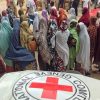
The Contribution of Humanitarian Action to Peace
The connection of humanitarian action to broader objectives like peace, development and human rights is understandably complex, but it is also an area in which some fresh thinking is important.« Previous Page — Next Page »





The Week with IPS

NEXT STOP - SDGs
Tracking global progress towards a sustainable world
Tracking global progress towards a sustainable world
