Languages
Thursday, November 12, 2026



News and Views from the Global South
Global

Thriving Rural Communities Is a Recipe for Healthy Cities
As the dust has settled on Habitat III and the summit in Quito, Ecuador, we now have a clear vision and a concrete road map for how to transform our cities into inclusive, safer and more productive environments. The New Urban Agenda comes at a propitious time. Urbanization is growing at a fast pace, particularly in developing countries, where the urban population is expected to double by 2050. In South Asia alone, the urban population grew by 130 million between 2001 and 2011, according to recent World Bank study. Another 250 million are expected to join them by 2030.
No Climate Justice without Gender Justice – the Marrakech Pact
The historic Paris Agreement on Climate Change last year is a breakthrough commitment to respect, promote and consider gender equality and women's empowerment obligations while taking climate change action. It also committed to gender-responsive adaptation and capacity building. A year later, with the Agreement entered into force on 4 November, vigorous efforts are being made at COP 22 in Marrakech to make sure that gender equality is systematically integrated into all aspects of the implementation of the Agreement.
Trump’s Threat on Multilateral Treaties Keeps UN Guessing
At the height of the US Presidential campaign in early 2015, Republican nominee Donald Trump made a rash of public pronouncements -- some threatening internationally-agreed UN conventions-- which set off political reverberations throughout the United Nations.
Understanding Unauthorized Migration
Growing numbers of men, women and even children in every major region of the world are joining international streams of unauthorized migration. This global movement of humanity’s desperate is taking place despite walls, fences, barriers, guards, patrol ships, warnings and nativist political rhetoric. Governments of origin, transit and destination countries are struggling on how best to manage unauthorized migration flows.
Actions Needed Urgently to Tackle Air Pollution – Part 2
As evidence mounts on the threats posed by air pollution to both human health and the environment, action must be urgently taken to address this problem.
Reflections on Trump Election
From the city of Cuzco, where the Inca culture was subjugated by the Spanish conqueror, I am watching how the world inexorably leads to a different measure of history. And given the impossibility of drafting a complete analysis, these are some of my scattered observations.
Air Pollution Emerges as a Top Killer Globally – Part 1
New research is showing that air pollution is a powerful if silent killer, causing 6.5 million worldwide deaths as well as being the major cause of climate change.
Trump – The Symptom
The electoral victory of U.S. Republican Donald Trump -- many have said -- is an alarming signal that heralds new, difficult times. Maybe. Anyway, this victory could –and should-be seen as a symptom not as a disease.
Changing Determinants of Global Income Inequality
Global income inequality among different regions began to increase about five centuries ago, before accelerating two centuries ago. The data suggest a brief reversal during the Golden Age quarter century after the Second World War, and in the last decade, with higher primary commodity prices once again, and protracted stagnation in much of the North following the 2008-2009 financial crisis.
Trump Threatens the World with Climate Disaster
By sabotaging Bernie Sander's primary campaign, the Democratic National Committee seems to have committed suicide and destroyed the Democratic party. USA's mass media were also responsible for the stolen primary, and for Donald Trump's election to the US Presidency.
Options Lacking to Help Developing Countries Avoid Debt Crises
Despite many developing countries facing a very real risk of falling into debt crisis - the current options available to assist countries to manage their debts are surprisingly lacking.
Did You Try Out Rosemary’s Ceci or Makhlouta with Banana Bread?
The original inhabitants of Planet Earth already knew—and still know how to eat healthy. Modern, urbanised and industrialised people mostly not. Anyway, life can be made easier than one may think. Just see what a world leading specialised body in the field of food and nutrition advises on what to eat and even how to cook it.
Beyond Calais: A Perspective on Migration, Agriculture and Rural Development
Migration is part of the process of development. It is not a problem in itself, and could, in fact, offer a solution to a number of matters. Migrants can make a positive and profound contribution to the economic and social development of their countries of origin, transit and destination alike. To quote the New York Declaration, adopted at the UN Summit on Refugees and Migrants on 19 September, “migrants can help to respond to demographic trends, labour shortages and other challenges in host societies, and add fresh skills and dynamism to the latter’s economies”.
Paris Climate Agreement: “Hard Work Starts Now”
The Paris Climate Change Agreement will enter into force on Friday 4 November, just days before the UN’s 22nd climate change conference begins in Marrakech, Morocco.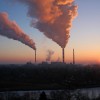
World to Cut Gas Emissions by 25 Percent More Than Paris Agreement
On the eve of the entry into force of the Paris Agreement today Nov. 4, the United Nations sounded new climate alarm, urging the world to ‘dramatically’ step up its efforts to cut greenhouse gas emissions by some 25 per cent more.
Data Innovation Powering Sustainable Development Goals
The world is awash with data. Today, more data than ever in human history is produced on a daily basis. Every time a person carries a cell phone from one place to another, tops up her mobile airtime or posts on social media, new data is created.
Privatization Cure Often Worse Than Malady
Privatization of SOEs has been a cornerstone of the neo-liberal counterrevolution that swept the world from the 1980s following the economic crisis brought about by US Fed’s sharp hike in interest rates. Developing countries, seeking aid from the International Monetary Fund (IMF) and the World Bank, often had to commit to privatization as a condition for credit support.
Wonder Woman: Not the Hero the UN Needs
For those of us who ever feel conflicted about the United Nations, the past month has been an exercise in managing absurd cognitive dissonance. First, on October 21 2016, the United Nations announced that the 1940s comic book heroine, Wonder Woman would be its new mascot for promoting the empowerment of women and girls.
Journalist Murders: The Ultimate Form of Censorship
The UN Educational, Scientific and Cultural Organization (UNESCO) has condemned the killing of more than 800 journalists globally since 2006. A measly seven percent of these murders have been solved.
The Key Role Women Played in Culture of Peace
In the fifteen years since the adoption of UN Security Council Resolution 1325, we have seen a tremendous enthusiasm among civil society at all levels in raising awareness, engaging in advocacy and building capacity for its meaningful implementation. It is my pleasure to write the foreword to this publication which is a meaningful endeavour to move the agenda forward on the occasion of the 15th anniversary of the adoption of this groundbreaking resolution.
President of UNGA Disillusioned by Unsustainable Development
Development should be about more than building roads or buying air conditioners, the President of the UN General Assembly, Peter Thomson told IPS in a recent interview.« Previous Page — Next Page »





The Week with IPS

NEXT STOP - SDGs
Tracking global progress towards a sustainable world
Tracking global progress towards a sustainable world
