Languages
Wednesday, November 18, 2026



News and Views from the Global South
Global
Decent Work Key to Food Security
Basic income security and access to social services can improve food production and consumption in the developing world, which can be boosted by South-South cooperation.
Q&A: “Investing in the Fight against Hunger Brings Extraordinary Returns”
The man who played a key role in the design of Brazil's successful food security policies believes it is possible to eradicate hunger in the world, and intends to try by promoting "a simple idea."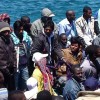
False Perceptions Underpin Anti-Migrant Sentiments
The rising tide of anti-migrant sentiment worldwide is caused primarily by the biased, polarised and negative debate on migration, according to a new study released here.
Q&A: South-South Cooperation Complements North-South Cooperation
South-South cooperation can play a key role in boosting the economies of developing countries, but it is not going to replace North-South cooperation, says Nassir Abdulaziz Al-Nasser, president of the 66th session of the U.N. General Assembly.
CLIMATE CHANGE: Biofuels Are Not the Solution
Science tells us that we are heading for a climate crisis, yet it is within our means to change course.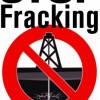
“Fracking” for Shale Gas: Neither Clean nor Green
Hydraulic fracturing or "fracking" is being used to tap the last remaining natural gas deposits across large areas of the United States and western Canada, fueling continued dependence on hydrocarbons instead of a shift to genuinely clean energy sources to cool the planet.
Workers Send More Money Home, Surpassing Development Aid
Despite a global economic crisis, worsening employment prospects for immigrants and hardening views on immigration in the U.S. and Europe, migrant workers are sending more money home, according to a World Bank report on global remittances released Wednesday.
South Outdoing North in Fight against Global Warming
The claims of some industrialised nations, which accuse the developing countries of not doing their share to curb emissions that contribute to climate change, are proven false in studies conducted by respected academic institutions.
Mobilising Men to End Violence Against Women
Since it launched in 1997, the United Nations Trust Fund to End Violence Against Women has distributed more than 78 million dollars to 339 projects around the world, but even these resources fall far short, meeting less than five percent of demand.
Q&A: Climate Talks Must Ensure That “Words Become Reality”
Involving women in decision-making and resource management is a basic necessity for any effective plan to address the multi- layered and life-threatening consequences of climate change, says the head of UN Women.
OP-ED: The Future of Carbon Markets: Taking Politics Seriously
Carbon markets are under attack on all sides, despite ongoing faith in their ability to deliver meaningful reductions in greenhouse gases (GHGs).
U.S.: Bottled Water Companies Target Minorities, But So Do Soda Firms
Water is the lifeblood of this planet, whose inhabitants are watching its accelerated spiral into crisis mode even as they struggle to address the issues and lifestyles that are stretching the earth's resources thin.Can BRICS Make a Difference at Busan? – Part 2
While experts are hopeful that blocs of emerging market economies like BRICS – Brazil, Russia, India, China and South Africa – will play a major role in the upcoming aid effectiveness conference in Busan, South Korea, others fear that the new players do not yet have the fiscal power to make a serious intervention in fora generally dominated by rich donor states.
Q&A: “Gender Violence Is Not Natural and Not Inevitable”
Dedicated efforts by women's rights advocates are bearing fruit, UN Women says: for example, two-thirds of the world's countries now have legal provisions to stop domestic violence.Can the BRICS Make a Difference At Busan? – Part 1
As shock waves from Greece's economic crisis emanate across the Eurozone and the Occupy protests in the U.S. grow bolder in their critique of the dominant neoliberal system, it seems clear to many observers that the old hegemonic economic order is fading fast.
Time to Derail Fossil Fuel Train, Energy Agency Warns
Countries have chained themselves to a fossil fuel train that is headed straight off a cliff, warns the International Energy Agency (IEA).OP-ED: A Rio+20 Activist Manifesto and Action Plan
Unless civil society activists launch their own programme of action at the United Nations Conference on Sustainable Development in Rio de Janeiro next summer (Jun. 4-6), the event will be little more than an expensive talkfest.
Q&A: Cooperatives: “Meeting Human Need, Not Just Human Greed”
Different countries may celebrate Oct. 31 in a variety of ways, but this year, the 193 member states of the United Nations (U.N.) launched the International Year of Cooperatives 2012 to raise awareness about the impact of cooperatives on the development of communities where they operate.
Women Losing Ground in Economic, Political Equality
While gender equality ratios have improved in 85 percent of countries over the past six years, economic participation and political empowerment for women has failed to match the steady progress of health and education, says a new report by the World Economic Forum.
Climate Change Could Unravel Development Progress
The United Nations unveiled its 22nd annual Human Development Report on Wednesday, with grave warnings that unless countries take action against climate change and implement sustainable solutions, progress in human development will be in serious jeopardy.
OP-ED: Better Aid Means Better Development
Oxfam and major aid donors of the OECD’s Development Assistance Committee (the DAC) are often on opposite sides of the fence. Today though, we are on the same side —making sure that effective aid lifts people out of poverty.« Previous Page — Next Page »


The Week with IPS

NEXT STOP - SDGs
Tracking global progress towards a sustainable world
Tracking global progress towards a sustainable world
