Languages
Sunday, October 25, 2026



News and Views from the Global South
Global
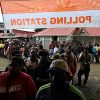
Solomon Islands: A Change More in Style than Substance
There’s change at the top in Solomon Islands – but civil society will be watching closely to see whether that means a government that’s grown hostile will start doing things differently.
The US a Direct Partner in the Israeli War
A major mistake we often commit in our analysis of the US political discourse on the Gaza war is that we assume that the US and Israel behave as if they are two political entities with separate agendas and sets of priorities.
US Senators Threaten Criminal Court & Advise Israel to Nuke Gaza
As the ancient Greek saying goes: those whom the Gods wish to destroy, they first drive them mad. Perhaps destruction is too far-fetched here, but madness is closer home—in Washington DC With the 7-month-old Israeli-Gaza conflict showing no positive signs of a permanent solution, there is a lingering sense of growing political craziness in Capitol Hill, the seat of the US government, once described as Israeli-occupied territory.
From Dorms to Demonstrations
The campus protests that have spread to universities in every part of the United States are not about the war between Israel and Hamas, despite the heated rhetoric around this topic. Most of the students who are protesting know little about the conflict, its history and its ramifications for international politics.
Chronicle of a Catastrophe Foretold
The IMF warns of a decade ahead of ‘tepid growth’ and ‘popular discontent’, with the poorest economies worst off. But as with inaction on Gaza, little is being done multilaterally to avert the imminent catastrophe.
Ocean Action on Global Agenda as Negotiations to Save Biodiversity Deepen
The oceans are as fascinating as they are mysterious. Home to the largest animals to ever live on Earth and billions of the tiniest, the top 100 meters of the open oceans host the majority of sea life, such as fish, turtles, and marine mammals. But there is another world far below the surface. In the belly of the ocean, there are seamounts—underwater mountains that rise 1,000 meters or more from the seafloor.
Educating the Mind Without Educating the Heart is No Education at All
The words above, by the ancient Greek philosopher Aristotle, serve as a reminder that we still have a long way to go to in educating ourselves. In doing so, we will naturally ensure that the young generation can access an inclusive quality education and use their knowledge to build a world of justice, equity, peace and security.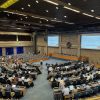
SBSTTA and SBI—Biodiversity Meetings Crucial for the Global South Begin
The 26th meeting of the Subsidiary Body of Scientific, Technical, and Technological Advisors (SBSTTA) of the United Nations Convention on Biological Diversity (UNCBD) started in Nairobi, Kenya, on Monday. Over 1,400 delegates, including 600 representing signatories or parties from over 150 countries, are present for the seven-day meeting at the headquarters of the United Nations Environment Programme (UNEP). A large number of members from Indigenous Peoples and other observer organizations, including women’s groups, are also attending the meetings.
Biodiversity Masterplan: Negotiations on Crucial Science, Technology for Implementation Underway
The triple planetary crises of climate change, biodiversity loss, pollution, and waste are escalating. At the current pace, the world is on track to lose one quarter of all plant and animal species by 2030, with one species already dying out every 10 minutes. One million species face extinction. Human activity has already altered three-quarters of the land on Earth and two-thirds of the ocean.
The World Must Not Abandon the Mothers of Gaza
As millions of children and families celebrate their mothers, my thoughts turn to the pregnant women and new mothers our teams at UNFPA, the United Nations sexual and reproductive health agency, support in more than 130 countries around the world. And I hold in my heart all those who, tragically, will never live to see their newborns.
Choose Hope: Standing at the Crossroads of the Future
We are at the tipping point in human history, facing major existential crises. The conflict between Russia and Ukraine has heightened the risk of a nuclear weapon being used since the Cold War. Furthermore, the climate crisis is accelerating. In these crises, the most affected are those in vulnerable situations.
Amid Record Displaced Persons, Migrant Remittances Spike—New IOM Report
While there have been a record number of displaced people worldwide, according to a new report by the International Organization for Migration (IOM), migrant remittances are promoting human development.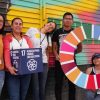
How do Taxes Drive the Sustainable Development Goals?
Tax revenue remains the most sustainable source of income for governments and plays a crucial role in financing the Sustainable Development Goals (SDGs). It diminishes the need for international assistance and contributes to the repayment of burdensome debt, ultimately strengthening a country’s ability to withstand external shocks.
A Russian Veto Threatens to Trigger a Nuclear Arms Race in Outer Space
When the 15-member UN Security Council failed last month to adopt its first-ever resolution on outer space—co-sponsored by the US and Japan—the Russian veto led to speculation whether this was a precursor for a future nuclear arms race in the skies above. The vetoed resolution was expected to “affirm the obligation of all States parties to fully comply with the 1967 Outer Space Treaty, including not to place in orbit around the Earth any objects carrying nuclear weapons or any other kinds of weapons of mass destruction, install such weapons on celestial bodies or station such weapons in outer space in any other manner.”
Disinformation in the Super Election Year
The year 2024 seems to be a year of big decisions. The European Parliament elections in June and the US presidential election in November… politics and the media are talking of a showdown between democracy and disinformation. Add the elections in Russia and India to that and almost half of the world’s population will be casting their vote this year.
We Should Aim to be at Peace with Nature, Says David Cooper of UN Convention on Biological Diversity
In a world faced with habitat loss and species extinction, climate change, and pollution, it’s crucial that countries develop their national action plans and create a society that lives in harmony with nature, says David Cooper, Acting Executive Secretary of the UN Convention on Biological Diversity (CBD), in an exclusive interview with IPS.
Press Freedom and Climate Journalism: United in Crisis
Journalism is in crisis, again. The challenges to press freedom are enormous and multi-faceted and they are deepening -- in “free” and open societies as well as autocracies. And there are no simple solutions. For individuals and entire media outlets the crisis is existential.
Harnessing Science-Policy Collaboration: The Vital Role of IPBES Stakeholders in Achieving Global Nature Targets
In December 2022, the fifteenth meeting of the Conference of the Parties to the Convention on Biological Diversity (CBD) saw governments worldwide unite behind a set of ambitious targets aimed at addressing biodiversity loss and restoring natural ecosystems, through the Global Biodiversity Framework – known now as the Biodiversity Plan.
AI Policy Can’t Ignore Climate Change: We Need Net Zero AI Emissions
Artificial intelligence provides amazing potential for advancement across fields, from medicine to agriculture to industry to the entertainment business, even as it generates significant concerns. AI can also improve the efficiency of energy production and use in ways that can reduce greenhouse gas emissions.
Another Climate Victory in Europe… and Counting
A group of senior Swiss women recently won a powerful victory offering renewed hope for tackling climate change. Earlier this month, the European Court of Human Rights ruled that the government of Switzerland is violating human rights because it isn’t doing enough to cut greenhouse gas emissions.
Small Island States Fostering Effective Energy Transition To Achieve a Blue Economy
Small Island Developing States (SIDS), a distinct group of 39 states and 18 associate members, are making efforts to promote the blue economy as they possess enormous potential for renewable energy relying on the sea. Experts predict that switching to renewables will help SIDS countries decarbonize power generation as an appropriate option for islands to cut their carbon dioxide (CO2) emissions, fulfill Paris Agreement pledges and contribute to the global fight against climate change.« Previous Page — Next Page »





The Week with IPS

NEXT STOP - SDGs
Tracking global progress towards a sustainable world
Tracking global progress towards a sustainable world
