Languages
Sunday, November 22, 2026



News and Views from the Global South
Latin America & the Caribbean

BRAZIL: Logistics Drives Tardy Industrialisation in Northeast
The steel and oil industries are still finding new frontiers for expansion. In Brazil's impoverished semiarid Northeast the key is not, like in China, cheap labour power or abundant raw materials, but logistical advantages.CENTRAL AMERICA: Taxing Land to Improve Distribution
Taxing large landholdings in Central America could help curb the heavy concentration of land ownership that characterises the region, and contribute to rural development, experts say.SOUTH AMERICA: “Drug Addicts Are Sick, Not Criminals”
Drug dealers in the favelas of this Brazilian city are doing the same brisk business as before the installation of the "Police Pacification Units" (UPPs) in those poor neighbourhoods, authorities and experts admit, while they acknowledge the difficulties in combating the problem.Dozens of Bodies Found in Eastern Mexico
The bodies of 35 people who allegedly had links to organised crime have been found in two abandoned lorries on a highway underpass in eastern Mexico, authorities say.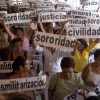
COLOMBIA: Victims of Sexual Violence Under Threat and on Their Own
"Another one? Another rape?" was the response Mari got at the Attorney General's Office in Colombia when she went to report what she had been through. "When they said that, I froze and got up and said 'Thank you, I’ll come back another day'," she told human rights defenders later.
MEXICO: Victims of Violence Demand the Truth
The Peace Caravan led by poet Javier Sicilia ended its tour through southern Mexico with a loud call for the creation of a truth commission to distinguish between murders committed by organised crime groups and killings by the security forces.CLIMATE CHANGE-BRAZIL: Farmers “Have Good Reason to Worry”
Bananas are harvested where apples used to grow; cassava, a traditional crop, is disappearing from the Northeast; and the southeast is losing the fragrance of good coffee. This is the science fiction of a new distribution of crops in Brazil, South America's agricultural powerhouse.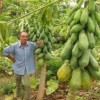
BRAZIL: Every Raindrop Counts
Brazil is considered a country rich in water resources, with its enormous underground aquifers and mighty rivers. But recognition of the vital importance of rainwater begins where it is most scarce: in the semiarid interior of the northeast.
MEXICO: Peace Movement Meets Zapatistas
The Caravan for Peace with Justice and Dignity, headed by Mexican writer Javier Sicilia, travelled through southeastern Mexico and reached the heart of the territory controlled by the Zapatista National Liberation Army (EZLN), bringing a message of solidarity.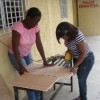
DOMINICAN REPUBLIC: Women Challenge Monopoly on “Men’s Jobs”
From a small office inside a public school on the eastern side of the Rio Ozama in the capital Santo Domingo, a programme operated by a local NGO, Ce-Mujer, has been leading a quiet revolution to empower women in the workplace for the last 13 years.SOUTH AMERICA: Uneven Progress in Child Health
Argentina, Bolivia, Brazil, Chile, Paraguay and Uruguay have all made progress in the area of child health. But some are celebrating significant achievements while others are plodding slowly towards the goals adopted by the U.N. member countries in 2000.RIGHTS-BRAZIL: Arrests in Judge’s Murder “Good News” – But Not Enough
The arrest of the alleged killers of Brazilian judge Patrícia Acioli, known for her work against organised crime, is seen by analysts and legislators as a step in the right direction in the fight against corruption and impunity.MEXICO: Peace Caravan Tells Migrants “You Are Not Alone”
Lucía and her family left their village in Guatemala village at 8:00 am to join the Peace Caravan, but they had to wait for six hours at the Rodolfo Robles bridge between Ciudad Tecún Umán, in Guatemala, and Ciudad Hidalgo, in the southern Mexican state of Chiapas.HONDURAS: Cabinet Shake-Up Raises Questions on Influence of Cartels
The dismissal of Óscar Álvarez as minister of security in Honduras, after he proposed a bill that would have allowed him to purge the police force of corrupt elements, has raised suspicions about the political influence of drug cartels.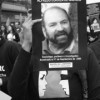
COLOMBIA: Uribe’s Former Intelligence Chief Sent to Prison
Jorge Noguera, a regional manager of former Colombian president Álvaro Uribe's (2002-2010) election campaign in 2002 and head of the secret police during the Uribe administration, has been sentenced to 25 years in prison. "I trusted him; if he committed a crime it pains me, and I apologise to the people," Uribe said Wednesday.
BRAZIL: Beating Drought in Semiarid Northeast
Violent clashes looked inevitable when some 1,500 desperately hungry peasants poured into this small Brazilian town. Riot police were staked out to prevent looting. It was the year 1993, and millions of people in Brazil's impoverished semiarid Northeast had been forced to the brink of starvation by three years of drought.
LATIN AMERICA: Environmental Innovators Create Virtuous Circles
A method to revolutionise gold mining; biofuel from used cooking oil; a container where garbage and wastewater go in and four useful products and zero waste come out: Latin American science applied to the environment.
MEXICO: Peace Caravan “Has Made Us Feel Stronger”
With a huge hug, Olga Reyes from Chihuahua, who has lost six family members in Mexico's wave of drug-related violence, greets Araceli Rodríguez from Mexico state, the mother of a young federal police officer who "disappeared" in Michoacán two years ago.Brazil Plans to Wind Down Peacekeeping Force in Haiti
At a time when the United Nations peacekeeping mission in Haiti has once again been drawing attention for alleged abuses, Brazilians have begun to ask themselves whether their first experience in leading such a force has brought them more headaches than prestige.GUATEMALA: Retired General and Populist in Duel for Presidency
A retired general and a populist tycoon will face off for the Guatemalan presidency in a Nov. 6 runoff, since no candidate won 50 percent of the vote in Sunday's elections.
Q&A: “Democracies Must Ensure Fair Gender Redistribution of Resources”
No matter how progressive laws to promote equality between men and women may be, without budgets with a gender perspective that allocate resources differentially, inequality will persist in Latin America.« Previous Page — Next Page »


The Week with IPS

NEXT STOP - SDGs
Tracking global progress towards a sustainable world
Tracking global progress towards a sustainable world

