Languages
Sunday, November 22, 2026



News and Views from the Global South
Latin America & the Caribbean
MEXICO: Rural Women Organise to Weather Multiple Crises
Adelaida Avelino, 60, is still devastated by the loss of her corn and wheat harvest, which were destroyed by the freeze that hit the Mexican state of Tlaxcala a month ago. But at least her medicinal plants survived.BRAZIL: ‘Green Grant’ May Do Little to Protect Amazon
The Bolsa Verde or Green Grant programme, which gives financial assistance to poor families that help preserve Brazil's Amazon jungle, may turn out to be only a drop in the ocean if legislation that undermines forest protection is adopted.ARGENTINA: Illiteracy on the Way Out
Efforts by the government and thousands of volunteers in Argentina have succeeded in slashing the illiteracy rate to just 1.9 percent, with a goal to eliminate it completely within the next four years.
VENEZUELA: Picking a Living in Hellish Landscape
Garbage pickers, emaciated dogs and carrion birds alike all hunt for items of value at the Cambalache garbage dump, before they have to give way to the smouldering fire that burns up to 900 tonnes of waste a day in the open air, spreading its smoke over Ciudad Guayana in northeastern Venezuela.
COLOMBIA: Nasa Indians: “The Armed Groups Won’t Let Us Live in Peace”
Indigenous children in the southwestern Colombian province of Cauca do not know what peace is. For the government forces and the leftwing guerrillas, the territory of the Nasa people is a strategic battleground.
BRAZIL: Suape Port Complex, the Locomotive of the Northeast
Silvio Leimig was 18 years old and had just earned his driver's licence when he visited Suape, a port 40 km from his home in Recife, the capital of the state of Pernambuco in Brazil's Northeast region, in the early 1980s.
Venezuela’s Heavy Industry Faces Multiple Woes
Like the biblical plagues of Egypt, 10 calamities have fallen in recent years on the previously flourishing basic industries of northeastern Venezuela, such as iron and steel, aluminium and hydroelectricity.
Desert’s Wealth is Wasted in Mexico
The deserts of northern Mexico are home to various plant species that have been largely ignored, despite the considerable social, economic and environmental contributions they could make.BRAZIL: Homegrown GM Bean Won’t Fight Hunger, Critics Say
Critics complain that a genetically modified bean developed in Brazil, resistant to one of the country's most damaging agricultural pests, was approved without enough debate or guarantees that the crop will not affect human health or the environment.
Q&A: “The Future of Brazil is the Natural Knowledge Economy”
Brazil could play a leading role in a new global agenda for sustainable development and become an "environmental power", says Carlos Nobre, one of the world’s foremost climate change experts.HONDURAS: Putting Defence In the Hands of Civilians
Prominent academics and activists say one of the main pending challenges in Honduras is a resumption of the demilitarisation of the country and the strengthening of civilian control over defence policy that was brought to an abrupt halt by the June 2009 coup d'etat.ARGENTINA: Boosting Agribusiness – and Family Farms
A plan to boost agribusiness, but based mainly on family farming and cooperatives, in Argentina is geared to producing and exporting more food – in a more sustainable manner.BRAZIL: Undersea Oil Revives Shipbuilding Industry
So far in Brazil, the "curse of oil" is only apparent in the political sphere, where Congress is divided about how to distribute the country's increasingly large oil earnings. But in the meantime the recent discoveries of offshore reserves in the Atlantic ocean are breathing new life into the shipbuilding industry.
MEXICO: Women Left Out of U.N. Forest Plan
Despite the growing participation of women in forestry projects in Mexico, the national strategy for the United Nations-led REDD+ forest plan in this country lacks a gender focus.
Salvadoran Campesinas Go Organic
The guavas grown by Mariana Rosales are big and bright green, and the best thing about them, she says proudly, is that she does not spend a single cent on fertilisers to produce them – something extremely rare in a country like El Salvador.LATIN AMERICA: Murky Waters
More than 20 percent of the population of Latin America and the Caribbean lacks basic sanitation and 15 percent has no access to drinking water because of poor management, said experts at a meeting that ended Thursday in Brazil.BRAZIL: Water Mega-Project for the Thirsty Agreste
The development of one part of Brazil's semiarid Northeast, the Agreste region in the state of Pernambuco, could begin with the construction of canals that will bring in water diverted from the São Francisco River.MEXICO: Food from Trees to Fight Malnutrition
The exceptionally nutritious moringa tree, native to the foothills of the Himalayas and cultivated in several Latin American countries, could help fight malnutrition in this region.BOLIVIA: General Strike Protests Crackdown on Native March
Bolivia's main trade union declared a 24-hour general strike Wednesday to protest Sunday's police crackdown on indigenous demonstrators who were protesting the construction of a road through a pristine rainforest preserve.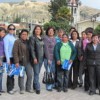
PERU: Councilwomen Fight Climate Change in Land of Melting Glaciers
Some symbolic acts are powerful reflections of a broader struggle. In March some 300 women planted trees in the Santa River basin in northwest Peru to demonstrate their determination to preserve the environment and help adapt to climate change.JAMAICA: Wanted: Light-Skinned Only, Please
Revelations that proprietors are requesting light-skinned workers from a government training institution is putting a new spin on Jamaica's so-called obsession with skin bleaching.« Previous Page — Next Page »


The Week with IPS

NEXT STOP - SDGs
Tracking global progress towards a sustainable world
Tracking global progress towards a sustainable world

