Languages
Sunday, November 22, 2026



News and Views from the Global South
Latin America & the Caribbean
COLOMBIA: Election Campaign Marred by Violence
"Political power will be fought for metre by metre in the Oct. 30 local and regional elections in Colombia, because this is a country imbued with violence, with different armies disputing different parts of the territory," said Alejandra Barrios, director of the election observation mission (MOE).
MEXICO: Women Reject Normalisation of Gender Violence
Ninety percent of the non-governmental organisations in Mexico are founded and run by women, says journalist and women's rights activist Lydia Cacho Ribeiro, even as crimes against women remain cloaked in impunity.
ARGENTINA: The Cristina Fernandez Era
President Cristina Fernández's smashing victory in Argentina, with nearly 54 percent of the vote, raises questions about how she will handle her growing supremacy.
ELECTIONS-ARGENTINA: Victory Front for Fernandez
The polls all point to a crushing first-round victory for Argentine President Cristina Fernández in Sunday's elections, due to her administration's successful social and economic policies and the wave of sympathy she received after her husband's death, analysts say.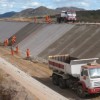
BRAZIL: Costly Water for the Poor Northeast
The visual impact is harsh: flattened hills, valleys full of mud, and kilometres and kilometres of bulldozed land - the modification of nature in Brazil's semiarid Northeast region is disturbing due to the enormous dimensions involved.RIGHTS: Brazilians Get Ready to Dig Up the Truth
The bill to establish a National Truth Commission in Brazil, which has made it through the lower house of Congress and is now in the Senate, is considered at least a start in clarifying, and preventing a repetition of, the abuses committed during the country's 21-year dictatorship.MEXICO: Transgenic Cotton Harbours Hidden Dangers
Wild cotton in Mexico has been contaminated with genetically modified material, posing a risk to biodiversity, experts say.
ARGENTINA: Divided Opposition Goes All Out for…Second Place
Argentina's weak, fragmented opposition is going to the polls on Sunday offering neither strong leaders nor clear alternatives capable of winning voters away from President Cristina Fernández, who is expected to easily win a first-round victory.
Argentine Wine Industry Prepares for Global Warming
Even slight changes in temperature can have a serious impact on the quality of wine, whose production is closely intertwined with the particular qualities of local soils and microclimates.EL SALVADOR: The Uphill Fight for a Disability Pension
Eric Saúl Majano stares blankly up at the ceiling in the government office in the Salvadoran capital that he is visiting to seek a disability pension, since he has been unable to work since 2002 due to schizophrenia. But achieving his goal will not be easy.
Green Tech Innovation Takes Root in Mexico
Environmental innovation is gaining ground in the academic, private and government sectors in Mexico, with the creation of research and development centres for local good practices and incubators for green production initiatives.
MEXICO: Government Frustrates Dialogue with Peace Movement
"I feel bad. They led me on with false hopes," complained María Herrera, one of the pillars of the Mexican peace movement led by writer Javier Sicilia, hours after the activists' second meeting with President Felipe Calderón.
COLOMBIA: When Humanitarian Law Is Just Rhetoric
The constant violations of international humanitarian law in Colombia claimed the life of an 11-year-old indigenous girl a month ago in the mountains of the southwest province of Cauca.
COLOMBIA: “I Was Ready for Anything – Except for Mourning a Daughter”
In the wooden, sheet-metal roofed house, the exact spot where Vanesa Coicué, an 11-year-old Nasa Indian girl, fell is marked by white and yellow chrysanthemums in a plastic soda bottle, along with a lit candle and an orange tree seedling.GUATEMALA: Little Headway against Rampant Malnutrition
"If we can manage it, we buy something at the butcher's every 15 days, even if it's only a bone, although we normally just eat maize and beans," says Marvin Fajardo, a small-scale farmer and father of three from the southern Guatemalan province of Escuintla.
LATIN AMERICA: High Food Prices Present Challenges and Opportunities
The global food crisis, which threatens to aggravate hunger and poverty, makes it necessary for agriculture to diversify, adapt to climate change and raise productivity, say FAO and experts.CENTRAL AMERICA: Diversifying Farming to Fight Hunger
The countries of Central America have set their sights on research and innovation in the production of tomatoes, cassava, potatoes and avocados to increase food supply and combat hunger, which mainly affects rural areas.
PERU: Campesinas Protect Traditional Diversity of Food Crops
Dina Apomayta is heir to the 3,500-year legacy of the Andean cultures of Tiwanaku and Lupaca, which venerated the land. And she and many other rural women in Peru continue to nurture the agricultural biodiversity that has been handed down from generation to generation.
Women in Rural Argentina Speak Out on Climate Change
Rural and indigenous women in northern Argentina, hit hard by the expanding agricultural frontier, deforestation and the spraying of toxic pesticides, spoke out about their problems and set forth proposals for discussion at the next global summit on climate change.CENTRAL AMERICA: Beating Mega Challenges with Microloans
Pilar Toc, a 45-year-old Quiche Maya woman, used to work endlessly in a factory making traditional clothing in northwest Guatemala. Even so, her situation was so precarious that she could not enrol her son in school. But her life changed when she took out a microloan from a community bank.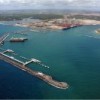
BRAZIL: Shark Attacks Attest to Environmental Sins of Suape Port
The Suape port complex may be eternally absolved of its environmental sins for ushering in unprecedented prosperity in the impoverished northeastern Brazilian state of Pernambuco, and for having been built before stricter requirements were introduced.« Previous Page — Next Page »


The Week with IPS

NEXT STOP - SDGs
Tracking global progress towards a sustainable world
Tracking global progress towards a sustainable world

