Languages
Sunday, November 22, 2026



News and Views from the Global South
Latin America & the Caribbean

GUATEMALA: “We Want Girls to Be Visible”
"I learned to not be afraid, and to love myself. Before, I never wanted to talk to people because I felt like they looked down on me and that I was no good," says 12-year-old Hilda Tura, one of the participants in a programme fostering leadership among indigenous girls in Guatemala.
BRAZIL: “Occupy” Movement Rolls to Rio
Inspired by the movement for real democracy and people's power that has spread to hundreds of cities around the world, young Brazilians in Rio de Janeiro have created their own version of "Occupy Wall Street", dubbed "Occupy Rio".
Q&A: “Food Is Not a Business, But a Human Right”
Rural women and small-scale producers play a key role in providing food security and food sovereignty, but many large multinational corporations threaten that progress by undermining populations' independence when it comes to food.
Argentina Lags in Microfinance, Despite Huge Potential
Although microfinance is more deeply rooted in Latin America than in other regions, in Argentina the sector is less developed, but has enormous potential, experts say.
COLOMBIA: Amazonas 2030 – Indicators for the Climate Crisis
"It's great news" that the Colombian government is studying the cancellation of mining titles that have been granted in protected areas and in border zones declared national security areas, anthropologist Martín von Hildebrand, director of the Gaia Amazonas Foundation, told Tierrramérica.
BRAZIL: Reality of Militias Is Fiercer than Fiction
When state legislator Marcelo Freixo received death threats for combating militias made up of off-duty police in Rio de Janeiro, his real life took on the form of the character portraying himself in the Brazilian Oscar hopeful "Tropa de Elite 2".CENTRAL AMERICA: No Right to Housing for Millions of Slum Dwellers
"The governments of Central America outline a number of requisites for access to housing, and people don't have the money to meet them," says Roly Escobar, an activist with a Guatemalan movement of slum dwellers fighting for the right to decent housing.MEXICO: Wixaritari Indians Fight Mining in Sacred Desert Site
Some 200 Wixáritari or Huichol men, women and children travelled 20 hours from western Mexico to the capital to defend their sacred ceremonial sites from silver mining.
LATIN AMERICA: Communities Should Go to Court Over Water
Local communities in Latin America should go to court more often to fight for access to drinking water, regarded as a universal right, and combine legal action with social protests and political lobbying, experts say.
PERU: In Prison, a Little Health Care Goes a Long Way
"I caught tuberculosis, but I'm lucky because it's been cured," says Hernán Arévalo from his bed in the new hospital at the Peruvian prison of Lurigancho, one of the most crowded and dangerous in Latin America. "Before, whoever came in here was unlikely to get out alive."LATIN AMERICA: Public Media Expanding
The public media are growing in Latin America, with a new focus that puts an emphasis on independence from the state and the backlash from the private media, said journalists, academics and officials meeting in the Paraguayan capital.EL SALVADOR: Water Bill Stagnates in Congress
A bill for protection, recovery and use of water resources in El Salvador, drafted by a platform of about 100 social, religious and academic organisations, has been bogged down in parliament for the past five years in spite of the country's water crisis.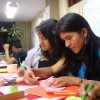
In Latin America, Closing the Gender Gap Brings Fresh Challenges
Over the past four decades in Latin America and the Caribbean, women have made remarkable strides in education, health, labour, and beyond, with girls now outperforming boys in school, the rate of working women more than doubling in many countries, and female participation rising in politics.
BRAZIL: Boycott of Dam Hearing Shows ‘Radical’ Foreign Policy Shift
Activists opposed to the construction of the Belo Monte hydropower dam in the Amazon jungle say the Brazilian government's decision to boycott an Inter-American Commission on Human Rights hearing represents a "radical" shift in the country's foreign policy.GUATEMALA: Costly Botched Port Ruins Beach Town Economy
"Now it's really dangerous to go out to sea, because of the huge waves. The few who brave it do so to survive," said fisherman Venancio Morales, one of the residents of the Guatemalan beach town of Champerico who have been affected by the construction of an unfinished new port.
Central America Slowly Learning the Value of Disaster Prevention
The growing frequency of weather-related disasters in Central America has led to greater organisational efforts for risk management and emergency response. But during the most recent storm in the region, the fruits of these efforts were still not visible.VENEZUELA: Government Distributes Land to Yukpa Indians
The Venezuelan government's decision to expropriate 25 ranches to distribute 15,800 hectares of land to communities of Yukpa Indians in the northwest of the country partially makes up a long-standing debt to the native group.
NICARAGUA: “We Women Want to Be Heard”
Fátima Hernández, a young Nicaraguan rape victim who has become a symbol in her country in her fight for justice, is now working to help women in a similar situation, and preparing to take her case to the Inter-American Commission on Human Rights.BOLIVIA: Native Protesters Celebrate Law Cancelling Rainforest Road
With victory cheers and predictions of future campaigns in defence of their ancestral territory, indigenous protesters from Bolivia's Amazon jungle region celebrated the new law that banned the construction of the road through their rainforest reserve.
Q&A: “We Are Facing the Threat of a Social and Health Catastrophe”
For Brazilian pediatrician and public health expert Paulo Buss, the worst enemy of health is unemployment. And if unemployment continues to rise, the result will be a global "catastrophe", he told Tierramérica.Permanent People’s Tribunal Sets Up Shop in Mexico
"We have a duty to show what the reality is, and we will do so with complete independence," said French judge Philippe Texier, a member of the Permanent People’s Tribunal, which has opened a chapter in Mexico.« Previous Page — Next Page »


The Week with IPS

NEXT STOP - SDGs
Tracking global progress towards a sustainable world
Tracking global progress towards a sustainable world

