Languages
Sunday, November 22, 2026



News and Views from the Global South
Latin America & the Caribbean
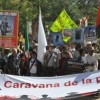
MEXICO: Activists Want President and Drug Lords Tried for War Crimes
Activists are hoping that the International Criminal Court (ICC) will take up a case against Mexican President Felipe Calderón, government officials and drug traffickers and indict those responsible for the violence wracking the country. But this is likely to be a complex and lengthy process.
MEXICO: Deadly Cocktail of Sexual Violence and Impunity
Sexual violence against women in Mexico is on the rise, alongside the escalation of violence between police and soldiers and the drug cartels, women's rights activists warn.ARGENTINA: Women Build New Opportunities in Cooperatives
Forged in the 2001-2002 social and economic crisis, cooperatives in Argentina are becoming a fast track to women's participation in what were traditionally regarded as male spheres.
LATIN AMERICA: How to Prevent ‘Femicide’
Vanina Alderete, an 18-year-old from Argentina, is a survivor of a particularly heinous case of domestic violence: when she was 11, her father killed her mother and her two little brothers and left her seriously injured.
Argentina Inundated with E-Waste
The shop is filled to bursting with buyers. One by one, customers follow a salesperson to one of a row of booths where they are provided with a wealth of information on the mobile phones for sale. But nobody tells them what to do with the old phones they are replacing.
SOUTH AMERICA: Coming Together to Preserve the La Plata Basin
Five South American countries have launched a joint sustainable management programme for the Río de la Plata basin, to preserve one of the largest fresh water reserves in the world.EL SALVADOR: Giving Young Slum Dwellers a Chance
In a country where hard-line policies have failed to make a dent in soaring levels of violent crime, Salesian priest José María Moratalla has produced good results by offering educational and vocational opportunities to juvenile offenders and young people at risk of falling into crime.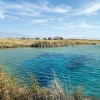
Unique Mexican Oasis in Danger of Vanishing
A rare wetlands ecosystem in the Chihuahuan desert in northern Mexico that may hold key information about the origins of life on earth – and even about possible life on Mars – is in serious danger of disappearing if water continues to be extracted by agribusiness concerns, local scientists warn.
BRAZIL: ‘Pacification’ of Favelas Not Just a Media Circus
The "take-over" of Rocinha, one of Rio de Janeiro's largest favelas, by heavily armed police and military units was seen by some as a media spectacle and by others as part of a successful strategy of regaining state control over an area ruled by armed drug gangs.
MEXICO: Communities Organise Against Spiralling Violence
A pressing concern of Mexican communities today is how to organise against the escalation of violence triggered by the government's militarised war on drugs, and how to counteract the temptation of easy money and other perks offered by the drug trade, especially to young men.
GUATEMALA: Incoming Government Has Its Job Cut Out
One of the highest poverty levels in Latin America, one of the highest murder rates in the world, and much-needed political and tax reforms are some of the pressing challenges that will face Guatemalan president-elect Otto Pérez Molina.
CLIMATE CHANGE-PERU: Rural Women Share Their Trials and Wisdom
"This year the freeze killed my crops, our small livestock died, and now I can't even sleep because I'm worried sick thinking about how to put food on my family's table, since I'm a widow," said Rosaura Huatay, an indigenous farmer in Peru's northern Andes highlands.
COLOMBIA: Student Protesters Demand Quality – and Equality
The "occupation" of Bogotá by students, backed by parents and professors as well as social and cultural sectors, is continuing even after the Colombian government offered to withdraw its controversial bill to reform education if the protests were called off.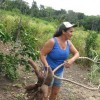
Brazil Commits to Quality Food for All
Representatives of the Brazilian federal and municipal governments and of indigenous, black and riverbank communities and other groups that make the population of this country so diverse assumed a commitment to fight for "the human right to an adequate diet."ARGENTINA: Fighting ‘Machismo’ Is a Guy Thing
An original campaign led by men is getting thousands of men in Argentina to reflect on the abuse of power and commit themselves to helping eradicate violence against women.
Climate Change Arouses Scientific Curiosity in Mexico
Climate change has inspired dozens of scientists at Mexican public universities to conduct research on its effects and seek ways to confront them.
BRAZIL: Proper Nutrition – the Next Food Challenge
Fighting malnutrition is not just about putting food on everyone's table every day, according to Brazil's Fourth National Conference on Food and Nutrition Security, meeting in the capital of the northeastern state of Bahia.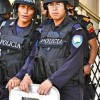
HONDURAS: Purging Schools of Crime
Reports of a purported police network in Honduras engaged in murders, extortion, kidnapping, car theft and drug trafficking prompted the government to sack several high-level police officials and ask Congress for help in purging the police at all levels.
ARGENTINA: Digital Revolution Hits Secondary Schools
Every student and teacher has a laptop with Internet connection in half of the public secondary schools in Argentina, even in remote rural villages or on islands.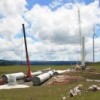
Brazilian Winds Fuel Green Job Creation
The term "green jobs", coined to describe employment that contributes in some way to preserving or restoring the environment, is increasingly entering the vocabulary of companies keen to respond to the social demand for a cleaner economy.
ARGENTINA: Women Gain Budget Know-How
"After so many years of feminist activism, we still hadn't realised that you need money to get things done. When I finally understood that, it was like seeing the light. It was a whole new avenue to explore," Argentine activist Noemí Chiarotti told IPS.« Previous Page — Next Page »


The Week with IPS

NEXT STOP - SDGs
Tracking global progress towards a sustainable world
Tracking global progress towards a sustainable world

