Languages
Thursday, November 26, 2026



News and Views from the Global South
Latin America & the Caribbean
BRAZIL: Using Science and Thinking Small to Relaunch Biofuels
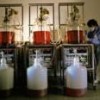
Clean and renewable energy sources are the new "El Dorado" in these times of economic crisis and global warming. While most people, it seems, want to have a car, travel and consume endlessly, the planet is giving us signs that it can no longer withstand a production model based on fossil fuels.VENEZUELA: Opposition Win Key Districts
The followers of Venezuelan President Hugo Chávez are celebrating a sweet and sour victory, because while they won 17 of the 22 states up for grabs in Sunday’s regional elections, the opposition took the most populous and politically and economically important states.MEDIA: Sustainable Development in a Doomed City
The sea encroaching on the streets of this Caribbean resort city in northern Colombia dramatically underlines the challenges that 60 journalists, winners of awards from the Latin American Avina foundation, discussed over the weekend.
CHILE: Women Trade Unionists Find their Own Voices
"When you have a social role, you become aware that you have a right to freedom of thought, that you can question the way things are," 44-year-old Chilean trade unionist Sonia Sagredo, who represents seasonal agricultural workers, told IPS.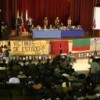
RIGHTS-COLOMBIA: When Terror Wears a Uniform
Herminia Lizarazo did not know what to respond when her seven-year-old grandson told her "Grandma, I want to know what the army is for." The boy, whose two uncles belong to the army in Colombia, wanted to wear a military costume for Halloween.ECONOMY-BRAZIL: Car Industry in Reverse Gear
Although the global financial crisis has not yet triggered a rise in unemployment in Brazil, car industry and related workers are starting to forge strategies for facing severe recession in the sector.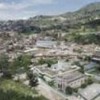
HONDURAS: Inventory of Mitch’s Cultural Destruction
When Hurricane Mitch thrashed Honduras and a large portion of Central America in 1998, the scale of the disaster clouded awareness that the winds and rains had also taken a heavy toll on cultural, artistic and historic heritage.VENEZUELA: Regional Elections Double as National Referendum
In Venezuela, where hardly a year goes by without elections, people will vote Sunday for governors in 22 of the 23 states, and for mayors in 328 of the 335 municipalities. The tough campaign leading up to the ballot has turned the exercise into a new referendum on President Hugo Chávez and his project of "21st century socialism".ECUADOR: Commission Declares Part of Debt “Illegitimate”
The final report of a presidential commission set up in Ecuador to audit the country’s public debt recommended that the government suspend interest payments on "certain portions" of the country’s foreign debt.
CLIMATE CHANGE: Hot Days and Nights in Mexico 2090
Climate change will dramatically increase the number of hot, dry days in Mexico in the coming decades, while coastal regions like the Yucatán, in the southeast, will be swamped by sea levels that are half a metre higher than today, a new study has found.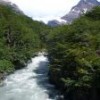
ENVIRONMENT-CHILE: Patagonia Dams On Hold
Environmental groups in Chile welcomed the decision by the HidroAysén energy company to seek a nine-month extension of the environmental impact assessment phase of a controversial project to build five hydroelectric dams in wilderness areas in the south of the country.ENVIRONMENT-ARGENTINA: Still Felling Forests, Despite Law
One year after a law was passed to preserve native forests in Argentina, environmentalists say that deforestation has continued, although at a slower pace. They blame the situation on the government’s delay in creating a compensation fund for provinces that take action against the clearing of forests.CHILE: Women Kick Off ‘New Stage’ in Sports
Chile is hosting the Nov. 19-Dec. 7 Under-20 Women’s World Cup, for which the country renovated four municipal stadiums, in an effort that according to President Michelle Bachelet will mark "a before and after" for national sports.ECUADOR-COLOMBIA: No Thaw in Sight
The cancellation of a meeting between delegates of Ecuador and Colombia aimed at restoring diplomatic ties, which were broken off in March, shows that it will be an uphill battle - especially with the latest round of mutual recriminations this month.
PERU: My Mining Deposits Are Under Your House
"Just imagine you’re told you have to leave your house, your livestock, the graves of your loved ones, and then they take you to an unfamiliar place without even asking you what you think about it. How would you feel?" asks Eduardo Sueldo, the local environment delegate in a highlands village in southern Peru.PERU: Army Chief to Appear Before Anti-Corruption Prosecutor
Peru’s army commander-in-chief, Edwin Donayre, will appear on Nov. 25 before anti-corruption prosecutor Marlene Berrú, who is investigating his alleged responsibility for 80,000 gallons of gasoline that are unaccounted for.
HAITI-DOMINICAN REPUBLIC: Media Unites to Fight Stereotypes
The contrast between Haiti and the Dominican Republic, which share the island of Hispaniola, is nowhere so stark as on its common border.EL SALVADOR: FMLN Starts Out Ahead
As the campaign gets underway, the left-wing Farabundo Marti National Liberation Front (FMLN) is the favourite in the polls for El Salvador’s March 2009 presidential elections.
ARGENTINA: Companies Pocketing Gas Subsidy for the Poor
Companies that produce and distribute liquefied petroleum gas (LPG) in Argentina are benefiting from large government subsidies aimed at bringing down the price of the fuel, which 40 percent of the population depends on for cooking and heating.VENEZUELA: Elections Will Put Chavez to the Test
As if his post were at stake, Venezuela’s left-wing President Hugo Chávez is showing up all over the country at election rallies, caravans, public works inaugurations, nationally televised public events and highly publicised midnight calls to his party’s local offices in remote towns.RIGHTS-PERU: Activists Warn of “Impunity Measures”
The governing party in Peru is working to keep members of the military and police accused of human rights violations committed in the context of counterinsurgency operations out of the courts, on the argument that they are being unfairly targeted by the justice system.« Previous Page — Next Page »


The Week with IPS

NEXT STOP - SDGs
Tracking global progress towards a sustainable world

