Languages
Thursday, November 26, 2026



News and Views from the Global South
Latin America & the Caribbean
MIGRATION: Caribbean Politics Grapples With Dual Citizenship
When Jamaica's chief justice disqualified Daryl Vaz from sitting in Parliament last April, it brought into focus the complications surrounding dual citizenship, not only here but throughout the entire English-speaking Caribbean.ARGENTINA-URUGUAY: Dispute Still Simmering Below the Surface
Although things have settled down, the dispute between Argentina and Uruguay over a paper pulp mill on a border river that has marred the fraternal relations between the two countries for the past four years continues to simmer.Q&A: Masculinity Doesn't Mean Macho
The rules for "being a man" that predominate in Latin America include "never saying no" to temptations out on the street, being "macho" - hanging tough - no matter what the risks, and above all, avoiding any characteristics or feelings that might be seen as feminine or cast doubts on one's masculinity.RIGHTS-COLOMBIA: Where Homophobia Totes a Gun
Homosexuals can remain in the closet and not be noticed, but that is not an acceptable alternative for transgender people who suffer violence to a greater extent in Colombia, where armed combatants in the conflicts too often turn prejudice into murder.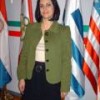
LATIN AMERICA: Changes in Land Use, Changes in Climate
The countries of Latin America have failed to design integrated policies to control the processes of changes in land use, one of the causes of climate change. The region produces 12 percent of the world's emissions of greenhouse gases, which are driving up the planet’s average temperatures and changing the climate around the globe.DEVELOPMENT-LATAM: The Greater the Solidarity, the Lower the Cost
Football in Belize does not aim for international achievements, but that does not matter to the environmental group that uses the sport to recruit children and young people to fight for the protection of local biodiversity under threat.
LATIN AMERICA: Indigenous Reporting – Between Activism and Professionalism
Indigenous journalism would seem to be in a stage similar to what environmentalism experienced a few decades ago: born of necessity and protest, it is caught in a constant state of tension between activism and professionalism.Q&A: “Young People Are Invisible Until They Become a Problem”
Latin American and Caribbean countries with specific laws and policies on young people must now move on to concrete actions, international consultant Dina Krauskopf told IPS in this interview.
DEVELOPMENT-LATAM: Solutions from Below
The global financial crisis has not demoralised those involved in community projects throughout Latin America and the Caribbean who took part in ECLAC’s fourth social innovation fair, which ended Friday in this city in northwest Colombia.LATIN AMERICA: Indigenous Journalists Plant a Seed
Journalists from indigenous communities in Colombia, Ecuador, Venezuela, Peru, Guatemala and Bolivia came together in La Paz to take the first step towards creating a network to work together and support each other.RIGHTS-PERU: Leftist Leaders Targeted by Anti-Terror Police
Based on information from a laptop computer belonging to Colombian guerrilla leader Raúl Reyes, Peru’s anti-terrorism police have requested arrest warrants for 14 leftist politicians and trade unionists from Peru for supposed ties to Colombia’s FARC guerrillas.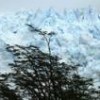
ARGENTINA: Frustration Over Veto of Glacier Protection Law
The decision by the administration of Cristina Fernández to veto a law to protect Argentina's glaciers - important reserves of freshwater - has caused deep concern among scientists and environmentalists who participated in writing the legislation.PARAGUAY: Uncontacted Ayoreo Threatened by Deforestation
Large swathes of native forest have been turned into pasture land in the northern part of Paraguay’s semi-arid Chaco region, as large Brazilian cattle ranchers expand their property in this country.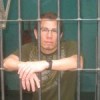
Q&A: "I Can't Be a Lifelong Suspect"
The prosecution in Peru has asked for a 20-year prison sentence for Roque Gonzáles La Rosa, a member of the now dismantled Peruvian chapter of the Continental Bolivarian Committee (CCB), inspired by the policies of left-wing Venezuelan President Hugo Chávez.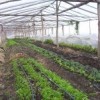
SOUTH AMERICA: Young People Want to Give Farming a Chance
Unlike so many in their grandparents’ generation, today’s young farmers in South America’s Mercosur trade bloc say they want to live off the land where they were born, and not move to cities where there is no longer a place for them.
COLOMBIA: Financial Scandal a Hurdle to Uribe’s Re-election
Five thousand people chanting anti-government slogans in the Colombian capital’s central Bolívar Square reflected the sharp fall in popularity of right-wing President Álvaro Uribe, whose bid to reform the constitution to allow him to run for a third term in 2010 has suffered serious setbacks in Congress.
LATIN AMERICA: Future of Private Pension Funds in Doubt
Pension funds in Latin America have suffered sometimes drastic losses as a result of the global financial crisis. Argentina decided to nationalise its private pension funds, and in Chile, Colombia and Mexico there are voices urgently calling for reforms.RIGHTS-JAMAICA: Lawmakers Vote to Retain Death Penalty
In the end, not even an appeal from the internationally respected South African Archbishop Desmond Tutu made a difference.PARAGUAY: Mixed Results for Lugo’s First 100 Days
Amid social demands, political conflicts and uncertainty over Paraguay's economic future, President Fernando Lugo has completed the first 100 days of his term, during which positive achievements have been made in the fields of health and fighting corruption.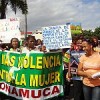
DOMINICAN REPUBLIC: Marching Against Machismo
Raising their voices in agreement with the declaration over the loudspeaker that "machismo kills", hundreds of Dominican women, carrying banners and roses, ended a march through the streets of Santo Domingo Tuesday in front of the Supreme Court Building, protesting the rising level of murders of women.
RIGHTS-ARGENTINA: Children of the ‘Disappeared’ Tell Their Stories
For the first time, the life stories of children of people forcibly disappeared by Argentina’s 1976-1983 dictatorship have been compiled in a book that sheds light on their experiences.« Previous Page — Next Page »


The Week with IPS

NEXT STOP - SDGs
Tracking global progress towards a sustainable world

