Languages
Saturday, November 28, 2026



News and Views from the Global South
Latin America & the Caribbean
BRAZIL: Ethanol Divides Agribusiness
The expansion of sugarcane farming to produce more ethanol in Brazil has run into unexpected resistance in Rio Verde, a prosperous town in the central state of Goiás, and it is coming from agribusiness leaders.GUATEMALA: Elections Hold Out Little Hope for Women Victims of Violence
Although they have taken a tough stance on crime, the leading candidates for Sunday’s presidential elections in Guatemala have not specifically addressed the serious problem of violence against women, which has cost at least 322 lives so far this year, nor have they proposed concrete measures to combat it.PARAGUAY: Oviedo’s Release Will Weaken Opposition Candidate
The release of former army chief Lino Oviedo in Paraguay will weaken the presidential candidacy of former Catholic bishop Fernando Lugo, the front-runner in the polls for the April 2008 elections, say analysts and politicians.RIGHTS-GUATEMALA: Genocide Plans May Be Declassified
Guatemala’s Constitutional Court must decide whether or not to declassify documents from 1982 and 1983 military operations commanded by then dictator José Efraín Ríos Montt that would shed light on the genocide committed in this Central American country.VENEZUELA: Not Even Funerals Safe from Flying Bullets
At the wake of Yeison Mendoza, a 25-year-old construction worker shot dead in Petare, a poor neighbourhood on the eastside of the Venezuelan capital, prayers, tears and flowers set the atmosphere until hooded gunmen on motorcycles fired a hail of bullets into the Zambrano funeral parlour, killing three people and wounding another five.
COLOMBIA: Foster Families Help Child Fighters Rejoin Society
"I took in a 14-year-old boy. I did it for Colombia, for peace. These children need another chance, to be able to live and grow up as decent citizens," says Maria*, a 29-year-old mother of three.ARGENTINA: Finally, a Marine Preserve
Argentina's first marine and coastal park, which is to protect rich biological diversity in the southern province of Chubut, is awaiting legislative approval.MEXICO: Key Video Evidence Blocked in Child Sex Ring Trial
Prosecutors in a case involving the sexual abuse of children in Mexico have failed to hand over to the courts 10 video recordings and 70 photos that show the accused, who claims to have friends in high places, in compromising circumstances with minors.RIGHTS-CHILE: Baby Steps, But Progress Nonetheless
Human rights groups in Chile are celebrating legal rulings in favour of victims of the 1973-1990 dictatorship of General Augusto Pinochet, and announcements by President Michelle Bachelet in the same vein. But they are critical of the slow pace of justice and the amount that still needs to be done.EL SALVADOR: Two Cheers for Democracy (None for Politicians)
Rafael Nieto, a barman in the Salvadoran capital, says that the institutions in his country do not work, lawyer Nelson Recinos maintains that "the normal thing here is to break the law," and shopkeeper Ana Menjívar says the political parties "don’t represent the wishes of the people."RIGHTS-EL SALVADOR: Death Squads Still Operating
Recent arrests of police officers in El Salvador accused of committing extrajudicial executions have encouraged human rights activists and experts who have long reported the continued existence of death squads in this Central American country.BRAZIL: Sports, Not Overprotection, for the Disabled
Sports competitions for the disabled help parents and educators overcome the pitfalls of overprotection. Ten-year-old Andrea began swimming as a toddler, and trains twice a month in the ocean. Her mother says she has never been given special treatment, even though she has been blind from birth.
PERU: Distribution of Earthquake Aid Under Scrutiny
Mayor Juan Mendoza seems perfectly at home. "Juanito, I need a coffin," "Juanito, we need tents in my barrio," "Juanito, the food’s run out in my neighbourhood," local residents clamour as they cluster around him.
BRAZIL: Bittersweet Sugarcane
The sugarcane workers in this small Brazilian town ate at least 200 of the little roasted wild birds. But they had not hunted them. They merely collected the roasted bodies of the birds that died in the controlled fire set in the cane field.BRAZIL: Plebiscite Against Privatisation of Mining Giant
Ten years after the much-criticised privatisation of the Companhia Vale do Rio Doce (CVRD), Brazil’s largest mining company, some 200 civil society organisations are attempting to undo the process, which is also facing a number of court challenges.ARCHITECTURE-MEXICO: Skyscraper Has Feet of Clay
The Mexican capital’s leftwing government wishes to celebrate the 200th anniversary of the country’s independence by sponsoring the building of the tallest skyscraper in Latin America, on prime residential land beside the emblematic Chapultepec Park, to house the offices of wealthy corporations.RIGHTS-BRAZIL: ‘Quilombos’ Fight Exclusion
More than a century after the abolition of slavery, Brazil still has small remnant "quilombos", free settlements created by fugitive African slaves in the 17th and 18th centuries.
PERU: Little Help for Slum-Dwellers Left Homeless by Quake
"We have come here because God sent us," says pastor Pedro Leyva Díaz. He looks tired after distributing food, clothes and sweets in dozens of poor communities devastated by the earthquake in southern Peru.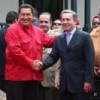
COLOMBIA: Chavez Brokers Pact for Gov’t-FARC Talks
Venezuelan President Hugo Chávez’s efforts to broker a humanitarian agreement for the release of hostages held by Colombia’s guerrillas have already begun to bear fruit.ECUADOR: Constituent Assembly to Deal with Mining Conflicts
A solution to the ongoing confrontations between mining companies and rural communities in Ecuador is likely to be left up to the constituent assembly that will begin to rewrite the country’s constitution in October.BOLIVIA: Unequal Battle Against Hunger
In the crowded Bolivian barrio of Achachicala, Salvation Army pastors and volunteers are fighting malnutrition by feeding 500 children on less than 50 cents of a dollar per meal.« Previous Page — Next Page »


The Week with IPS

NEXT STOP - SDGs
Tracking global progress towards a sustainable world

