Languages
Saturday, November 28, 2026



News and Views from the Global South
Latin America & the Caribbean
ENVIRONMENT-MEXICO: Green Plan to Cut Smog
The Mexico City government announced new environmental measures Thursday aimed at further restricting traffic, the main culprit for the city’s notorious smog. The plan is also to streamline the city’s chaotic traffic, in the face of warnings from experts of a total collapse of the system by 2010.BRAZIL: City Residents Want to Know ‘How Are We Doing?’
A civil society movement in Bogotá, Colombia has become a model for Brazilians who want to restore quality of life in the country’s two largest cities, by changing the political practices of city governments through mechanisms for communication and citizen oversight.TRINIDAD: Condom Machines the Latest Front in AIDS War
Among the frequently asked questions on the website of the National AIDS Coordinating Committee (NACC) in Trinidad and Tobago is one dealing with the use of condoms in the fight against HIV/AIDS.ARGENTINA: Expansion of Agricultural Frontier Endangers Native Communities
Encroached upon by the expanding agricultural frontier and facing the indifference of the state, indigenous communities in the northeastern Argentine province of Chaco have problems of access to water, food and their natural medicines, and are heading towards extinction.
LATIN AMERICA: Careful with the Toys
Between one-quarter and half of the toys in the hands of girls and boys in many Latin American countries are contraband items and many contain substances that are dangerous to human health.COLOMBIA: New Videos Shed Light on Palace of Justice Massacre
Judge Carlos Horacio Urán walked out of Colombia’s Palace of Justice alive after it was seized by guerrillas in 1985. But his body was found inside the building when the 27-hour siege came to an end.BOLIVIA: Polarisation Reaches Boiling Point
A 24-hour business strike called by opponents of leftist President Evo Morales in six of Bolivia’s nine departments or states was the latest demonstration of the polarisation dividing the country.SOUTH AMERICA: White Collar Criminals Slip Through Legal Loopholes
The snail’s pace of justice and large gaps in the criminal codes of Argentina, Paraguay and Uruguay are the biggest hurdles to cracking down on financial crime in general, and bank fraud in particular, lawyers and anti-corruption experts say.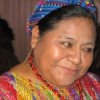
ELECTIONS-GUATEMALA: Rigoberta Menchu Running for the Long Term
The first indigenous woman candidate for president of Guatemala, Rigoberta Menchú, is behind in the polls, but the very fact that she is standing is an important precedent and a sign that the political system is more open, analysts say.LATIN AMERICA: As Citizen Oversight Spreads
Citizen oversight of public institutions and authorities is expanding in various shapes and forms in Latin America, but in order to continue spreading, the public must become more aware of their rights and their ability to take a more proactive stance in guaranteeing them, say experts.CHILE: Rediscovering Nobel Laureate Gabriela Mistral
A treasure trove of poems, letters and personal effects of Chilean poet Gabriela Mistral, which have lain untouched for 50 years, have been donated to the Chilean state and may contribute to a revaluation of the work of the first Latin American woman to be awarded the Nobel Prize for Literature.SOUTH AMERICA: Under the Bolivarian Umbrella
A broad range of social groups in South America have hoisted the Bolivarian banner of Venezuelan President Hugo Chávez. However, they tend to act independently of each other, and say they receive no financial support from Caracas.COLOMBIA: Talks with ELN Halfway to Framework Accord
This week’s round of exploratory talks between the Colombian government and the insurgent National Liberation Army (ELN) in the Cuban capital came to an end Friday halfway to a framework accord for starting formal peace talks. One of the main hurdles to an agreement is the question of verification of the eventual ceasefire.COLOMBIA: Campaign Seeks to Make Water a Constitutional Right
Sixty environmental, indigenous, labour and social organisations in Colombia are carrying out a campaign for a constitutional amendment that would make access to clean water a fundamental right.ECUADOR: Support Grows for Letting Sleeping Amazon Oil Lie
The innovative offer by the government of Ecuador to refrain from exploiting its largest oil reserve, in exchange for international compensation for nature conservation, is attracting increasing support.MEXICO: Dean Highlighted Preparedness as Well as Vulnerability
Hurricane Dean, one of the four strongest hurricanes to make landfall since records began to be kept, demonstrated the high level of development achieved by local disaster prevention and civil protection plans in Mexico, but also the country’s environmental vulnerability, caused by human activities.ARGENTINA: Former Agent of Chilean Dictatorship Released on Parole
Shocked by the release on parole of former Chilean secret police agent Enrique Arancibia, who was sentenced to life in prison for the 1974 murders of Chilean General Carlos Prats and his wife, the attorney representing the Chilean state in that trial told IPS he was considering legal action to get the measure overturned.
ENVIRONMENT-ARGENTINA: Sad Tale of the Tercero River
Argentina's polluted rivers are not limited to Buenos Aires. Wastewater dumping is devastating the second largest river of the central province of Córdoba, the Ctalamochita, or Tercero River.PERU: Anti-Poverty Plan Shrouded In Mystery
Peruvian President Alan García says that one of the pillars of his strategy to radically reduce poverty in his country is a new plan which, although it is fully operational, remains a mystery to the majority of Peruvians.BRAZIL: New Security Plan Combines Prevention and Punishment
After deploying the federal police in Brazil’s most violent cities, the government of Luiz Inácio Lula da Silva is now implementing integrated social policies as the preventive arm of its new public security programme.
ARGENTINA: From Wetlands to Desert, But No One Listening Upstream
The western portion of the Argentine province of La Pampa was a veritable oasis 50 years ago, with natural vegetation, thriving crops and abundant livestock. But the arbitrary management of the Atuel river upstream in the neighbouring province of Mendoza has transformed what were once wetlands and fertile farmland into a desert.« Previous Page — Next Page »


The Week with IPS

NEXT STOP - SDGs
Tracking global progress towards a sustainable world

