Languages
Sunday, November 8, 2026



News and Views from the Global South
Middle East & North Africa
Saudi Troops “Sent into Bahrain”
A Saudi military force of about 1,000 troops has entered Bahrain to help protect government facilities there, according to witnesses and reports citing Saudi sources.
WOMEN’S DAY: An Arab Israeli Woman Fighting on All Fronts
"Every woman is a woman of frustration. Me, I'm just struggle." Hanin Zoabi, 41, is a Palestinian Israeli woman, a fighting woman. An elected member of the Israeli Knesset parliament, she is the first woman on an Arab party's list, Balad.Protesters Converge on Iraq Capital
Hundreds of people have converged on Baghdad's Tahrir, or Liberation, Square for an anti-government demonstration despite a vehicle ban that forced many to walk for hours to the heart of the Iraqi capital.OP-ED: Democracy Is No Panacea
The Egyptian people have every reason to be proud. They have provided the world with a shining example of how to overthrow a dictator within three weeks with hardly any violence - their message of freedom, unity and solidarity will remain for years in the collective memory of the Middle East and the entire world.MIDEAST: Gaza Protesters Prepare for March 15
A look at the Tunisian and Egyptian uprisings that succeeded in ousting long- entrenched dictators confirms a universal truth: it is the youth who are leading the way in forcing reform in the Middle East.Now Gaddafi Makes the Same Mistake
The brutal response by Libyan leader Muammar Al-Gaddafi against pro- democracy protestors in the country indicates his determination not to leave office without a bloody battle, but his moves follow the path that eventually led to ouster of two neighbouring dictators.MIDEAST: Mubarak Name Easier to Erase Than his Legacy
It was easy enough to rename Mubarak Children’s Hospital the Al Tahrir Hospital in Gaza. Not so easy is the task of managing patients who need to cross over to the Egyptian side for treatment, or come back in.
MIDEAST: Train Connections Fail to Bridge
The apex of modern times for one of the world's oldest cities is when what looks like a silvery car glides by. A cruise on Jerusalem's first light rail is a dream of perfection promising to relieve traffic congestion in the city.IRAQ: Protests Spread to Kurdistan
At least one person died and dozens were injured Thursday in Iraqi Kurdistan's second largest city as angry protestors attacked the local headquarters of one of the two ruling Kurdish parties, while an opposition building was set ablaze in the other major Kurdish city.Palestinian Revolution by Default
The Egyptian revolution, and the threat to autocratic Arab regimes all over the region, have forced rapid changes on the Palestinian political scene - with major players Hamas and Fatah scrambling to catch up.
YEMEN: Protest Goes Out With the Candles
Many are baffled that Yemen’s anti-government protests have so far failed to deliver revolutionary regime change. But a complex context here demands a different kind of political dialogue with power.MIDEAST: How Israel Misses Mubarak
As Israel's public television aired live pictures of crowds of elated Egyptians celebrating the ousting of President Hosni Mubarak, the anchor suddenly had a telling twist of tongue.Jordan Feels a Jolt
The wave of political protests that has struck parts of the Middle East and North Africa over the past few weeks has also affected the Hashemite Kingdom of Jordan. The protest movement here, initiated in the wake of the Tunisian Jasmine revolution, underscores the population’s demand for political reform.Hungry Gazans Feed Egyptian Troops
Mustapha Suleiman, 27, from J Block east of the Rafah crossing with Egypt, crosses through gaps in the iron fence on the border carrying bread, water, meat cans and a handful of vegetables for Egyptian soldiers stationed on the other side.
Palestinian Streets Quiet as PA Suppresses Protests
The Palestinian Authority (PA) is using brute force and intimidation tactics - similar to those deployed in Cairo - to suppress pro-Egyptian and Tunisian protests in the West Bank.
MIDEAST: Now Gaza Begins to Shake
Ripple effects of the Egyptian uprising are now spreading to Gaza, where some groups are planning a new rally next week. Moves by some Gazans to mimic protesters in Egypt, Tunisia and Yemen by taking to the streets are making the Hamas government nervous.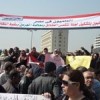
Egypt’s Fate Lies in a Square
Demonstrators who turned up in Cairo's Tahrir Square Friday in even larger numbers than on earlier days are from all walks of life: old men wearing traditional galibiyas, young people in jeans and T-shirts, and women of all ages wearing Islamic head scarves. The protesters, whose numbers across the nation are now estimated at more than one million and growing, shout variations of one slogan: "The people want the fall of the regime!"MIDEAST: Israelis Discover a New Love for Mubarak
Around the world, peoples revel in anticipation of the fall of a regime that has denied its citizens their basic rights. But most Israelis are haunted by nightmare scenarios of 'the day after', as if their country's stability was anchored in the continuity of the rule of Hosni Mubarak – not in peace.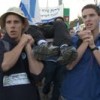
MIDEAST: Israeli Army Battles New Dangers Within
They chant, "One people, one draft!" They raise the flag of unified, across-the- board army enlistment – students and veterans wearing scars of past wars from a few dozen mainstream Zionist civil society organisations and youth movements.Arabs Push for Stability in Lebanon
With political crises in Egypt and Tunisia overshadowing other issues in the Middle East, the appointment of billionaire Najib Mikati as Lebanon’s new prime minister is winning regional support in the hope that the change will minimize instability in yet another Arab country. Many questions are arising, however, about the formation of the new government and how much clout Hezbollah will have over it.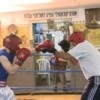
MIDEAST: In the Ring, It’s Peaceful Attack
The opening bell resounds through the bomb shelter turned boxing club located in the western part of the city. A Palestinian boxer swiftly jumps from his corner, moves across the ring, trades punches with his Israeli opponent.« Previous Page — Next Page »





The Week with IPS

NEXT STOP - SDGs
Tracking global progress towards a sustainable world
Tracking global progress towards a sustainable world
