
Monday, October 12, 2026



News and Views from the Global South
Africa: Women from P♂lls to P♀lls

POLITICS-MALAWI: Elections Get Ugly For Women
Malawi’s primary elections are getting ugly for women candidates. Shoving, derogatory songs and being pelted with stones are just some of the intimidating tactics aimed at discouraging women from contesting the primary elections that will select candidates for the parliamentary polls in May 2009.
POLITICS-ETHIOPIA: Disappointed But Not Defeated
She fought alongside men in the Ethiopian liberation struggle. She fought for a free and fair society. But today, Yewubmar Asfaw feels that Ethiopia's revolution has failed to deliver a fair share of political power to women.
POLITICS-ANGOLA: A Tradition of Strong Women
She was orphaned by Angola's liberation struggle against Portugal, but through it she found a new family and a life-long inspiration.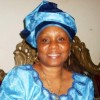
POLITICS-GUINEA: Marching to the Beat of Her Own Drum
Surprises have been a common occurrence in the all-but-common political career that made Kaba Rougui Barry the first female mayor in Guinea since political parties were legalised in 1990.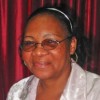
POLITICS-MOZAMBIQUE: Fate and Merit
Two deaths in a row placed Rita Muianga at the helm of Xai-Xai's municipal council. In 2003, council presidents Ernesto Mausse and Faquir Bay died suddenly and successively. Rumours of witchcraft gripped Xai-Xai, a small town 220 kilometres north of Mozambique's capital, Maputo.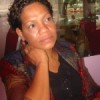
POLITICS-MOZAMBIQUE: The Modern Face of Renamo
If Maria Moreno is elected president of the Municipal Council in Cuamba, in Niassa Province, Mozambique's parliament will lose one of its most interesting personalities.POLITICS-SWAZILAND: Hide And Seek
Swazi gender activists are angry that King Mswati III and the newly elected Parliament have betrayed their hopes, and the Constitution, by not appointing more women to the House of Assembly and the Senate.POLITICS-BENIN: Women Left Out of New Govt
"Every change is a step backwards in this new era. It's disheartening," is Claire Houngan Ayémona's response to Benin's newly-appointed cabinet.
POLITICS-MOZAMBIQUE: Still A Man's Thing?
Only a handful of women are running in Mozambique's municipal elections scheduled for Nov. 19. Among the 111 candidates vying to become president in 43 municipal councils, only eight are women.
POLITICS-MOZAMBIQUE: Ready To Roll
The posters and flyers are ready, and so is Marta Simango. Ready for Nov. 4, when the municipal elections campaign officially kicks off in Mozambique.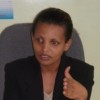
POLITICS-ETHIOPIA: A Career In Dissent
Frozen in disbelief on the steps of the courthouse where she presided as a federal judge, Bertukan Mideksa watched as a man she had just ordered released on bail was detained by plain-clothes police with no warrant and no apparent regard for the law.
POLITICS-ZIMBABWE: Women Demand Movement On Talks
Over 300 women gathered outside the Rainbow Towers Hotel in Harare on the morning of Oct. 27, dressed mostly in black and white. They were there to protest the prolonged impasse over the allocation of Cabinet ministries among Zimbabwe’s rival parties.
POLITICS-SWAZILAND: A Woman With Swagger
The writing is on the wall. "WANTED - Men who Believe that Wives are not for Beating," reads a poster on Nonhlanhla Dlamini's office wall.
POLITICS-MALAWI: The Bold and the Beautiful
The reigning Miss Malawi, Peth Msiska, has hit the campaign trail, not seeking another crown but to be voted into Parliament in her country’s general elections in May 2009.POLITICS-GHANA: The Steep Price of Getting Elected
Mawusi Awity and her husband were willing to jeopardize his military career for her dream of running for parliament in Ghana but there was another price to pay that she could not afford.
SÃO TOMe AND PRINCIPE: A Retro Approach to Politics?
It is lonely at the top – especially when you are one of only two women among 53 men at the National Assembly.POLITICS-SENEGAL: Ms. Mayor, Ms. Prefect
The Sicap Baobab neighborhood, one of the prettiest in the Senegalese capital, stands out, but not for the most obvious reasons. Not for its well-paved roads, or the number of naturalised immigrants from Cabo Verde, Togo or Benin, not for the hustle and bustle of the formal and informal economies.MADAGASCAR: A Difficult Step For Women
The northern region of Diana is known for the beautiful beaches of the Nosy-Be district and the scent of fields of ylang-ylang flowers. But the political landscape of Diana is as extraordinary as its geography: the region's administrative head is a woman, Anjara Mantasara.POLITICS-KENYA: Broken Bodies, Unbroken Spirit
It was a sad occasion, and an occasion to rejoice. Sad, said Dr Ludeki Chweya, introducing Flora Terah's new book, because her heart-wrenching story shows that physical abuse and torture are a weapon of choice to deter women's participation in electoral politics in Kenya.
POLITICS-NAMIBIA: Gender Equality – Making The Numbers Count
Namibian gender activists applaud the goal of a 50/50 split of women and men in government by 2015, but warn that the real work is only just beginning.
POLITICS-GUINEA: "Sheep Who Vote?" Women Say No
Long absent from the top posts in the civil service and under-represented in political parties, Guinean women are calling for changes during legislative elections planned for December.« Previous Page — Next Page »





With democratic elections a fact of life across Africa, the continent now faces a different challenge at the polls: ensuring that women have equal opportunities when running for office, representing their constituents, and casting ballots for future leaders. The Inter-Parliamentary Union notes that women hold an average of just 17.5 percent of legislative seats in sub-Saharan Africa -- a far cry from the 30 percent believed necessary for them to have real influence in parliaments, and further still from the 50 percent that would signal parity had finally been attained. Here, we examine obstacles to women's participation in legislative politics. We also analyse how women -- and men -- are dealing with the problems, so that these difficulties can be relegated to the history books.

The Week with IPS

Tracking global progress towards a sustainable world


This page includes independent IPS news coverage which is part of a partnership with UN WOMEN SARO to strengthen the voice and visibility of "Women in Politics" in the region.
Advocacy Toolkit for Women in Politics

- Planning for Advocacy
- Framing an advocacy message
- Mobilising Resources fot your Advocacy Activities
- Conducting Research
- Networking Tools - Srength in numbers
- Be Media Savvy
- Writing for Media - Opinion and Commentary Pieces
- Key Gender Concepts
- Using the SADC Protocol on Gender and Development as an Advocacy Tool
- One woman's journey in advocacy
