
Tuesday, October 6, 2026



News and Views from the Global South
Africa: Women from P♂lls to P♀lls
POLITICS-BOTSWANA: I Lost the Election, But I Am a Winner
When Kgomotso Mogami threw her name into the hat to contest the Gaborone Central parliamentary seat it was easy for many people to write her off.SOUTH SUDAN: Media Give Us a Fair Deal – Women
The guns have gone silent – except for sporadic conflict in parts of the vast South Sudan region, such as the Eastern Equatoria State. It may not be the absolute end of the conflict in the region, but it is a reason for renewed hope.POLITICS: Malawians Demand Local Councils
In Malawi, local government elections are as rare and endangered as the country’s black rhinoceros.
POLITICS-NAMIBIA: The Struggle Does So Not Continue
They are called the "born frees", the children of Namibia’s Independence, and they will vote for the first time this month. Struggle credentials mean zip to them, and they have a serious beef with politicians.
SWAZILAND: Help Sex Workers – Senator
It is one of the world's oldest professions, dating so far back that it is even mentioned in the Bible. But in the deeply cultural and religious country of Swaziland, Senator Thuli Msane stirred a hornet's nest when she publicly challenged a new strict bill opposing prostitution.POLITICS-MOZAMBIQUE: Victory for Frelimo Amid Claims of Election Fraud
The incumbent, President Armando Guebuza, has won the Mozambican 2009 elections in a landslide, obtaining three quarters of the votes, according to official results.ZAMBIA: Give Us Our Constitution
Pressure is mounting for a new constitution that is inclusive of all citizens' views as the ongoing delays by the body granted to draft it still continues.
AFRICA: Counting on Media for Good Governance
While campaigning in the last election, Margaret Roka Mauwa, Member of the Malawian Parliament, did not promise her voters that when she won she would buy them coffins.
SOUTH SUDAN: Complicating the Vote for Women
In April 2010, the people of South Sudan will vote in a milestone general election, and for the first time, South Sudanese women will be able to participate.
Q&A: Reality Fell Upon Us: Women's Voices Must Be Heard
Fifty-six percent of Rwanda's parliamentarians are women, a manifestation of the active role women have taken in rebuilding the country since the 1994 genocide.EGYPT: Disputes Rise Over Quotas for Women MPs
Disputes have arisen over new legislation setting a quota for female representatives in parliament. Spokesmen for the ruling National Democratic Party (NDP) of President Hosni Mubarak describe the quotas as a milestone for women's rights, but some critics say the move threatens to create more problems than it solves.POLITICS-BOTSWANA: Parties Block Women Candidates for Upcoming Elections
As Botswana prepares for general elections in October, gender activists are protesting against the lack of female parliamentary candidates.
POLITICS-SOUTH SUDAN: Women Ready To Take Their Place
When the women of South Sudan welcomed the signing of the Comprehensive Peace Agreement (CPA) in 2005, they were cognizant of the fact that true democracy will be realised only when their human rights are realised.
POLITICS-SOUTH AFRICA: 'One Miracle at a Time'
The African National Congress comfortably won almost two-thirds of the total vote in South Africa's recent elections, to retain power at the national level and in eight of the country's nine provinces.POLITICS: ‘Women Are Born Leaders’
When Margaret Mensah-Williams walked down the steps after presiding over the Namibian parliament for the first time, male parliamentarians rushed to ask her how she became so good at chairing the house.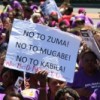
RIGHTS-SOUTH AFRICA: Election Campaign Silent on Violence Against Women
With its emphasis on gender equality, the South African constitution is regarded as a great example for many other developing countries. Yet, despite laws intended to protect the rights of women like the Sexual Abuse Act and the Domestic Violence Act, women in the country still suffer indignities at the hands of police and in court.
POLITICS: Malawi’s Women Challenge For Top Posts
Sitting side by side, clothed in bright traditional outfits complete with headgear, they looked like any of the women who always dance and ululate for politicians at rallies.ETHIOPIA: Political Space Narrowing
Bertukan Mideksa has a reputation in Ethiopia as a competent politician, but voters will not be able to cast ballots for her in the next national election. The revocation of her 2007 pardon has sent a chill through Ethiopia's opposition parties.
POLITICS-KENYA: Taking Up a Women's Agenda
The first woman from the Muslim majority island constituency of East Lamu to contest for a seat in Kenyan parliament, Shakila Abdalla is determined to give voice to the country's poor and marginalised.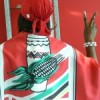
POLITICS-MOZAMBIQUE: Few Women Mayors This Term
Bad news for women: of the eight women running for mayor in Mozambique's municipal elections held on Nov. 19, only three won. Overall, 114 candidates ran for mayor in 43 municipalities.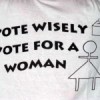
POLITICS-GHANA: The Fruits of the Future
The upside: three political parties selected women as vice-presidential candidates in the general elections of Dec. 7, the first time ever in Ghana’s history. The downside: the parties are small and have no real chance of victory.« Previous Page — Next Page »





With democratic elections a fact of life across Africa, the continent now faces a different challenge at the polls: ensuring that women have equal opportunities when running for office, representing their constituents, and casting ballots for future leaders. The Inter-Parliamentary Union notes that women hold an average of just 17.5 percent of legislative seats in sub-Saharan Africa -- a far cry from the 30 percent believed necessary for them to have real influence in parliaments, and further still from the 50 percent that would signal parity had finally been attained. Here, we examine obstacles to women's participation in legislative politics. We also analyse how women -- and men -- are dealing with the problems, so that these difficulties can be relegated to the history books.

The Week with IPS

Tracking global progress towards a sustainable world


This page includes independent IPS news coverage which is part of a partnership with UN WOMEN SARO to strengthen the voice and visibility of "Women in Politics" in the region.
Advocacy Toolkit for Women in Politics

- Planning for Advocacy
- Framing an advocacy message
- Mobilising Resources fot your Advocacy Activities
- Conducting Research
- Networking Tools - Srength in numbers
- Be Media Savvy
- Writing for Media - Opinion and Commentary Pieces
- Key Gender Concepts
- Using the SADC Protocol on Gender and Development as an Advocacy Tool
- One woman's journey in advocacy
