
Wednesday, October 14, 2026



News and Views from the Global South
Africa: Women from P♂lls to P♀lls
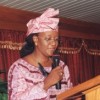
POLITICS-SIERRA LEONE: The Ups And Downs Of Zainab Bangura
Her reputation as a fiery orator is enhanced whenever she takes the podium, her punch softened by her broad smiles and gorgeous attires in West African style.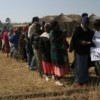
POLITICS-SWAZILAND: Struggling Against Tradition
The crowd ululated, whistled and danced. Their candidate had won! Last Sunday, the people of Mbabane East returned Esther Dlamini to Swaziland's House of Assembly for a second term.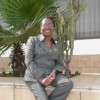
POLITICS-ANGOLA: Boys’ Club No Longer
Something looked very different at the inauguration of Angola’s newly elected parliament, held Tuesday at the Talatona Convention Centre in Luanda, the capital - this is not a boys' club any longer.SOUTH SUDAN: Growing Women's Power in Government
When Sabrina Dario Lokolong, the Speaker of South Sudan's Eastern Equatoria State Assembly, enters or leaves Parliament, all the other members of parliament must stand up.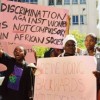
POLITICS-ZIMBABWE: Now To Share Power With Women
The ink was barely dry on the power-sharing agreement signed by Zimbabwe’s main political parties on Sep. 15 when women activists demanded a fair share of power.
POLITICS-ZIMBABWE: Blazing a Trail For Women Politicians
You could spot her easily in the evening newscasts: the only woman among the grey-suited men daily accosted by reporters as they emerged, tense and tight-lipped, from the closed-door meetings.
RIGHTS: Swazi Law And Custom Under Pressure
When the women's movement in the southern African kingdom of Swaziland took to the streets in August to challenge what they called extravagance by the royal family, Swazi traditionalists were livid.
RIGHTS-SOMALIA: Building Women’s Leadership
The moderator raps her pen on the table to hush the boisterous assembly of Somali women gathered in Bagamoyo, on the Indian Ocean coast of Tanzania. Their voices drop for a moment before the sound level rises again to a heated crescendo.RIGHTS-ZIMBABWE: Towards Parity For Women In Politics
In a highly contested election marred by violence and held under very difficult economic conditions, Zimbabwean women politicians defied the odds to participate as candidates in the March 29th elections.
POLITICS-ANGOLA: Ambitious Plans For Women's Participation
Nearly a third of candidates in Angola's upcoming parliamentary elections are female, thanks to a new quota imposed by the government. The 30 percent rule was designed to bring more women into the country's parliament, but as campaigning gets under way, women continue to stay in Angola's political shadows, barely visible at rallies and with few holding senior party positions.
POLITICS-SIERRA LEONE: Women Candidates Progress, But Not Enough
Official results from the July 2008 local council elections in Sierra Leone have been announced by the chairperson of the country's National Electoral Commission. Despite numerous reports of harassment and intimidation, more women were elected to councils than in polls four years ago. But results fell short of the 30 percent representation set by gender activists.
SIERRA LEONE: Activists Angered By Poor Results for Women
Sierra Leone’s women’s advocacy group "50/50" has expressed disappointment at the poor showing of women in the July 5 local council elections.RIGHTS-ZIMBABWE: Women Bear Brunt of Violence
"We are too familiar with the violence that was meted upon numerous of us from 1890 when the colonialists came into our country right up to the most recent elections. Chief among these forms of violence is sexual violence, and it concomitant implication, HIV infection. Zimbabwean women now have the lowest life expectancy world wide because of HIV & AIDS - 34 years."POLITICS-ZIMBABWE: Media Blackout for Female Candidates
For activists campaigning to put more women into Africa's parliaments, the media has become a key battleground. All too often, female candidates are sidelined in election coverage, or reported on in a way that entrenches stereotypes of women rather than analysing the strength of their political and economic policies.POLITICS-ZIMBABWE: "Getting People Participating Is a Process, Not an Event"
Amidst the turmoil surrounding the Jun. 27 presidential run-off in Zimbabwe, it is doubtless something of a challenge to muster enthusiasm for plans relating to the country's next general elections. Gender activists intent on having more women voted into office in 2013 are undaunted, however.
Q&A: "But They Never Killed My Spirit"
On Sep. 7 last year, as she walked to her home, parliamentary candidate Flora Igoki Terah was attacked and tortured by a gang of five men. Terah's case is one of several case studies highlighted in Amnesty International's 2008 report on the state of the world's human rights, released on May 28.
Q&A: 'Development Aid Is No Panacea'
Celine Tan is a Lecturer in Law at the University of Birmingham. Her doctoral research has focussed on development financing, in particular its impact on global governance and international relations.RIGHTS-AFRICA: Security Council Urged to Protect Civilians
As diplomats prepare to leave for Africa where the U.N. Security Council is due to meet next week, calls from activists are growing for strong international action to address the worsening human rights situation in many parts of the continent.
Q&A: "As a Woman Politician in Kenya, You Need to Think Out of the Box"
A coalition cabinet for Kenya was sworn in Thursday amidst mingled relief and exasperation on the part of those living in the East African nation: relief at the possibility of Kenya now being able to rebuild in earnest after post-election violence, and exasperation at the price tag attached to this hope.
Q&A: "I Will Give the Big Boys a Run For Their Money"
She's made her mark in the history books by becoming one of only three women to contest the presidency in Kenya; but, Nazlin Umar won't be taking up residence in State House, at least not during the current political term.
POLITICS: Democracy Unfinished
A new report by the Geneva-based Inter Parliamentary Union (IPU) has shown that women are changing the priorities and sometimes the tone of legislatures around the world. But, it also highlights the slow pace at which the number of parliamentary seats held by women is increasing.« Previous Page — Next Page »





With democratic elections a fact of life across Africa, the continent now faces a different challenge at the polls: ensuring that women have equal opportunities when running for office, representing their constituents, and casting ballots for future leaders. The Inter-Parliamentary Union notes that women hold an average of just 17.5 percent of legislative seats in sub-Saharan Africa -- a far cry from the 30 percent believed necessary for them to have real influence in parliaments, and further still from the 50 percent that would signal parity had finally been attained. Here, we examine obstacles to women's participation in legislative politics. We also analyse how women -- and men -- are dealing with the problems, so that these difficulties can be relegated to the history books.

The Week with IPS

Tracking global progress towards a sustainable world


This page includes independent IPS news coverage which is part of a partnership with UN WOMEN SARO to strengthen the voice and visibility of "Women in Politics" in the region.
Advocacy Toolkit for Women in Politics

- Planning for Advocacy
- Framing an advocacy message
- Mobilising Resources fot your Advocacy Activities
- Conducting Research
- Networking Tools - Srength in numbers
- Be Media Savvy
- Writing for Media - Opinion and Commentary Pieces
- Key Gender Concepts
- Using the SADC Protocol on Gender and Development as an Advocacy Tool
- One woman's journey in advocacy
