Languages
Tuesday, October 27, 2026



News and Views from the Global South
Chile

Valparaíso Blaze Highlights the City’s Poverty
The blaze that tore through the Chilean port city of Valparaíso revealed the dark side of one of the most important tourist destinations in this South American country, which hides in its hills high levels of poverty and inequality.
Chile Graduates in Earthquake Preparedness
Chile appears to have learned a few lessons from the 2010 earthquake and tsunami, and it successfully drew on them the night of Apr. 1, when another quake struck, this time in the extreme north of the country.
Q&A: “Bolivia Marked the Start of a Major Indigenous Awakening”
He describes himself as someone who was drawn to Marxism as a result of his commiseration with the plight of indigenous people in his country, and he is considered one of the most influential Latin American thinkers of the 21st century.
Bachelet to Recalibrate Chile’s Foreign Policy
For the past four years, the foreign policy of Chile, South America’s “miracle”, has focused more on economic than political issues.
Where Would You Like Your New Glacier?
The idea sounds like harebrained science-fiction, but the accelerated retreat of glaciers due to global warming and the effects of mining is leading scientists to seek to restore or recreate these valuable reservoirs of fresh water.
Chileans, Peruvians Unperturbed by State Conflicts
Juan González and Luis Monsalve come from different backgrounds, but have much in common. González, a 40-year-old Peruvian migrant who has lived for the past eight years in Santiago, and Monsalve, a 63-year-old Chilean, agree that border conflicts never benefit ordinary people.
Education Is Key to Bachelet’s Chile
For 14-year-old Isadora Riquelme and thousands of other Chilean teenagers, the chance of getting the university education they want depends on the reforms that Michelle Bachelet has promised to undertake when she takes office as president again in March.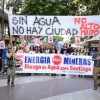
Alto Maipo Project Endangers Santiago’s Water Supply
A hydroelectric project under construction near the Chilean capital poses a threat to the supply of drinking water to more than six million people living in the Santiago Metropolitan Region.
Women Farmers in Chile to Teach the Region Agroecology
An organisation that brings together some 10,000 peasant and indigenous women from Chile is launching an agroecology institute for women campesinos, or small farmers, in South America.
Bachelet’s Promised Reforms Could Face Uphill Struggle
The promised structural reforms to modify the political system inherited from Chile’s 1973-1990 dictatorship and reduce the severe social inequalities in the country propelled Michelle Bachelet to a resounding triumph in the Sunday Dec. 15 runoff election.
More Chileans Want the Benefits of Living in Latin America’s ‘Tiger’
Hugo Hurtado, 47, is a chef. Anyone would say that in his country, Chile, the Latin American “tiger”, his profession would be synonymous with success and even fame. But unfortunately that’s not true.
Bachelet Poised for Easy Win in Fed-Up Chile
Voters fed up with the extremely unequal distribution of wealth and power in Chile are expected once again to elect a centre-left government Sunday.
Visibility from High-Profile Human Rights Inquiries Trickles Down in Chile
Ongoing efforts to determine the causes of the deaths of high-profile Chileans - singer-songwriter Víctor Jara, former presidents Eduardo Frei Montalva and Salvador Allende, and Nobel Literate Prize-winner Pablo Neruda – indirectly bring visibility to thousands of other victims of Chile’s 1973-1990 dictatorship.
Chile’s Mining Industry Turns to Sunlight to Ease Energy Shortage
The mining industry in the north of Chile, the world’s leading producer of copper, is trying to partially satisfy its insatiable appetite for energy with a renewable, ever-available source: the sun.
Pinochet’s lingering political reforms
 The dictatorship headed by General Augusto Pinochet (1973-1990) from start to end systematically dismantled every vestige of “the Chilean path to socialism” that the government of Salvador Allende (1970-1973) had attempted to follow. But it also established political structures that Chilean democracy has not yet managed to eradicate. See the process in the timeline below:
Education: The mother of all Pinochetista reforms
Free, public education is the main demand expressed today by Chilean society, especially the young. The issue is not that Chileans don’t study, or that school enrolment is low. The problem is the growing privatisation of the system, as shown by this graph, and how that has divided students into different categories, in terms of quality of education. It all began with the reforms ushered in by the dictatorship of General Augusto Pinochet (1973-1990).

Pinochet’s Policies Still Rankle in Chile
Sept. 11, 1973 marked the start in Chile of a dictatorship that was synonymous with cruelty. But above and beyond the human rights violations, the reforms ushered in by the regime of General Augusto Pinochet continue to mark today’s Chile – a country of dynamic economic growth but a fragmented society.
Mining in Chile Going Back Underground
Declining mineral content, the need to preserve the environment, and technological advances are causing big mining companies to turn back to underground mining in what is a rising trend in Chile and around the world, experts say.
Chile’s Women Candidates, Not Two of a Kind
"There's something sexist about saying that the candidates are two women. Has anyone ever remarked on it when the candidates are two men?" former Chilean president Michelle Bachelet complained about comparisons between herself and her main rival in the presidential elections, rightwing candidate Evelyn Matthei.
Mining Industry Plans Massive Use of Seawater in Arid Northern Chile
The arid climate in northern Chile has forced mining companies to seek out new sources of water. The main source is seawater from the Pacific Ocean, whose use is expected to increase significantly in the coming decade despite the high costs of extraction and transport.Therapeutic Abortion Faces Political Resistance in Chile
Nearly a quarter century after Chile’s return to democracy, there is still a lack of political will to legalise therapeutic abortion, analysts say, even though Congress is debating several draft laws on the question.« Previous Page — Next Page »





The Week with IPS

NEXT STOP - SDGs
Tracking global progress towards a sustainable world
Tracking global progress towards a sustainable world
