Languages
Wednesday, October 21, 2026



News and Views from the Global South
City Voices: The Word from the Street
AFGHANISTAN: The Cheap Way to Hell
For the last three weeks, 30-year-old Ghulam Nabi has lain in a Kabul hospital bed, suffering. His face is etched with hopelessness, loneliness and despair over the life he once had and has now lost forever.CENTRAL AMERICA: The World’s Most Violent Region
Although the UNDP's Report on Human Development in Central America 2009-2010 says the region has the highest rates of non-political crime in the world, there are nevertheless plenty of opportunities to improve public security, analysts and experts say.ARGENTINA: Through the Lens of Young Slum Dwellers
Two dozen young slum dwellers in Buenos Aires began filming a documentary about themselves this month, in an attempt to break down the negative stereotypes with which they are portrayed in the media.
Q&A: Turin Embraces Moniker of "Multicultural Hotspot"
As the Italian government cracks down ever harder on new waves of migrants, the city of Turin has taken a different approach, reaching out to immigrant communities and embracing a philosophy of economic, social and cultural integration.CUBA: Restoring Historic Santiago for Its People
Even with her house practically in ruins, Isabel García wouldn’t dream of living anywhere else. She’d rather stay where she knows that no matter what corner she turns she’ll always be able to gaze out into the blue sea or raise her eyes up to the green mountains that shelter her beloved city of Santiago, in eastern Cuba.BRAZIL: Olympics in Rio – ‘Happiness’ Trumps Wealth and Technology
Brazil has "the happiest and most creative" people in the world, and deserved this opportunity, Brazilian President Luiz Inacio Lula da Silva said in Copenhagen, celebrating Friday's election of Rio de Janeiro as the host of the 2016 Olympic Games.U.S.: Homeless Shelters Fighting Push from Downtowns
The largest homeless shelter in the southeast U.S., the Metro Atlanta Task Force for the Homeless, has filed a lawsuit against the city of Atlanta claiming officials have undertaken a complex campaign to sabotage the shelter with the ultimate goal of driving homeless, mostly African American men off the streets of downtown.MUSIC: Afro-Brazilians Priced Out of Back2Black Concert
On stage, singer-songwriter Gilberto Gil highlighted Brazil's "genetic and cultural" connection to "Mother Africa," to applause from a predominantly light-skinned audience at a concert that black people generally could not afford - symbolic of the country's "veiled racism" at an international festival organised to combat it.
BRAZIL: Artistic Energy as Antidote to Exclusion
Putting the power of art to the test in extreme situations has become an unintended but necessary task for the Axé Project, a Brazilian non-governmental organisation (NGO) aimed at creating the conditions for street kids and other at-risk children to overcome educational, family and community exclusion.
BRAZIL: Changing Lives Through the Power of Dance
"My family’s lives changed," said Maria Erilma da Silva, a mother of three girls and a teenage boy, listing a whole series of transformations, from changes in eating and personal hygiene habits to "the security of knowing where my daughters are" and even an end to her husband’s frequent drinking binges.
URUGUAY: Development from the Ground Up
Putting people, not the economy, at the centre of development by coordinating and designing initiatives based on the interests of the target populations themselves is the goal of the Support to Territorial Networks (ART) programme, which is growing year after year in Uruguay.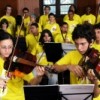
BRAZIL: Music Education Opens Doors to Social Inclusion
"It takes us an hour and 20 minutes to get there. We have to walk, because we can't afford the 30-minute bus ride. But the girls never miss their music classes, not even when they have to go without lunch because they don't have time to eat after school," says their mother, Maria da Cruz.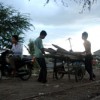
RIGHTS-CAMBODIA: Newest Evacuation ‘Biggest in Decades’
Dozens of families this week started dismantling their homes and moving away from lakeside land in the centre of the capital after giving up on their lengthy struggle to remain. By the end of the eviction process at this site, around 30,000 people will have been moved off now-valuable land.
Q&A: A Second Chance – As Advocate for Women Migrants in Argentina
In her 48 years, Natividad Obeso has already lived several different lives. There was the time when she lived in her native Peru as a successful businesswoman and mother of four. Then there was the time when she spent her days wandering the streets of the Argentine capital, penniless and alone, a fugitive of political persecution that she never understood.PARAGUAY: Soft, Slow, Shabby Justice
Five years after the tragic fire that destroyed the Ycuá Bolaños supermarket in the Paraguayan capital, leaving a death toll of 400 people, the courts at last confirmed the prison sentences of the four principal defendants, although compensation for survivors and victims' families has still not been decided.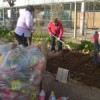
CHILE: The Environmental Fight Starts in Your Neighbourhood
A working-class neighbourhood on the outskirts of the capital, which stood united against the dictatorship of General Augusto Pinochet in the 1970s and 1980s and today is doing so against climate change, is launching the country's first "ecobarrio" project.GUATEMALA: Impunity, Corruption Drive Wave of Kidnappings
Byron Ranulfo Rustrián was just 12 years old. He loved playing football and was a good student. On Jul. 23, a group of youngsters he didn't know invited him to play a match and he agreed, but it was a trap: he was kidnapped and his body turned up five days later.
CULTURE-URUGUAY: Music to All Ears
Taking in a classical music concert, learning to make films or attending a literary workshop are no longer activities reserved for the elite in the Uruguayan capital. In addition to the existing initiatives offered by the city government, a new project is under way to promote cultural production and recreation among the poor.ENVIRONMENT-US: Urban Farms Take Root
Juxtapose the word urban in front of farm and there’s bound to be a lot of head scratching. But in cities around the U.S. small-scale farms and garden plots are coming to life in unlikely places. Abandoned city lots, and neglected yards are being converted into vegetable gardens - as basic food literacy becomes part of the vocabulary of city dwellers.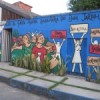
BRAZIL: Bringing Community Mental Health to the Poor
Zilá Ferreira and Juraci Lisboa were in the grip of depression since 1996 – the former over the death of her mother, and the latter because she was "abandoned with seven children under 14."
PARAGUAY: Indigenous Squatter Communities Organise Self-Help
Indigenous families living in a squatter settlement on the outskirts of the Paraguayan capital are organising themselves, and now have a community soup kitchen and are producing and selling handicrafts. They don't want to return to panhandling on the streets of Asunción, so far from their home villages.« Previous Page — Next Page »





The Week with IPS

NEXT STOP - SDGs
Tracking global progress towards a sustainable world
Tracking global progress towards a sustainable world
