Languages
Wednesday, October 7, 2026



News and Views from the Global South
Conflict Prevention - Africa
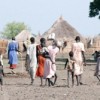
SOUTH SUDAN: Making of a Nation still Holding on to the Past
The five children of Mary Muwombi have grown up in the war of south Sudan. It was a harsh existence - living on the brink of death and eating whatever they could find just to survive.POLITICS-AFRICA: Seeking a Democratic South Sudan
The atmosphere is heavily charged with political tensions, alliances are already in the offing, expectations are high and the pressure for the country to achieve a successful transition from an interim government to a democratically elected one is immense.
SOUTHERN AFRICA: Human Rights Day Honours Non-discrimination
While waiting in one of those interminable queues at a South African state hospital, Jullian Nwadu was asked when she was going back to Zimbabwe. "In December," she answered, welcoming what seemed like a stranger’s attempt at making friendly conversation. "When you go, you mustn’t come back."
RIGHTS-ZIMBABWE: Mugabe Orchestrated Rape – AIDS-Free World report
"When the tenth man finished raping me they said they were going to rape my daughter. I cried out but I could not even stand up at this time...they raped my daughter (while) I was there and I couldn’t do anything to stop them. My daughter was five years old..."
UGANDA: Mob Justice Increases as Court Backlogs Escalate
Sam Kubo had gone to lease out his 600 hectares of land in Kayunga district. But instead he went to his death.ETHIOPIA: New Election Code Sparks Furore
Opposition parties are troubled by what they say is government’s strategy to keep them out of the general elections in May 2010.
WATER-ZIMBABWE : New Wells Protect Environment, Build Peace
Twenty years ago, Isaac Chidavaenzi would worry when his neighbours set up vegetable gardens on river banks, trying to get closer to water sources. The number of gardens on the rivers' banks has now decreased, but Chidavaenzi is even more worried.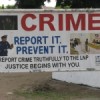
LIBERIA: When the Mob Prevails
It was past midnight when Carroll Johnson was woken by angry shouting in his suburban neighbourhood of Fiamah. Around the corner a frenzied crowd with sticks had gathered in the darkness, and now stood menacingly over an armed robber called 'Bush Cat'.AFRICA: Climate Change ‘is a Security Issue’
Africa is the canary in the mine of global security, as climate change threatens to redraw the maps of the continent and the world.
NIGERIA: Slow Start for Niger Delta Amnesty
Nigeria’s president Umaru Yar’Adua is embarking on an ambitious move to end armed insurgency in the country’s oil-rich Niger Delta region.
DRC: Respect and Protect Civilians
A government offensive against rebels in the eastern Democratic Republic of Congo that began in January has dramatically increased sexual violence in the provinces of North and South Kivu.KENYA: Govt Fails to Keep Word on Tribunals
The Kenyan government has reneged on its commitments to call on independent, international tribunals to try perpetrators of 2007 post-election violence. This move is being criticised by Human Rights Watch (HRW), a New York City-based organisation that advocates against human rights abuses.
SIERRA LEONE: Radio Stations Banned
Two Sierra Leonean radio stations have been stripped of their licences. The national regulatory body, the Independent Media Commission (IMC), says the stations failed to comply with the country's media code.
RIGHTS-UGANDA: ‘Our Mission is To End Impunity’ – Moreno Ocampo
On a visit to Uganda, Luis Moreno Ocampo, prosecutor for the International Criminal Court (ICC) has again called for joint action by governments in the region to arrest the top commanders of Ugandan rebel group, the Lord's Resistance Army (LRA).
RIGHTS-AFRICA: AU Heeds Perpetrators Not Victims
The final day of the African Union summit has been dedicated to the issue of the arrest warrant issued by the International Criminal Court against Sudanese president Omar al-Bashir, charged with seven counts of war crimes and crimes against humanity, including murder, rape and torture.
RIGHTS-UGANDA: You Are Worth Nothing
Widespread gender-based violence against women and children in the conflict zones of the Great Lakes region has received some attention in recent years; less well-known is the extent of sexual violence against men.
POLITICS-SUDAN: 'Darfur Was Just A Place Where Evil Lived'
Analysing the colonial and historical roots of the violence in Darfur, Mahmood Mamdani concludes that the crisis in Darfur is not genocide, but a fight for land, triggered by drought, which has been racialised by outside powers.
POLITICS-DRC: Debate Over Truth Commission
The search continues for the best way to expose the truth surrounding crimes committed in the Democratic Republic of Congo (DRC), not least in Ituri, in the north-east of the country, a region which where years of atrocities and massive human rights violations have gone unpunished.SIERRA LEONE: Knuckling Down To Heal Political Wounds
Incitement and violent clashes continue to shackle the government of Sierra Leone that took office two years ago. The elections were marred by reports of assassination attempts; violent confrontations between party militants; burning and looting; and widespread intimidation of voters.
RIGHTS: Against Sexual Violence: Solidarity Among African Women
Increased cases of rape and sexual abuse of women and girls is closely associated with armed conflict and its aftermath in Africa.AFRICA: Women's Bodies Have Been Battlefields
Religion, cultural norms and tradition promote discrimination and unequal power relations between men and women in Africa. Akina Mama wa Afrika's Christine Butegwa doesn't hesitate when asked what explains the horrific levels of sexual violence against women in conflict-affected areas on the continent.« Previous Page — Next Page »





The Week with IPS

NEXT STOP - SDGs
Tracking global progress towards a sustainable world
Tracking global progress towards a sustainable world
