Languages
Wednesday, November 18, 2026



News and Views from the Global South
COP31
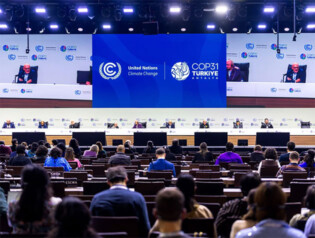
COP31: Johan Rockström Warns of Climate Tipping Points and Efforts to Sideline Science
The world is moving dangerously close to irreversible climate tipping points, making urgent action to reduce greenhouse gas emissions more critical than ever, warns Johan Rockström, Director of the Potsdam Institute for Climate Impact Research. He argues that protecting forests and accelerating emissions reductions must go hand in hand to prevent further warming and preserve the planet’s natural capacity to absorb carbon dioxide.
Indigenous Leader Warns Energy Transition Risks Turning Their Territories Into ‘Sacrifice Zones’
Indigenous communities risk paying a heavy price for the global shift to clean energy unless governments involve them in decision-making and protect their ancestral territories, an Indigenous leader from Brazil has warned.
New Working Group Seeks Justice for Critical Mineral Mining Communities
A coalition of African civil society organisations, representatives from the Africa Institute of Resilience Studies (an independent organisation working in research, policy, training and capacity development), and representatives from the Bank–Civil Society Coalition, which brings together seven major regional networks and civil society organisations working on climate and energy, have launched the African Non-State Actors Working Group on Critical Minerals on the sidelines of COP 31 in Antalya, Türkiye.
Africa Makes Some Gains but Faces Major Setbacks at COP31
Today (November 15) marks the second week of negotiations at the United Nations climate summit in the resort city of Antalya, Turkey.
Time to Home
Somewhere tonight, a family that lost its home to the water is asleep in a school gymnasium. The tent, the blankets and the first meal arrived within hours. But a secure home will take years. Every climate disaster ends with the same question, and few climate budgets have a line for it: where will we sleep tonight?
COP31: National Oil Companies Must Lead Global Shift Away from Fossil Fuels, Says NRGI Expert
The shift away from fossil fuels is made more difficult by the powerful, often overlooked role of national oil companies. These companies are deeply embedded in their countries’ economies and political systems.
‘Africa Cannot Burn Its Way Out of Its Waste Crisis’, Zero-Waste Advocates Say at COP31
Plans to build waste incineration plants across Africa risk undermining efforts to curb methane emissions, zero-waste campaigners have warned, as world leaders and climate negotiators gather in Antalya, Türkiye, for the COP31 climate summit.
COP31: New Research Ties Extreme Weather and Mental Health Challenges in Africa
Floods. Extreme heat. Droughts. African communities have experienced it all and more.
COP31: Why Africa Must Rethink Nuclear Energy
Gabriel Sheunopa Manyangadze holds a placard reading “No nuclear spin, let renewables win" as a campaigner leads protesters against nuclear energy in Africa at the United Nations climate summit in Antalya, Turkey.
COP31: African Development Bank to Co-Lead Global Electrification Finance Initiative
Africa's transition to clean energy received a potential boost at COP31 with the announcement of a new international financing coalition, co-chaired by the African Development Bank (AfDB) and World Bank from 2027.
Without Action, Climate Change Could Push Women Further Behind by 2050, CGIAR Warns
Fetching water was once a back-breaking daily reality – one that Nomuhle SibandaMpofu will never forget.
Drought Cripples Dairy Farmers in Maharashtra in ‘Off the Charts’ Weather Year
Dairy farmer Sagar Pawar has to buy water and fodder at inflated rates to feed his brood of two buffaloes, three Guernsey cows and a calf. He lives in the Solapur district, which is already drought-prone, but now has to deal with the impacts of a strong El Niño as well.
COP31 Litmus Test for International Cooperation
As the world heads toward COP31 Türkiye starting this week, I’ve been reflecting on how I think COP31 could prove to be a more revealing "Transition COP”. Let us remember that the Paris Agreement came from a series of "institutional heartbeat” COPs – NOT from annual blockbuster headlines.
Kenya’s Civil Society Calls on COP31 Climate Negotiators To Draw From Grassroots
As the world prepares for the 31st United Nations Conference on Climate Change (COP31) in Antalya, Türkiye, Kenya’s priorities for the negotiations are being shaped by lived experiences of communities who are on the frontline of the climate crisis.
Wealth Buys Protection in Climate Crisis – Oxfam
The world’s wealthiest people are driving a disproportionate share of climate pollution while poorer communities bear the heaviest costs of floods, heatwaves, food insecurity and other climate disasters, according to a new report by Oxfam International.
Pacific Scientists Build a Regional Picture of a Changing Ocean
The Pacific Ocean connects thousands of islands, and understanding how ocean acidification is unfolding across the region requires more than individual research projects or monitoring stations.
The Sámi People and Reindeer Herding – a Struggle for Sápmi’s Whole Nature
The Sámi, Europe's last recognised Indigenous community, have faced threats to their existence throughout history. Norway, in 2024, apologised for its forced assimilation policy following the findings of a Truth and Reconciliation Commission report, and in September 2026 Sweden has recently been told to do the same.
From Small Islands to Antalya: COP31 Must Move Climate Promises from Paper to People
When you grow up on a small island, the ocean is not scenery. It is your neighbour, your livelihood, and the measure of time itself. For decades, as I walked the beaches of Seychelles, I watched the subtle shifts that scientists were warning the world about. The tide crept a little higher up the sand each year. After a warm season, vibrant coral gardens turned ghost-white. Storms that once belonged to rare memory began arriving with unsettling regularity.
As El Niño Returns, East Africa’s Urban Poor Brace for Heavy Rains
Nearly three decades have passed, but Japhet Gimbi still remembers the rain. He was a Form 2 student in Tabora, western Tanzania, when the 1997 El Niño flooded the town. As the rain kept falling, fewer students made it to school. That was a super El Niño, one of the strongest on record. Since then there have been five other events including the 2014-2016 "super El Niño".
Afro-Brazilian Religious Communities Face Mounting Discrimination Amid the Climate Crisis
In 2024, as floodwaters approached Lutalo Canti’s home in Porto Alegre, Brazil, he lifted some furniture off the floor and left in a hurry. Extreme rainfall in the country’s southern region had caused local rivers to overflow. The flooding would eventually reach more than 400 municipalities and impact over 2 million people.
Finding Silver Linings Amid Haze of Climatic Uncertainty
With the city enveloped in a cloak of haze, the urgency of tackling the climate crisis could hardly have been clearer as the four-day Global Tipping Points Conference 2026 drew to a close at Malaysia’s Sunway University on Thursday.Next Page »


The Week with IPS

NEXT STOP - SDGs
Tracking global progress towards a sustainable world
Tracking global progress towards a sustainable world
