Languages
Thursday, July 2, 2026



News and Views from the Global South
Corruption
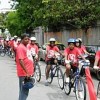
POLITICS-MALAYSIA: Protestors Pedal to Parliament, Brave Police
Dozens of cyclists promoting workers' rights are on an extraordinary odyssey across the country, scheduled to climax with the handing over of memorandums in Parliament on Thursday.POLITICS-MALAYSIA: Badawi’s ‘Toothless Bills’ Harm Reform Agenda – Critics
By tabling two of three reform bills, Prime Minister Abdullah Badawi has shown his hand and, not surprisingly, both have run into strong opposition within and outside parliament.IRAQ: Looking After Pockets, Not Patients
A nurse at Baquba General Hospital asked Ahmed Ali, who co-authored this report, for a bribe to look after his sick baby. It was hardly an exceptional demand. Patients around Iraq have begun commonly to speak of the need to bribe medical staff to get some form of care.POLITICS: Thai Elites Install Their Man as Premier
Almost a year after his party suffered its third consecutive electoral defeat, Abhisit Vijjajiva rode to victory to become Thailand’s new prime minister, the third this year. It was not a choice of the voters, though.POLITICS: Thailand’s Poor Discover Vote Power
Prateep Ungsongtham recalls a vastly different mood a decade ago when she tested the political pulse of the urban poor living in Klong Toey, Bangkok’s largest slum.RIGHTS-CAMBODIA: New Laws May Curb NGO Activity
Cambodia could be the latest Asian country to adopt tighter laws governing the activities of local and international non-governmental organisations (NGOs) - a move many believe will put further pressure on the country’s already fragile democratic space.POLITICS-THAILAND: Business as Usual – Parliamentarians for Sale
A group of leading politicians head for a secret meeting with the powerful army chief as part of a plot to form a new government. But their plans go awry when they get lost in the sprawling military compound.HEALTH-ZIMBABWE: Shady Dealings With Antiretrovirals
The current political and economic crisis in Zimbabwe is dealing a blow to the provision of free treatment and care to people living with HIV/AIDS (PLWHAs).EUROPE: And the Lobbying Award Goes To…The Worst
An unconventional awards ceremony was held in Brussels Dec. 9. The 'Worst EU Lobbying Awards' gave recognition to those corporate interest groups that have resorted to deceptive tactics while seeking to shape legislation in their favour.SRI LANKA: Oil Hedging Deal Turning Into Billion-Dollar Scam
As global oil prices dive, the Sri Lankan government finds itself saddled with a complicated oil hedging deal with two foreign banks that could cost the country close on one billion US dollars and has brought charges of high corruption upon state officials.POLITICS-THAILAND: Court Gains No Glory by Banning Ruling Party
The recent judgment by Thailand’s Constitutional Court confirmed the power it has to sack a politician or party found guilty of election malpractice, even if it smacked of the kangaroo courts of neighbouring, military-ruled Burma.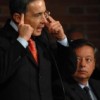
COLOMBIA: Financial Scandal a Hurdle to Uribe’s Re-election
Five thousand people chanting anti-government slogans in the Colombian capital’s central Bolívar Square reflected the sharp fall in popularity of right-wing President Álvaro Uribe, whose bid to reform the constitution to allow him to run for a third term in 2010 has suffered serious setbacks in Congress.PARAGUAY: Mixed Results for Lugo’s First 100 Days
Amid social demands, political conflicts and uncertainty over Paraguay's economic future, President Fernando Lugo has completed the first 100 days of his term, during which positive achievements have been made in the fields of health and fighting corruption.SRI LANKA: Oil Futures Gamble Burns 300 Million Dollar Hole
The Sri Lankan government is grappling with a costly 300 million dollar payout to Citibank and Standard Chartered Bank (SCB), following a disastrous oil futures contract between the banks and the state-owned Ceylon Petroleum Corporation (CPC).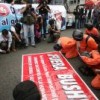
LABOUR-PERU: Protest Against Bush and Alan Garcia
A demonstration in the Peruvian capital by left-wing political movements against U.S. President George W. Bush’s visit to the country turned into a protest Friday by hundreds of laid-off workers and trade unions in conflict with local and foreign companies.POLITICS-BANGLADESH: Uncertainty Grips Scheduled Elections
Parliamentary elections in Bangladesh, scheduled for Dec.18, are now slipping into uncertainty with former prime minister Begum Khaleda Zia demanding that a state of emergency imposed by the military-backed, interim government be completely lifted first.PERU: Army Chief to Appear Before Anti-Corruption Prosecutor
Peru’s army commander-in-chief, Edwin Donayre, will appear on Nov. 25 before anti-corruption prosecutor Marlene Berrú, who is investigating his alleged responsibility for 80,000 gallons of gasoline that are unaccounted for.DEVELOPMENT-AFRICA: Governance Still Failing
How can governance be improved to give development a chance in Africa? Political theorist Patrick Chabal believes a role has to be found for traditional methods of accountability to be used alongside formal systems recognised in the West.MEXICO: Kidnapped Migrant Women – Out of Sight, Out of Mind
"I don't see any investigation, only grief and despair," said Heyman Vázquez, a Catholic priest who runs a shelter for migrants on the border between the southern Mexican states of Chiapas and Oaxaca, referring to the recent kidnappings of 20 Central American women by groups of armed men.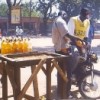
TRADE-CAMEROON: Borders – Where Two Economies Meet
No one pays full price for petrol in northern Cameroon, not when there's cheaper Nigerian contraband available. In Garoua town for example, there are about 4,000 commercial motorcycles which all depend on "zoa zoa" or "federale" as this highly cherished liquid is generally referred to.BULGARIA: Losing Billions to Corruption
Far from succeeding in pressuring Bulgaria to solve its problems with high-level corruption and organised crime, the European Union is forced to watch its aid money drain away into the coffers of shady businessmen well connected with the Bulgarian political class.« Previous Page — Next Page »


The Week with IPS

NEXT STOP - SDGs
Tracking global progress towards a sustainable world
Tracking global progress towards a sustainable world
