Languages
Saturday, October 3, 2026



News and Views from the Global South
East Africa
SOUTH SUDAN: Q&A: Spirits High in South Sudan Despite Unresolved Issues
As South Sudan prepares to cede from the North, it faces tremendous challenges towards building a nation and a sense of nationhood.SOUTH SUDAN: Equitable Oil Deal Needed For Peace
The sharing of oil between North and South Sudan needs to be urgently addressed otherwise conflict between the two regions will escalate and could possibly lead to civil war, according to government officials and rights organisations.
KENYA: Budget Cushions Agricultural Sector Amidst Staggering Inflation
As the country’s inflation rate hits a staggering 14.5 percent – compared to 4.5 percent in December 2010 - Kenyans are struggling to afford basic commodities like maize, amid a shortage of the staple food.
KENYA: People Dying Because of Lack of Anaesthetics
One person dies weekly in Kenya due to a shortage of anaesthetics and the situation is worse in slums and rural areas across the country.SUDAN: Southern Kordofan – A State of Ghost Towns
While humanitarian organisations try to bury the corpses scattered across Southern Kordofan, aid to the thousands of people displaced by the fighting is slow as the country's humanitarian commission has prohibited most aid organisations from working in the area.
UGANDA-HEALTH: When Women Go Without Needed Contraceptives
When the monthly contraceptive injection that Bernadette Asiimwe, a mother of four, got from government health centres in western Uganda was out of stock for weeks, she fell pregnant with her fifth child.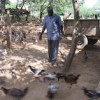
KENYA: Training Poultry Farmers to Vaccinate Against Disease
Every Tuesday and Friday Teresia Muisyo wakes up at 05.00 to feed her ever- growing flock of over 300 free-range indigenous birds.
“Microfinance Can Help Rural Communities Adapt to Climate Change”
Projects to fight climate change are being designed all around the world. But only five percent of them can be financed with the current international funds available, which means resources have to be used more wisely. Microfinance could be one solution.RIGHTS-AFRICA: Rwandan Woman Sentenced to Life for Genocide
Rwanda’s former minister of family and women affairs and the only woman to be indicted by the International Criminal Tribunal for Rwanda (ICTR), Pauline Nyiramasuhuko, has been sentenced to life imprisonment for genocide and rape, among other crimes.SUDAN: Feeling the Economic Impact Before Secession
Amira Amer* becomes very picky the minute she reaches the bus station. One by one she lets the new air-conditioned busses pass her by. She is waiting for a cheaper bus. They are limited in the expensive city of Khartoum and are constantly packed to the point of overflowing.
KENYA: No Longer Forced to Buy Ineffective Anti-Malarial Drugs
People in Western Kenya are now able to buy effective anti-malarial drugs at low prices thanks to the success of the Global Fund’s subsidy programme, and thanks to honest pharmacists who are reselling the drugs at the recommended low prices.SOUTH SUDAN: Fuel Shortages Grip Country
South Sudan is facing severe fuel shortages less than three weeks before it gains independence from the rest of the country. Many gas stations have shut down and those that remain open have people lining up overnight for fuel.KENYA: Empowering Women through Micro-Finance Credit
Without a college education and against the backdrop of limited job opportunities, it was not easy for Salome Wairimu to find employment.
KENYA: Uneducated Women Struggle to Access Credit Fund
As an estimated 3.7 million dollars continues to sit idle in the Women Enterprise Fund (WEF) kitty, the very women the fund was meant to benefit have complained about the difficult requirements that need to be met in order to access the money.UGANDA: Distribution Policy Means Not Enough Drugs for Clinics
The nurse at Najembe Health Centre in Buikwe district says the centre’s supply of malaria drugs will be finished in two days. A malaria epidemic has hit the area and the demand for the drugs is high. But the centre, which serves the entire sub-county, will have to wait up to six weeks before their supply will be replenished.
CLIMATE CHANGE: Putting Children in Harm’s Way
It is late afternoon and the lone figure of nine-year-old Nancy Chepkemboi trudges home. To keep her head dry from the heavy rains, Chepkemboi has placed her books inside her shirt and used the polythene bag that is her school bag to cover her head.
RIGHTS-UGANDA: Government Needs to Prioritise Maternal Health
Just a week after a group of civil society organisations petitioned Uganda’s constitutional court demanding that the government’s non-provision of essential services for pregnant mothers was a violation of the right to life; Margaret Nabirye lost her baby in childbirth.UGANDA: The Value of Immunisation Programmes
GAVI, the Global Alliance for Vaccinations and Immunisation, secured pledges of 4.3 billion dollars from donors in London on Jun. 13 with the aim of securing funding to ensure life-saving vaccinations for every child on the planet.
KENYA: Cassava Offers Food Security in Drought
After substituting her maize crop with cassava, Jemima Mueni has enough money to pay school fees for her children and enough food to last until the end of the year, despite the current drought.
MALAWI: Fears of Sustainability of New ART Regime
As government prepares to roll out the expensive new antiretroviral treatment regime recommended by the World Health Organisation (WHO) this month, there are fears about the programme’s sustainability after two recent proposals for funding were rejected by the Global Fund.Need to Protect Millions Displaced by Environmental Disasters
Heavy rainfall means that over 500,000 people living in mountainous areas in Uganda need to be relocated as they live in areas at risk to landslides.« Previous Page — Next Page »


The Week with IPS

NEXT STOP - SDGs
Tracking global progress towards a sustainable world
Tracking global progress towards a sustainable world
