Languages
Tuesday, October 6, 2026



News and Views from the Global South
IPS UN Bureau Report
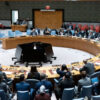
A New UN Secretary-General Needs the Blessings of the US–or Get Vetoed
When there was widespread speculation that a UN Under-Secretary-General (USG), a product of two prestigious universities—Oxford and Cambridge—was planning to run for the post of Secretary-General back in the 1980s, I pointedly asked him to confirm or deny the rumor during an interview in the UN delegate’s lounge.
International Funding for 30×30 Biodiversity Target Falls Billions Short of Global Goals
A new study and interactive dashboard released today in Nairobi at the seventh session of the United Nations Environment Assembly (UNEA) finds that current international financial flows remain billions of dollars short of what is required to achieve the global biodiversity target of protecting and conserving at least 30 percent of the world’s land and ocean by 2030 (30x30).
How Community Radio Is Powering Tanzania’s Climate Resilience
At dawn in the mangrove-choked Rufiji estuary, paddles from wooden canoes slice through still waters as a soft voice drifts across the tide.
UN Pact for the Future Requires Global Solidarity and Localized Solutions
More than one year since its adoption, the UN Pact for the Future is held up as a critical framework for countries to address today’s issues through global cooperation. Its agenda for global governance and sustainable development is ambitious, and it is for this reason the Pact poses implementation challenges when it comes to the direct impact on local communities. It will require the joint efforts of governments, civil society and international organizations to achieve the goals laid out in the Pact.
Thousands Gather in Nairobi as Science Meets Diplomacy for Planet Protection
“There will never be a better time than now to invest in a stable climate, thriving ecosystems, and resilient lands, or in sustainable development that delivers for all,” said Amina J. Mohammed, the deputy Secretary-General of the United Nations, during the opening plenary of the seventh meeting of the UN Environment Assembly (UNEA-7) taking place from December 8 to 12, 2025.
Climate Crisis Disrupts Sundarbans Community Festival, Prosperity
A dried karam tree branch stands on the bank of a pond in a field in Datinakhali village adjacent to the Sundarbans. Despite many efforts, the tree could not be saved.
Cyclone Ditwah Leaves Millions Affected as Sri Lanka Faces Widespread Flooding, Displacement, and Rising Health Risks
In late November, Cyclone Ditwah made landfall in Sri Lanka and southern India, bringing heavy rainfall that triggered widespread flooding and devastating landslides. The storm caused extensive damage to civilian infrastructure and resulted in a significant loss of life. Communities have been severely impacted, with limited access to essential services, while humanitarian agencies face challenges in reaching the most vulnerable populations.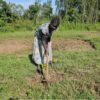
Farmers Earn While Reviving Native Forests Through a Blockchain-Powered App
For years, Morris Onyango had been trying to reforest his degraded land on the shores of River Nzoia, in Siaya county, 430 kilometers from Kenya’s Capital, Nairobi. But every time he planted trees on his farm, his efforts bore little fruit, as floodwaters would not only wash away his tree seedlings but also fertile topsoil on his land.
In Zimbabwe, School Children Are Turning Waste Into Renewable Energy-Powered Lanterns
When going home after school, Monica Ben not only takes with her a pen and exercise books but also a lantern to light the dark room and completes her daily homework in Mashonaland East province.
Any Resumption of US Tests May Trigger Threats from Other Nuclear Powers
President Donald Trump's recent announcement to resume nuclear testing rekindles nightmares of a bygone era where military personnel and civilians were exposed to devastating radioactive fallouts.
Businesses Impact Nature on Which They Depend — IPBES Report Finds
Nature is a double-edged sword for global business. A groundbreaking report will reveal how businesses profit from exploiting natural resources while simultaneously impacting biodiversity.
‘Low- and Middle-Income Countries Need Better Data, Not Just Better Tech’
During the Global Development Conference 2025, development experts and researchers kept warning that low- and middle-income countries (LMICs) were being pushed into a wave of digital transformation without the basic statistical systems, institutional capacity, and local context needed to ensure that AI and digital tools truly benefited the poor.
Fresh Lens For Nuanced Multifaceted Climate Solutions Needed
“I see more philanthropic support aligning with systems thinking, linking climate stability, biodiversity protection, Indigenous leadership, and community resilience,” says Michael Northrop, Program Director at the Rockefeller Brothers Fund.
Resumption of Nuclear-Explosive Testing: A Dangerous Path
In a Truth Social post that reverberated around the world, on October 29 President Donald Trump wrote: “Because of other countries’ testing programs, I have instructed the Department of War to start testing our Nuclear Weapons on an equal basis.”
International Volunteer Year 2026: An Opportunity to Reimagine Volunteerism?
This coming International Volunteer Day (IVD), celebrated every year on 5 December, is special because the United Nations will launch the International Volunteer Year 2026 or IVY 2026.
Rising Arms Revenues and Death Tolls Underscore Ongoing Military Conflicts, Civil Wars
The revenues from arms sales and military services by the 100 largest arms-producing companies rose by 5.9 percent in 2024, reaching a record USD 679 billion, according to new data released by the Stockholm International Peace Research Institute (SIPRI).
From Village Vision to Vital Innovation: How One Student is Revolutionizing Healthcare in Malawi
In the quiet hills of Chamhanya Gondwe village in Malawi’s Mzimba district, a young boy once watched his community struggle with limited access to healthcare.
Yemen’s Worsening Food Security Crisis: Economic Collapse, Continued Insecurity, and Humanitarian Challenges
For the past decade, Yemen has been at the center of a severe and multifaceted humanitarian crisis, marked by widespread violence between various Middle Eastern actors, widespread civilian displacement, economic decline, and the collapse of essential services that serve as lifelines for displaced communities.
COP30 Fails the Caribbean’s Most Vulnerable, Leaders Say: ‘Our Lived Reality Isn’t Reflected’
Caribbean small island states say this year’s UN climate conference has once again failed to deliver the urgency and ambition needed to tackle escalating climate devastation across the region. From slow-moving climate finance to frustrating political gridlock, leaders say COP30 did not reflect the realities that small islands are living through every day.
Vulnerable Populations Will Suffer With UNAIDS Early Closure
“It’s like adding fuel to an already burning fire,” says Aditia Taslim. “We have not recovered from the impact of the US funding cuts earlier this year, and closing down UNAIDS prematurely will only make things worse, especially for key populations and other criminalized groups, including people who use drugs,” Taslim, who is Advocacy Lead at the International Network of People Who Use Drugs (INPUD), tells IPS.
The UN’s ‘International Days’ Range from the Sublime to the Ridiculous
The 193-member General Assembly, the UN’s highest policy-making body, routinely designates “International Days” and “World Days” on a wide range of subjects and events—from the sublime to the ridiculous—described as “a sudden shift from something grand and awe-inspiring to something silly and unimportant.« Previous Page — Next Page »





The Week with IPS

NEXT STOP - SDGs
Tracking global progress towards a sustainable world
Tracking global progress towards a sustainable world
