Languages
Monday, October 19, 2026



News and Views from the Global South
IPS UN Bureau Report
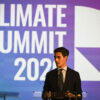
Overshoot of Paris Agreement and the Looming Super El Niño Drive Urgent Calls for Global Climate Action at UNGA 81
The United Nations 2026 Climate Summit addressed critical strategies to mitigate the compounding impacts of the climate crisis and accelerate progress toward the Sustainable Development Goals (SDGs).
India Still Needs to Address Harmful Dark Skin Stereotypes
As a young girl, Sarada Murlidharan cringed at the thought of going to school. It was not the studies but the taunts of 'being black' or having dark skin, where fair skin was considered preferential, that made her unhappy.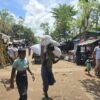
Rohingya Camps: Children in Frontline of Food Rationing Crisis
For Mohammed Dullah, recent cuts in UN food rations for Rohingya and other refugees in Bangladesh are not just spreading hunger but also forcing them to save on basic needs such as schooling and healthcare for his children.
Nepal’s Devastating Floods Have Put Women and Girls at Greater Risk
On August 26, 2026, deadly flash floods and landslides ripped through Himalayan towns and villages along Nepal and Tibet’s border, devastating communities. The United Nations estimates that in Nepal’s worst-affected districts of Rasuwa and Nuwakot, 157,050 women and girls are directly or indirectly impacted.
Forty Years of the ‘Right to Development’: When Growth Excludes, Is It Still Development?
World leaders have warned that the most vulnerable people have been left behind as the right to development has promised more than it has delivered, with development seemingly the preserve of the superrich and powerful.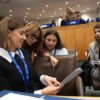
From Commitments to Action: Centering Lived Experience in NCD Responses
On September 21, just prior to the opening of the United Nations General Assembly Debate (UNGA81), the NCD Alliance held its fifth Multi-stakeholder Gathering, “Strategies for a Sustainable NCD and Mental Health Response,” during the UN High-level Week.
AI-Driven Climate Change Pushes Frontline Communities Further Into Environmental Degradation and Poverty
On September 21, Frontline Resource Institute (FRI) hosted its Climate Justice Hub at Fordham University at Lincoln Center in New York City under the theme “Building a Stronger Climate Coalition.”
A New Arms Race is Threatening to Take-off—this time in Outer Space
The world’s ongoing arms race is threatening to extend beyond planet earth—and spillover into outer space. The US has deployed weapons in space and will use them to defend American forces, Air Force Secretary Troy Meink said last week, according to Cable News Network (CNN). His comments marked the first public acknowledgment of such capabilities, though he offered no details about the weapons or when they were put into orbit.
Floods, Hunger and Disease Pile on Myanmar’s Civil War Misery
Isolated and at constant war with itself, Myanmar’s humanitarian crisis is deepening as global challenges far exceed the capacity to respond of a military regime increasingly focused on its own survival.
Climate Week NYC Kicks off With World Leaders’ Commitments to Action
The Climate Group’s annual conference in New York City has attracted thousands of attendees this year, among them world leaders, corporate heads, philanthropists, and climate advocates. Those leaders present at the opening ceremony of Climate Week have made clear calls to collectively tackle climate issues.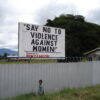
Life-Changing Humanitarians Empower Women Against Violence in Papua New Guinea’s Highlands
In the remote Highlands region of Papua New Guinea (PNG), humanitarians are life-saving beacons to women and girls facing myriad forms of violence. Despite years of awareness programmes and advocacy, the incidence of domestic and sexual violence is not declining. But Janet Kilea is one survivor who has rejected the fear and stigma of her experience and now dedicates her energy to transforming other women’s lives.
Family Law Reforms Are Needed to Advance Gender Equality
On September 16, at the lead-up to the 81st UN General Assembly, Equality in Family Law (GCEFL), Equality Now, TrustLaw, and the World Bank Group convened in New York City for the event titled The Gender Equality Dividend: Investing in Women’s Economic Prosperity Through Family Law Reform. Hosted by APCO, the event introduced new data on barriers to family law reform and highlighted strategies to help the international community maximize women’s economic participation.
US Visas for Ruthless Autocrats to Address UN – but not for Palestinian Leaders
When Yasser Arafat was denied a US visa for his second visit to New York to address the United Nations back in 1988, the General Assembly defied the United States by temporarily moving the UN’s highest policymaking body to Geneva—perhaps for the first time in UN history—providing a less hostile political environment and a platform for the leader of the Palestine Liberation Organization (PLO).
The Connection Between Urbanization and Poverty: How Cities Can Reduce Poverty – Or Deepen It
Urbanization can help concentrate jobs, services, and investments; however, it can also concentrate unaffordable housing, insecure employment, and unequal exposure to contamination and environmental threats. A recent report from the UN Special Rapporteur on extreme poverty and human rights, argues that the difference is not urbanization itself, but how cities are planned, governed, and financed.
Outpacing Foreign Aid, Migrant Remittances Are a Lifeline Ensuring Families Are Fed and Healthy, Says IFAD
Migrants now send home more money than foreign aid, and this is pulling rural families out of poverty, according to the International Fund for Agricultural Development (IFAD).
WHO Launches New Global Health Strategy for Childhood Cancer Medications
When a child is diagnosed with cancer, their chances of survival should not depend on where they live, yet according to the WHO, more than 80 percent of children with cancer in high-income countries are cured, compared with fewer than 30 percent in many low- and middle-income countries (LMICs).
Ahead of COP17, UN Biodiversity Chief Urges Urgent Realignment of Finance with Nature Goals
The world may have enough money to protect nature. The bigger problem, according to the head of the UN Convention on Biological Diversity (CBD), is that too much of it is still being spent on activities that destroy it.
African Farmers Demand Affordable Finance as Governments Fall Short on Funding
Agriculture remains underfunded in Africa as governments struggle to deliver on decades-old promises to dedicate 10% of national income to agriculture.
Killing of Environmental Defenders Reflects Power Struggle Over World’s Resources
At least 124 land and environmental defenders were killed around the world in 2025 while protecting forests, rivers, farmland and Indigenous territories, according to a new report by Global Witness that warns violence against activists remains widespread even as recorded killings have declined from previous years.
Renewed Hostilities In Yemen Inflame Displacement and Regional Risks
In recent days, the humanitarian situation in Yemen has deteriorated sharply following a new escalation of hostilities between the Iran-backed Houthi rebels and the Saudi-backed Presidential Leadership Council (PLC). This follows four years of relative stability, marking the most severe resurgence of violence since the collapse of the United Nations (UN)-mediated ceasefire in October 2022.
Will the General Assembly Continue to be Subservient to the P-5 Refusing to Challenge the Nominee for UN Chief?
As the race for the election of a new Secretary-General (UNSG) gathers momentum, the spotlight is on the 193-member General Assembly, the highest policy making body at the United Nations, which has refused to assert itself and continues to play a subservient role in the elections of UNSGs.« Previous Page — Next Page »





The Week with IPS

NEXT STOP - SDGs
Tracking global progress towards a sustainable world
Tracking global progress towards a sustainable world
