Languages
Tuesday, October 20, 2026



News and Views from the Global South
IPS UN Bureau Report
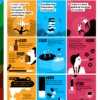
Global Survey Finds Deep Crisis of Trust as Majority Say Economic System Favours the Rich
An international survey released by Earth4All has found a growing crisis of trust in governments, widespread anger over inequality, and strong public support for major economic reforms, suggesting that many people across the world believe current political and economic systems are failing to serve ordinary citizens.
Investment in Irrigation Systems Is Vital in Preparing for the Next Climate Shock
When the African continent experiences erratic rains, crops fail, leaving millions of people facing hunger.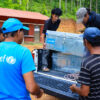
Humanitarian Needs Grow as Nepal Recovers from Catastrophic Floods
Two weeks after devastating floods struck Nepal, communities across the country are still struggling to meet basic needs as humanitarian efforts continue. The disaster, triggered by a glacial collapse, has become one of Nepal’s deadliest in recent years, leaving widespread destruction in its wake.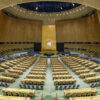
The Lighter Side of Politics at the UN General Assembly
When over 130 world leaders arrive in New York for the high-level segment of the General Assembly next week-- it will be rare to hear hard-hitting, headline-grabbing political statements from the podium.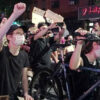
US Plans to Restrict Foreign Journalists Trigger Rising Protests
First, it was the mass deportations of undocumented aliens, then a crackdown on liberal-minded academics from prestigious US Universities, and now, restrictions on foreign journalists based in the US.
Lawmakers Need to Grapple With the ‘Human Story’ of the Aged, Youth, Women and Girls when Making Policy
"As parliamentarians, we should understand that behind every demographic indicator is a human story,” Kamikawa Yoko, MP Japan and Chair of AFPPD, reminded lawmakers in her opening address to the Asian Forum of Parliamentarians on Population and Development (AFPPD) annual conference held in Kuala Lumpur, Malaysia.
How Saving Cattle in Zimbabwe is Saving Its Lions
A 12-year-old male lion slipped out of Zimbabwe’s Hwange National Park one winter morning and killed a 7-year-old boy in a village it wandered into.
What 1.5°C Overshoot Means for Small Islands
The world is now expected to breach the 1.5 degrees Celsius warming limit that small island states have spent years defending as a threshold for survival.
Nuclear Victims’ Experiences Must Be at the Heart of Global Efforts for Assistance and Remediation
More and more, global disarmament discussions are encompassing the humanitarian and environmental impacts of the testing and use of nuclear weapons, as it becomes clear that the legacy of nuclear weapons leaves its mark on multiple generations.
UN Declares International Day to Eliminate Child Marriage
As the 80th session of the UN General Assembly draws to a close, one of the final items in its agenda was to establish an annual observance for the elimination of child marriage, raising the global profile of a pervasive social issue.
Nepalese Experts, Victims Contemplate the Future After the Flood
That day, Subash Tamang was mining sand along the banks of the Trishuli River near the Trishuli Hydropower Project, working alongside his wife, brother, sister-in-law, and two other family members. Suddenly, he noticed water gushing down from above the hydropower site. His first thought was that the dam had burst.
WHO Announces New Ebola Vaccine Guidelines for the DRC
While Uganda announced the end of its Ebola outbreak last week, the Democratic Republic of Congo (DRC) continues to battle its deadliest Ebola outbreak to date. As of September 1st, there have been over 6,000 cases, including over 3,000 deaths, with Ituri standing as the most affected province.
Strengthen Africa’s Seed Systems as El Niño Threat Becomes Reality Again
As climate disasters frequent across the African continent, governments have been promoting climate-smart innovations, including the development of drought-resistant crops.
UNICEF Report Underscores Rising Rates of Tech-Facilitated Sexual Abuse Targeting Children
A new report from UNICEF finds that approximately 1 in 5 of all children surveyed reported facing tech-facilitated sexual abuse or exploitation in a single year.
Families in Desperate Search for Victims of the ‘Himalayan Tsunami’ in Nepal
On Sunday afternoon, Mingma Tamang, 29, rushed into the TU Teaching Hospital’s emergency ward, where a rescue team had just brought in an injured person in the Rasuwa flash flood – but she soon left grim-faced.
‘I am one who dies for life, not one who lives for death’ – Kurdish Political Prisoner Pakhshan Azizi
In 2024, Kurdish social worker Pakhshan Azizi was sentenced to death. She remains incarcerated in Evin Prison, Tehran, Iran. This is her story ...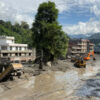
Deadly Flash Floods in Nepal Kill Hundreds and Leave Over 4,200 Missing
On the morning of August 26, an unprecedented series of flash floods struck Nepal and the Tibet Autonomous Region of China, causing immense destruction, killing hundreds of civilians and leaving thousands missing. Entire neighborhoods have been buried underwater and beneath mud as the Nepalese government and humanitarian organizations rush to provide emergency assistance.
Pakhshan Azizi’s Letter from Evin Prison
Writing from the women's ward of Evin Prison on 10 June 2026, Kurdish political prisoner Pakhshan Azizi, who remains under a death sentence, reflects on her legal case, political principles, humanitarian work, and the broader historical and political dynamics shaping the Middle East.
Africa’s Pastoralists Need More Than COP17’s $1.2 billion Rangelands Pledge
When the rains fail across Tanzania’s northern Maasai Steppe, herders drive their cattle farther in search of pasture and water.
Uganda Announces End of Ebola Outbreak, Yet Regional Risks Remain
Following 42 consecutive days without a new confirmed case, The Africa Centres for Disease Control and Prevention (Africa CDC) and the World Health Organization (WHO) have announced the end of the Ebola outbreak in Uganda.
Consequences of Inaction: UN Security Council Pressed to Act Before Hunger Becomes Famine
Across the board, UN officials and humanitarian organizations urged the Security Council to act before the consequences of food insecurity and famines hit, during a high-level open debate on Tuesday, August 25. More than 80 representatives took part in Tuesday’s conversation on conflict-related food insecurity under the theme “Food under fire: the Security Council’s role in mitigating global and local food crises”.« Previous Page — Next Page »





The Week with IPS

NEXT STOP - SDGs
Tracking global progress towards a sustainable world
Tracking global progress towards a sustainable world
