Languages
Sunday, November 8, 2026



News and Views from the Global South
IPS UN Bureau Report

‘Living in Fear’: Landowners in Uganda’s Oil Field on Brink of Eviction
When Mugisha Jealousy Mulimba learned that the government of Uganda was dragging him to court, he expected justice. But he says he has realized these courts are being used to deprive him of his rights to a fair hearing and the right to fair and adequate compensation for his land and property.
Africa Pushing Limits To Boost Renewable Energy Supply Chain, Security
Investors, regulators, researchers, policymakers, and representatives of renewable energy companies, acknowledged the key challenges of shifting away from fossil fuels to renewable energy in Africa when they gathered in Abu Dhabi, United Arab Emirates (UAE) this week.
Rural Entrepreneurs Thriving Against All Odds in Zimbabwe
With heavy sweat drenching his face and his shirt soaked in the sweat, 39-year-old Proud Ndukulani wrestled with a homemade knife, which he dipped in some used oil, before turning the glistening knife upon a rather tough and dusty tyre obtained from what he said was a forklift. His assistant stood by his side as he (Ndukulani) cut some tough rubber from the giant tyre lying outside an open shade roofed with aging asbestos sheets at Juru Growth Point, located 52 km east of Harare in Zimbabwe’s Goromonzi district in the country’s Mashonaland East province.
Pioneering Digital Initiative Empowers Pacific Islands to Tackle Climate Disasters
Winning a battle for survival requires understanding the opponent. And, for the peoples of 22 island nations and territories scattered across more than 155 million square kilometres of Pacific Ocean, the volatility and wrath of the climate are their greatest threats.
IPCI 2024: Oslo Commitment Protects Sexual and Reproductive Rights Across All Contexts
Parliamentarians from 112 countries have adopted the IPCI statement of commitment to protect and promote sexual and reproductive health rights, committing to the principle that "life or death is a political statement." As IPCI Oslo drew to a close on Friday, April 12, 2024, parliamentarians adopted a new Statement of Commitment that was “the collective effort of every single delegate,” said Alando Terrelonge, MP from Jamaica and chair of the drafting committee.
IPCI 2024: Technology as a Tool to Advance and Threaten Sexual and Reproductive Health Rights
Technology emerged as a core theme of IPCI Oslo for its relevance in advancing the objectives of the Cairo Programme of Action. When channeled for good, it is an effective tool that can fill accessibility gaps in the health sector and spread awareness of sexual and reproductive health rights. Yet, the way in which digital technology has been weaponized against SRHR is of great concern for parliamentarians, especially for women.
Women Affected by ‘Gender-Biased’ Climate Change Deserve Justice
While research into the unequal impacts of climate change on women is growing, more is needed to enable them to realize their rights to climate justice. Researchers argue that women and girls have unequal access to food, water, health, education, and even income, thanks to climate change. This makes them more vulnerable.
When the Man Who Built the Bombs Met the Man Who Dropped the Bombs…
The award-winning Hollywood movie Oppenheimer portrays the life of J. Robert Oppenheimer, who helped create the atomic bomb, which claimed the lives of an estimated 140,000 to 226,000 people and devastated the two Japanese cities of Hiroshima and Nagasaki in August 1945.
IPCI 2024: Oslo Conference Focuses on Parliamentary Power over Reproductive Rights
Gearing up for the 30th anniversary of the International Conference on Population and Development (ICPD), the world’s parliamentarians and ministers are meeting in Oslo to determine the course of action needed to promote sexual and reproductive human rights (SRHR).
UN Staff Warned Against Public Comments on the Devastating Conflict in Gaza
The deadly six-month-old Israeli-Hamas war, which has claimed the lives of more than 32,000 Palestinians in Gaza and over 1,200 in Israel, has sharply divided the world with vociferous protestors on both sides of the conflict. But the United Nations is no exception with some of the estimated 35,000 staffers—both in New York and UN affiliates worldwide-- have been increasingly vocal, mostly on social media, critical of either Israel or Hamas.
30 Years On, Genocide Survivors Embark on a Journey To Build a Resilient Future
A minute of silence was observed on April 7 across Rwanda as the country held a memorial ceremony to mourn more than one million people, overwhelmingly Tutsis, who were systematically killed in the 100 days of atrocities between April and July 1994.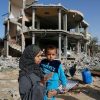
‘Scattered Measures’ in Humanitarian Aid for Gaza Are Not Enough – UN Secretary General
As the humanitarian crisis in Gaza drags into its sixth month on Sunday, April 7, the UN Secretary-General calls for a “true paradigm shift” in the delivery of humanitarian aid. On Friday April 5, 2024, Secretary-General António Guterres spoke before reporters to mark six months since the October 7 attacks, where 1,200 civilians in Israel were killed in a terrorist attack led by Hamas, which has since led to a military campaign by the Israel Defense Forces (IDF) into Gaza.
Has the World Progressed or Regressed, 30 Years After a Landmark Population Conference?
As the world commemorates the 30th anniversary of the landmark International Conference on Population and Development (ICPD) held in Cairo in 1994, one lingering question remains: Has the world progressed-- or regressed-- in implementing some of the recommendations in the Programme of Action (PoA) approved by 179 UN member states.
No Turning a Blind Eye to Protection of Dominican Republic’s Natural Resources, Says Environment Minister
In 2020, general elections were held in the Dominican Republic. This took place while the COVID pandemic was becoming an increasingly serious threat, causing severe social and economic disruption. The elections were two months late as a result of the initial chaos COVID caused. The governing Dominican Liberation Party’s 16-year rule ended after the Modern Revolutionary Party’s candidate, Luis Abinader, received a majority of the votes. Elections are now scheduled for May 19 this year and IPS took the opportunity to ask Miguel Ceara Hatton, the country’s Minister of Environment and Natural Resources, how he perceived the past four years' efforts to mitigate a global crisis that now threatens us all, namely climate change and environmental degradation.
Can Preserving Goa’s Khazans Address Climate Threats?
Growing up in a khazan ecosystem, the traditional agricultural practice followed in the south-western Indian state of Goa, Elsa Fernandes would love sitting in a koddo, a woven bamboo structure for storing paddy. Her family members would pour paddy around her and with the growing pile, she would rise to the top and then jump down with joy.
India’s Farmers Could Use Better Monsoon Forecasts
Agriculture in India need not 'gamble' with the monsoons if accurate weather and climate forecasts are proactively made available to farmers, according to the results of a new experimental study conducted by the University of Chicago.
UN in Geneva to Partially Shut Down— for Second Time— Due to Cash Flow Crisis
Faced with a continued cash flow crisis, the United Nations in Geneva (UNOG) will partially close down – for the second time since December last year— as it scales back its operations, including building closures, official travel restrictions, and budgetary cuts on spending. The UN is studying plans to close the Palais des Nations beginning 22 April. Only conferences would run, but some of the offices would shut.
Made in Africa: Africa’s Fashion Redefining Narratives About the Continent
It is a new dawn as Africa’s high fashion industry enters an era defined and driven by young African fashion designers. As they take to the global stage, the young creatives are showcasing the continent in all its majesty through unique weaving techniques and patterns that combine their rich African heritage with contemporary styles.
WHO Calls for More Data on Violence Against Older Women and Women With Disabilities
Older women and women with disabilities experience abuse that is unique to their demographics, yet they are underrepresented in national and global databases, according to findings shared by the World Health Organization (WHO).
Why Farmers in India and Pakistan Are Shifting to Natural or Regenerative Farming
Nine years ago, farmer Sultan Ahmed Bhatti gave up tilling the soil and using most fertilizers and pesticides on his farm in Doober Bhattian, Pakistan. His brothers at first derided him. But soon, his first experiment with growing wheat on raised beds was a runaway success. “We produced more wheat than what we grew on ploughed, flat land,” he said.
Revival of Hope: How a Remote Indian Village Overcame Water Scarcity
The people of Patqapara Village, a hamlet in India's West Bengal State, were until recently reeling under absolute distress due to water scarcity. The lack of irrigation facilities in this far-flung and inaccessible hamlet had resulted in a steady decline in agricultural activities. With a population of around 7,000, as per government estimates, the village primarily depends on agriculture for its livelihood. However, in recent years, drastic changes in weather patterns, including unseasonal rainfall, delayed monsoons, and soaring temperatures above normal levels, led to the drying up of irrigation canals and wells in the village. This left the local population in chaos, as their cultivable fields were bereft of any irrigation facilities.« Previous Page — Next Page »





The Week with IPS

NEXT STOP - SDGs
Tracking global progress towards a sustainable world
Tracking global progress towards a sustainable world
