Languages
Sunday, November 8, 2026



News and Views from the Global South
IPS UN Bureau Report

UN, Still Living in the 1940s, Urgently in Need of Reforms
Politically, the United Nations has largely been described as a monumental failure ---with little or no progress in resolving some of the world’s past and ongoing military conflicts and civil wars, including Palestine, Western Sahara, Kashmir, and more recently, Ukraine, Yemen, Afghanistan, Syria, Sudan and Myanmar, among others.
The Case for Afghan Women and Girls: How an International Criminal Court Investigation Could Expand Human Rights
Two years have passed since the Taliban re-assumed power in Afghanistan, and women and girls have yet to return to work or school. Can the international justice system now come to their defense? Experts say a case for Afghan women and girls has the potential to change the way the legal community thinks about human rights abuses. Will it?
Multilingual #AfghanGirlsVoices Campaign to Return Millions Back to School
A Taliban edict is rolling back time in Afghanistan after access to education for all Afghan girls over the age of 12 was indefinitely suspended on September 18, 2021. Afghanistan is the only country in the world where girls are forbidden from attending school beyond the primary level, leaving more than 1.1 million girls and young women without access to formal education.
Youth Rally for Peace Through Climate Justice at the UN
“What do we want? Climate justice! When do we want it? Now!” youth chanted in an unusually lively conference at the United Nations Headquarters.
African Agro-Processors Call for Policies Conducive to Local Manufacturing
Experts at the Africa Food Systems Forum (AGRF) in Dar es Salaam, Tanzania, have called on African governments to make and review existing policies to protect the processing and agro-industrialisation of locally produced agricultural products.
UN Report Offers Solutions for Decarbonization of Buildings, Construction Sector
The building sector may be overdue for a significant overhaul of the processes in which infrastructure is built to be more environmentally conscious and reduce carbon emissions, a new UN report reveals.
A Global Survey of Democracy Finds Both Sobering and Alarming Results
The recent epidemic of coups in Africa -- including military take-overs in Mali, Burkina Faso, Niger and Gabon-- have triggered the inevitable question: Is multi-party democracy on the retreat? The Open Society Barometer, an annual global survey from Open Society Foundations, launched September 12, reflects the positive and negative aspects of the state democracy worldwide.
Human Trafficking: Women Lured by Promise of Jobs, Sold as Brides
It has been over a decade since 32-year-old Rafiqa (not her real name) was sold to a villager after being lured by the promise that she would be employed in the handicrafts industry of Indian-administered Kashmir.
World Leaders Offered “15 Minutes of Fame” at UN’s High-Level Meeting
Everyone in this world is entitled to 15 minutes of fame-- is a legendary quote mis-attributed to the American pop icon Andy Warhol. Over the years, the United Nations has laid down its own 15-minute rule for world leaders addressing the UN General Assembly.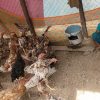
Elevating Farmers’ Income Through Organic Poultry Rearing
Even after toiling hard for an entire year, Shivaji Rao, a 37-year-old farmer, would find it hard to cover the basic expenses of his family. He cultivates maize from his one-and-a-half-acre land in India’s Southern State of Telangana.
ECW’s New Report Shows Successful Education Funding Model for Crises-Impacted Children
In a world set on fire by climate change and brutal conflict, millions of children in emergencies and protracted crises need educational support. Children in 48 out of 49 African countries are at high or extremely high risk of the impacts of climate change, particularly in the Central African Republic, Chad, Nigeria, Guinea, Somalia, and Guinea Bissau.
World’s Richest Countries Must Set More Ambitious Climate Change Goals, Report Finds
Individually and collectively, member countries of the G20 are falling far behind in their greenhouse gas reduction goals and are failing to make the significant cuts on emissions that would be needed to keep global temperatures low, despite possessing the technological and financial capabilities for reducing emissions.
Africa Finds Common Ground on Climate as Nairobi Declaration Unveiled
To cool down a burning planet, Africa’s Head of State and Government at the inaugural Africa Climate Summit unveiled the ‘Nairobi Declaration’ as curtains fell on the inaugural Africa Climate Summit held in Nairobi, September 4-6, 2023, under the theme “Driving Green Growth and Climate Finance Solutions for Africa and the World.”
African Startups Mull Home-Grown Solutions to Combat Climate Change
A group of young African startups made their presence known at the Africa Climate Summit in Nairobi, Kenya, hoping to play a big role in promoting home-grown climate-oriented solutions.
Toothless Global Financial Architecture Fuelling Africa’s Climate Crisis
As thousands convene in Kenya’s capital, Nairobi, for the Africa Climate Summit, the first time the African Union has summoned its leaders to solely discuss climate change under the theme ‘Driving Green Growth and Climate Finance Solutions for Africa and the World’, the backdrop is a country on the frontlines of a climate crisis.
Lawmakers Call on G20 to Prioritise Spending on Youth, Gender, and Human Security
Legislators from around the world, this week, officially submitted to the Sherpa of the G20 meeting set for September in New Delhi a declaration calling on governments to prioritise spending on ageing, youth, gender, human security, and other burning population issues.
When the UN Came Under Attack— from a Mis-Guided Rocket Launcher
When 150+ world leaders, including Presidents and Prime Ministers, arrive in New York to address the high-level segment of the General Assembly beginning September 19, the UN neighborhood will be turned into a veritable war zone. The streets will be littered with scores of police officers, US secret service personnel, UN security officers, bomb-sniffing dogs, road closures-- and a stand-by ambulance in the UN campus ready to cope with any medical emergencies.
Invasive Species, Fast-Riding Horsemen Galloping the Biodiversity Apocalypse
Mango farmer Eufria Nyadome used to earn USD 60 from selling a 20-litre bucket of fresh mangoes and now can barely make USD 20 even though her mango trees are giving a good yield. She is throwing away buckets of rotten mangoes.
‘I am because you are’ – Climate Justice Through the Spirit of Ubuntu
The Africa Climate Summit 2023 is expected to start with renewed hope. In its 60+ years of post-independence history, Africa has contributed around 3% of Green House Emissions, accounts for approximately 2.6% of global trade, and less than 3% of the world’s GDP in 2021.
Bangladesh’s Battle Against Climate Change: A Nation at Risk
Bangladesh, a picturesque land of rivers, lush green landscapes, and a vibrant cultural heritage, faces one of its most significant challenges ever — climate change.
Climate Justice Delayed, Is Justice Denied
The failure to tackle the climate change crisis is an injustice to the millions who have lost lives and livelihoods through floods, extreme weather, and wildfires, pointing to the urgency of adaptation and mitigation finance, experts say.« Previous Page — Next Page »





The Week with IPS

NEXT STOP - SDGs
Tracking global progress towards a sustainable world
Tracking global progress towards a sustainable world
