Languages
Monday, November 9, 2026



News and Views from the Global South
IPS UN Bureau

Guatemala Clings to Democratic Promise
When Guatemalans went to the polls on 25 June, distrust and disillusionment were rife. First place in the presidential contest was claimed by none of the candidates: it went to invalid votes, at 17 per cent. Many didn’t bother, resulting in an abstention rate over 40 per cent.
Greener Pastures Not So Green for Zimbabweans in the Diaspora
They have high-paying jobs, a high standard of living, and almost everything they need, but for Zimbabweans abroad, all that glitters is not gold. Twenty-eight-year-old Gift Gonye, based in Germany, is one such Zimbabwean, and he is apparently not satisfied with his life abroad.
Recognising Human Rights Defenders as Remarkable Agents of Positive Change
In recent years, the global landscape for human rights defenders (HRDs) has become more difficult and complex, with both new and heightened challenges. With hundreds of defenders killed every year, the scale and magnitude of threats faced by HRDs is unprecedented.
Transformative Change of our Relationship with Nature: Key to Saving Global Biodiversity
To most people, ‘transformative change’ is an abstract academic catchphrase. But transformative change is far more than that. It is the foundational response necessary to address the global crisis of biodiversity loss that threatens the wellbeing of every person in every community – and every species in every region.
Quest for Safe Water in One of India’s Most Isolated Villages
Simita Devi spent over ten days in a government-run hospital a year ago anxiously watching her critically ill nine-year-old daughter, Gudiya, who was diagnosed with typhoid. Gudiya was so sick she even went into a coma for a day. Medical staff attending to the child said she contracted the disease from drinking contaminated water.
Climate Change and Development
There is little doubt that human activity is accelerating climate change. Our activities are causing global warming and potentially disastrous climate change.
Tuberculosis: A Disease of the Poor Begs For Rich Funding
The United Nations General Assembly is convening a high-level meeting on Tuberculosis (TB) to get a political commitment for increased funding for programmes and research to end an old disease that today kills more people than AIDS and COVID.
How the Security Council can Better Pursue Accountability for International Crimes Against Children
All my life was wasted, said Anwar*, as he told me recently about his traumatic experiences living under the Islamic State (IS) armed group in Northeast Syria. Around 2018, when Anwar was 14 or 15 years old, his father, a member of IS, forced Anwar to train with the group as a young teenager. He even made Anwar watch as he inflicted brutal punishments on people who broke IS’ rules.
Land Beneficiaries Lament Worsening Poverty in Resettled Areas
Located between two heavily-deforested mountains, Nakadanga Trust in Machinga District in southern Malawi looks lifeless. It is isolated away from all other original communities. Here, the houses are made of mud bricks and they are grass thatched. There is no source of potable water in the area. There is no school nearby, no health centre and no shops for groceries.[related_articles]
Gender-Based Violence: Why Victims Do Not Leave
In almost every conversation I’ve had about gender-based violence (GBV), the question “why don’t they leave?” inevitably comes up. After many years of working in this space, I have learned that the answer is not as simple as we think. The nature of GBV is quite complex. Numerous layers and factors affect individuals both internally and externally.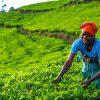
African Women Seek to Boost Innovation and Creativity in Agribusiness
Adeline Umukunzi, a 28-year-old woman mushroom farmer in Musanze, a district located about 100 km north of the capital Kigali, said women have often been the unseen faces of agribusiness in Rwanda. "Women have always played a vital role in agriculture, but behind the scenes. We are starting to see more and more female faces in agribusiness," she told IPS.
Questions Arise About Youth Commitment to Democracy After Nigerian Elections
As Nigeria’s newly-elected president Bola Tinabu seems to be making his mark by undoing many of his predecessor’s policies - another battle is being waged in the courts between him and one of his rivals Peter Gregory Obi.
Inequitable Distribution of COVID Vaccines Tied to Power and Money
 The reasons that led to inequitable distribution of COVID vaccines during the pandemic have been inherent in the global pharmaceutical supply chain for decades and contributed to serious adverse consequences for global south countries, as was evident with HIV and Ebola. Further, those issues will likely contribute to inequities with regard to vital medicines in the future. This story by IPS Correspondent and IWMF Fellow Jewel Fraser highlights that the inequity issue is definitely not due just to the pandemic but an ongoing one.

The Need for More Funding, Especially to Women, Towards Climate Adaptation Goals
There is a significant funding gap for climate adaptation – especially for women. Public financing will not be sufficient to close this gap, but it will be crucial for supporting the most vulnerable and facilitating private sector investments where funding and support is needed most.
Women’s Savings in Zimbabwe Struggle Under Weight of Unstable Currency
For years, self-employed and unemployed women in Zimbabwe formed neighbourhood "clubs" where they pooled money together for everything from buying bulk groceries to be shared at the end of the year to meeting funeral expenses.
The Common Good, or Transactional Religion?
For the last 30 odd years, I have maintained that religions matter. I noted the reasons for why they matter, and always listed how they matter ---as social service providers, as first responders in humanitarian crisis; as mediators in tensions and conflicts, as upholders of common good and the values of humanity; as protectors of children and of the most vulnerable; and even as political actors.
The USA’s Systemic Racism includes Its Wars
A recent Justice Department report concluded that “systemic” racial bias in the Minneapolis Police Department “made what happened to George Floyd possible.”
Rohingya Camps Become Dengue Hotspots in Bangladesh
With the monsoon in Bangladesh, Rohingya refugee camps in Cox's Bazar have emerged as a dengue hotspot, with the mosquito-borne disease continuing to spread among the stateless refugees. "A total of 1,066 dengue cases were reported in highly cramped refugee camps in Cox's Bazar up to May 23 this year, while the case tally was only 426 among the local community there," Dr Nazmul Islam, Director of Disease Control and Line of the Directorate General of Health Services (DGHS), said.
Out-Trumping the Trump
It’s been seven months since Florida Governor Ron DeSantis celebrated a brilliant re-election victory in the midst of an otherwise mixed Republican midterm performance. He had come in with nearly 20 per cent more votes than Democrat Charlie Crist.
When the President of the General Assembly Was Given a Seat at a Summit— a Back Row Seat
When the United Nations commemorated ‘International Day of Women in Diplomacy’ last week, the President of the General Assembly (PGA) Csaba Kőrösi rightly pointed out the woeful absence of women to hold that position in the UN hierarchy. “Women have played a central role in the history of the United Nations ever since the signing of the UN Charter,” he said, “but out of the 78 people elected to my role, President of the General Assembly, only four have been women.”
South Sudan President, Education Cannot Wait Jointly Announce Extended Multi-Year Education Response for Crises-Impacted Sudanese Children
South Sudan is experiencing one of the most severe crises in the world today, causing fragility, instability, and economic stagnation. While a peace agreement was reached in 2018, sporadic intercommunal violence and climate-induced disasters continue to spur displacement. More than 2.2 million people are internally displaced. Another 2.3 million have fled to neighboring countries as refugees.« Previous Page — Next Page »





The Week with IPS

NEXT STOP - SDGs
Tracking global progress towards a sustainable world
Tracking global progress towards a sustainable world
