Languages
Monday, November 9, 2026



News and Views from the Global South
IPS UN Bureau

Kenyan Entrepreneur Using Organic Microbes to Unlock Hidden Nutrients in Dairy Feeds
Using naturally occurring microbes, a Kenyan entrepreneur has developed a molasses-based supplement that pre-ferments animal feeds to unlock all the necessary nutrients that would otherwise find a way out of the animal through cow dung, and dairy farmers have fallen in love with the product.
BRAC International Signs MoU with Rwanda to Empower People in Extreme Poverty
Last week, BRAC International signed a Memorandum of Understanding (MoU) with the Government of Rwanda under the Ministry of Local Government (MINALOC) to support efforts to empower people in extreme poverty to develop sustainable livelihoods and break the poverty trap long term. This is part of the Government’s broader efforts to eradicate extreme poverty by 2030.
One Year into the Ukraine War, Massive Influx of Russians into Georgia Has Consequences for Locals
Since the war in Ukraine started in February last year, at least 1.5 million Russian citizens have crossed the Russia-Georgia border, official data states. However, as of today, it needs to be clarified how many of them stayed in the country, but walking the streets of the Georgian capital Tbilisi, the presence of Russian nationals can be seen almost everywhere.
Protecting and Managing the High Seas
On March 4 2023, the 193 members of the United Nations reached a major milestone. They agreed on a treaty to manage and protect the high seas– the marine areas that lie outside the 200 mile Exclusive Economic Zones (EEZ) of coastal states. The high seas are an essential part of the global ecosystem. They cover 50 percent of the Earth’s surface, produce half the oxygen we breathe, provide a home to 95 percent of the planet’s biosphere, are a critical sink for carbon dioxide, and help regulate the Earth’s temperature.
Championing Sustainability Despite Adversities in Asia & the Pacific
As we reach the midpoint of the 2030 Agenda for Sustainable Development, it is an opportune moment to reflect on the Asia-Pacific region’s progress and accelerate efforts to achieve our goals.
War Criminals & Military Aggressors Who Occupy Seats in the Security Council
Come April 1, a post-Ukraine Russia, will preside over the UN Security Council in a month-long presidency on the basis of alphabetical rotation. But Russia will not be the first or the only country – accused of war crimes or charged with violating the UN charter—to be either a member or preside over the most powerful political body in the United Nations.
Georgia: Danger Averted, for Now
Georgian civil society can breathe a sigh of relief. A proposed repressive law that would have severely worsened the space for activism has been shelved – for now. But the need for vigilance remains.
Scaling up Climate-Smart Trade Policies in the Pacific
The impacts of the climate crisis are acutely felt in the Pacific region. In recent years, the region has been hit by devastating climate events, which cause widespread destruction and significant loss of lives and livelihoods across countries.
Belief in Witchcraft Costing Lives of Elderly Women in Malawi
In December last year, a video clip went viral of two elderly women surrounded by a charged-up crowd and engulfed in a cloud of dust as they filled up a grave in a village in the Mzimba district in northern Malawi.
Health – It’s Time for Women to Lead the Sector
Women health workers are more than two thirds of the health workforce and represent 90% of the world’s frontline health workers, yet hold less than a quarter of senior leadership roles - a situation which is unfair and a significant risk for global health security.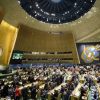
Gender Empowerment Falters at the Highest Echelons of the UN
When Secretary-General Antonio Guterres addressed the UN Commission on the Status of Women (CSW) last week, he said the annual meeting takes on even greater significance at a time when women’s rights are being “abused, threatened, and violated around the world.”
Belarus: A Prison State in Europe
Last October, Ales Bialiatski was awarded the Nobel Peace Prize. He was one of three winners, alongside two human rights organisations: Memorial, in Russia, and the Center for Civil Liberties in Ukraine. The Nobel Committee recognised the three’s ‘outstanding effort to document war crimes, human rights abuses and the abuse of power’.
Civic Space – the Bedrock of Democracy – is Scarce & Contested
On 29 and 30 March, the US government, in partnership with Costa Rica, Netherlands, South Korea and Zambia, will co-host the second virtual Summit for Democracy. Several elected leaders and state representatives will come together to highlight achievements in advancing democratic principles.
‘Stone-Age’ Donkey-Drawn Carts Ply Zimbabwe’s Abandoned Remote Routes
From the Masvingo-Beitbridge highway in Zimbabwe at a spot popularly known as Turn-P, the road passing through Neshuro Township has been degraded, disused, and derelict for over two decades, with buses avoiding the route. Now donkey-drawn carts that operate alongside jalopy vehicles have become the new alternative for remote travellers around Mwenezi villages.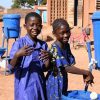
Terrorism & its Impacts on Water Access in the Sahel
Burkina Faso’s interim President Captain Ibrahim Traoré spoke late last year of the conflicts that are now blighting his country and much of his region. He described the situation in Burkina Faso as predictable given the endemic weaknesses in governance that he believes have led to the economic abandonment of many young people, particularly outside of urban areas.
Fighter Planes? Yes. Rubber Bullets? No
When the US was planning to sell fighter planes to a politically-repressive regime in South-east Asia in a bygone era, a spokesman for a human rights organization, responding to a question from a reporter, was quoted as saying there were no plans to oppose the proposed sale because “it is very difficult to link F-16 fighter planes to human rights abuses” If fighter jets are fair game and cannot be used to violate human rights, the same cannot be said of “weapons of mass control” (WMCs), including water cannons, tear gas grenades, pepper spray and rubber bullets—used mostly against civilian demonstrators.
Solar Powered Freezer Improving Immunization Coverage in Hard-to-Reach Rural Villages
Up until 2019, nurses in three health facilities located in the semi-arid south-eastern Kenya region of Makueni County struggled to bring critical health services closer to a hard-to-reach population scattered across three remote, far-flung villages.
Parliamentarians Pledge to Act on Grim Realities of Child Marriage, Gender-Based Violence
Child marriage, gender-based violence (GBV), sexuality education, religion, and tradition came under the spotlight during a conference, Arab and Asian Parliamentarians’ Meeting to Follow-Up on ICPD25 Commitments: Addressing Youth Empowerment and Gender-Based Violence, held in Jakarta, Indonesia.
Pandemic Accord Text Falls Short of Expectations
As countries recently gathered in Geneva for the fourth round of negotiations on the WHO proposed pandemic treaty or accord, close examination of the current text by civil society experts has revealed significant gaps.
International Women’s Day, 2023: Gender-Responsive Approach to Technology and Innovation Will Ensure Progress
Promoting gender equality in technology and digital spaces is at the core of the UN’s observance of International Women’s Day (IWD) as UN senior officials call on the world to take concrete action against ingrained gender biases.
Vanuatu Twin Cyclones Underscore the Pacific’s Vulnerability to Compounding Climate-Disaster Risks
Two destructive Category 4 tropical cyclones, Judy and Kevin, and an earthquake of 6.5 magnitude impacted over 80 per cent of the Vanuatu population from 1 to 3 March 2023. To address this emergency situation, the UN, along with Pacific member States have deployed personnel on the ground to coordinate humanitarian assistance and prepare post-disaster damage assessment.« Previous Page — Next Page »





The Week with IPS

NEXT STOP - SDGs
Tracking global progress towards a sustainable world
Tracking global progress towards a sustainable world
