Languages
Tuesday, October 20, 2026



News and Views from the Global South
Lebanon

From War Zones to Global Environment Talks, Communities Seek Faster Green Finance
For three decades, Iffat Rachid Edriss walked Lebanon's coastline with a clear purpose: protecting the sea she loves.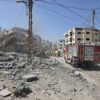
Aid Groups Appeal for Lasting Ceasefire to Address Lebanon’s Catastrophic Humanitarian Crisis
Aid groups have welcomed a ten-day ceasefire agreed between Israel and Lebanon but warn only a permanent halt to fighting can allow for the kind of response needed to address the dire humanitarian situation in the country.
Humanitarian Response in Lebanon ‘Under Significant Strain’ after Wednesday Airstrikes
On April 8, Israeli military forces launched the deadliest series of airstrikes on Lebanon since hostilities escalated in early March, resulting in the deaths of at least 254 civilians. This latest incident threatens to further complicate humanitarian efforts in Lebanon that are already under immense pressure.
UN Leaders, Diplomats Warn of Middle East Instability Following Weekend Air-Strikes in Iran
The United States and Israel launched a joint military strike on Iran on February 28. Iran followed with military strikes on Israeli bases and on Arab Gulf states, including Bahrain, Oman, and the United Arab Emirates. The realized threat of a new war has caused alarm for the security situation in the Middle East and its impact on civilian populations.
Displaced Farmers in Southern Lebanon Still Denied Access to Land
Food security and livelihoods in southern Lebanon are under severe threat as the repercussions of Israeli bombing continue to be felt across the region, a report released today (NOV 10) has warned.
Struggle For Water Continues Following Israeli Attacks on Lebanon
Just under a year into a fragile ceasefire, 150,000 people in southern Lebanon continue to deal with the potentially lethal aftermath of Israeli bombing, highlighting the devastating long-term effects of conflict.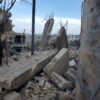
Southern Voices: Grief, Resilience, and Daily Life in Jnoub
"Special, targeted operations in southern Lebanon," a phrase that has echoed repeatedly over the past two years in Israeli Defence Force (IDF) statements. But behind these clinical military terms lies a human cost that statistics cannot capture.
Health Workers in Conflict Zones Experience an Epidemic of Violence
The international community must take action to uphold international humanitarian law, say healthcare and rights advocates, as attacks on healthcare in war zones reached a record high last year.
U.S.-Backed Israel-Hezbollah Ceasefire Comes Into Effect
A ceasefire between Israel and Hezbollah comes into effect early on Wednesday morning (November 27). It is hoped that this will mark an end to a 13-month-long period of hostilities between the two parties in Lebanon. News of the ceasefire came from United States President Joe Biden, who made a televised announcement on Tuesday afternoon that an agreement had been reached between the Israeli and Lebanese governments. Biden remarked that the ceasefire was expected to be a “permanent cessation of hostilities” from both sides of the conflict.
UN, Lebanon Launch $426 Million Humanitarian Emergency Appeal
The escalating hostilities between Israel and Lebanon have already threatened the safety and security of more than 1 million civilians, urging Lebanon’s government and the United Nations to take swift humanitarian action and call for international support.
Lebanon’s Deep Healthcare Crisis Exposed through Communicable Diseases
This summer is bringing an additional challenge to the public health front in Lebanon, along with higher-than-normal temperatures.
Liberal Facade Hides Lebanon’s Patriarchy
Despite its apparent liberalism, Lebanon scores low in gender equality, especially in politics.
Hunger, Desperation in Lebanon as Food Prices Rocket
On the streets of Beirut, Hadi Hassoun begs for a few pounds to feed his five children. He has little hope of a job, especially now that the economic crisis in Lebanon has destroyed wealth.
Lebanon: How to Build Back Better after Political and Economic Crisis
Lebanon must “shield and preserve” the skills, knowledge, and experience of its people in order to move forward with its development, according to Christophe Abi-Nassif, the Lebanon programme director for the Middle East Institute (MEI).
The Exploitative System that Traps Nigerian Women as Slaves in Lebanon
“I need help, right now I cannot walk properly,” trafficking victim Nkiru Obasi pleaded from her hospital bed in a video she posted online. The young Nigerian woman had been injured in the Aug. 4 Beirut blast, which ripped through the Lebanese capital, killing 190 people injuring a further 6,500 and damaging 40 percent of the city. However, it’s not her injuries keeping her in Lebanon but a restrictive and abusive system of migrant laws.
Impending Food Crisis in Lebanon will Largely Affect Migrant Workers
Migrant workers and refugees in Lebanon will “inevitably” suffer the most as food insecurity threatens the nation following last week’s blast.
Once Auctioned, What to Do with Syrian Refugees?
Few months ago, an unprecedented "humanitarian auction" was opened in Brussels at the European Commission, shortly after watching the image of the three-year old Syrian child that the sea threw up on the Turkish shores. The "auction" was about deciding upon the number of Syrian refugees to be hosted by each EU country. Germany won the largest batch.
Disunity, the Hallmark of European Union Foreign Policy
The appalling crisis ravaging the Middle East and striking terror around the world is a clear challenge to the West, but responses are uncoordinated. This is due on the one hand to divergent analyses of the situation, and on the other to conflicting interests.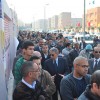
New Poll Highlights Need for Reform in the Middle East
A new public opinion survey undertaken in six Arab countries, Iran, and Turkey finds that people are more likely to blame “corrupt, repressive, and unrepresentative governments” and “religious figures and groups promoting extremist ideas and/or incorrect religious interpretations” for the rise of violent groups like al-Qaeda and the Islamic State than they are to blame “anger at the United States.”
Syrians: ‘Biggest Refugee Population From a Single Conflict in a Generation’
Barely 10 months ago, the United Nations Refugee Agency (UNHCR) said the refugee population from Syria had reached the three million mark. Today, the latest data from the field show that the number has passed four million.
Child Labour: A Hidden Atrocity of the Syrian Crisis
In a conflict that has claimed over 220,000 lives and injured a further 840,000 people as of January 2015, it is sometimes hard to see beyond the death toll.Next Page »





The Week with IPS

NEXT STOP - SDGs
Tracking global progress towards a sustainable world
Tracking global progress towards a sustainable world
