Languages
Tuesday, October 20, 2026



News and Views from the Global South
MDG 5 - Maternal Health
HEALTH-BRAZIL: Birth Centres vs. Hospitals
The recent closure of a birth centre, which offered a more "human" touch with its focus on natural childbirth, in this Brazilian city revived the controversy over such practices, which have the backing of the Health Ministry but are opposed by the medical associations.HEALTH-KENYA: Family Planning Not Only For Women
In a makeshift room inside an unfinished building in the Manyatta slums in the Western Kenyan city of Kisumu, the neighbourhood’s men regularly congregate to discuss community matters, usually in the presence of the area chief.HEALTH-KENYA: Two Dollars And Change: Enough To Save a Mother’s Life
At the age of 14, Zulekha Mumma delivered her first child. At 21, the birth of her seventh child killed her. She died from excessive bleeding in her home in Nyalenda, a slum on the outskirts of Kisumu city in western Kenya, some 400 kilometres from Nairobi.RIGHTS: Honour Pledges on Reproductive Health
In 1994, the International Conference on Population and Development (ICPD) proposed a groundbreaking shift in the approach to reproductive health: women's reproductive capacity was to be transformed from an object of population control to a matter of women's empowerment to exercise personal autonomy.HEALTH-BOLIVIA: Subsidy to Cut Maternal-Child Mortality
A new Bolivian government programme will provide special payments to pregnant women and mothers with children up to the age of two, with the aim of cutting the country’s maternal and infant mortality rates.
HEALTH-NEPAL: Baby Boom in Maoist Army
At the annual military parade of the People’s Liberation Army, Nepal’s ex-guerrillas, curious bystanders saw a young woman clad in military fatigues kiss and cuddle a baby before handing her back to an older woman.
HEALTH-INDIA: On the Rag Amidst Riches
For millions of Indian women the colloquial phrase 'going on the rag' can literally mean that, or using just about anything available to stay dry during menstrual periods for lack of access to modern sanitary pads.NICARAGUA: Total Ban on Abortion Violates Human Rights, Says UN
The United Nations Committee against Torture (CAT) described the criminalisation of abortion under any circumstances in Nicaragua as a violation of human rights.
Q&A: "A Threat to One is a Threat to All"
On May 24, one of the leading advocates of Africa's unity and liberation, Tajudeen Abdul Raheem, was killed in a car accident in Nairobi, Kenya.MEXICO: Avalanche of Anti-Abortion Laws
In the last 13 months, 12 of Mexico's 32 states have approved amendments to their state constitutions defining a fertilised human egg as a person with a right to legal protection, and seven other state parliaments are taking steps in the same direction.LESOTHO: Cultural Beliefs Threaten Prevention of Mother-Child HIV Transmission
A health centre in one of Lesotho’s poorest districts has scored significant success in implementing a prevention of mother-to-child HIV transmission (PMTCT) programme, but health experts warn that a number of factors, including cultural beliefs and stigma, threaten to derail it.HEALTH-KENYA: Contraceptives: Stock-Outs Threaten Family Planning
Kenya's new national plan for reducing maternal mortality recognises the importance of a steady supply of contraceptives across the country. In principle, contraceptives are already available for free or heavily-subsidised at government clinics and hospitals, but for women who rely on public health system, the reality is somewhat different.
HEALTH-MEXICO: Training Professional Village Midwives
Mexican communications specialist Marla Vargas had her baby in the bathtub at home, attended by a midwife, because, she says, "I wanted a different experience, and a better way for my child to come into the world."HEALTH-MALAWI: Women’s Group Sues Govt Over Abortion Rights
An influential women rights organisation in Malawi, Women in Law in Southern Africa-Malawi (WILSA-Malawi), is suing the government of Malawi for preventing women from accessing safe abortion.GENDER-ZIMBABWE: Religion and Poverty Force Girls into Early Marriages
While her peers get ready to go to school each morning, 14-year-old Matipedza (not her real name) of Marange district in Manicaland has to stay behind to prepare breakfast for her 67-year-old husband.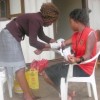
HEALTH-UGANDA: Shifting the Weight to Bear the Burden
There is no lunch break for the staff at the Kiswa Health Centre. With the closure of the nearby Mbuya hospital for renovation earlier this year, the six-room centre is offering pre- and antenatal services, HIV/AIDS testing and general healthcare to 400 patients a day.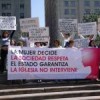
CHILE: Therapeutic Abortion – Hot Election Issue
The debate on the decriminalisation of therapeutic abortion has been revived ahead of the December presidential elections in Chile, one of the few countries in the world where abortion is illegal even under extreme circumstances, such as risk to the mother's life or a severely deformed foetus.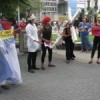
BRAZIL: Child Rape Case Revives Debate on Abortion
The case of a nine-year-old girl who was raped and impregnated by her stepfather has revived the debate in Brazil on sexual violence, the need to reform the abortion law, and the shortcomings of the health system when it comes to dealing with the few cases in which abortion is legal.ARGENTINA: Bold New Law on Violence Against Women
Argentina now has an ambitious new law to prevent, punish and eradicate physical, psychological and economic violence against women, in both the private and public spheres. But the big challenge, say experts, will be to put it into practice.LATIN AMERICA: Everyone Pays for Domestic Violence
After 26 years raising three children in an economically comfortable marriage, Dora finally understood that staying with her husband meant "choosing death." "I had to lock myself into my daughter’s room at night for fear that he would hit me with a baseball bat while I slept," she told IPS.CHILE: Progress for Women, But Still a Yawning Gap
With one year to go in office, women's groups and civil society organisations report positively on Chilean President Michelle Bachelet's government policies to promote gender equity. But there is still much to be done, they say.« Previous Page — Next Page »





The Week with IPS

NEXT STOP - SDGs
Tracking global progress towards a sustainable world
Tracking global progress towards a sustainable world
