Languages
Tuesday, October 20, 2026



News and Views from the Global South
MDG 5 - Maternal Health
Q&A: ‘ We Were Told To Go To The Mortuary’
Two understaffed and ill-equipped public clinics serving 600,000 people: it is in neighbourhoods like Dandora that the battle to reduce maternal mortality is won or lost.HEALTH-LATAM: Too Many Women and Children Dying
"Latin America is not in the tragic conditions of the least developed countries, but an average rate of 130 maternal deaths per 100,000 live births is very high," UNICEF representative Egidio Crotti told IPS.DEVELOPMENT-AFRICA: Better Education Improves Health of Mothers and Children
A new UNICEF report reveals there is still much to be done to reduce infant and maternal mortality in sub-Saharan Africa. Failure to improve care for pregnant women and newborns threatens to undermine progress on all health-related development goals.HEALTH-NEPAL: On Course to Achieve MDG on Maternal Health
Impoverished Nepal has dramatically reduced maternal mortality cases from 540 per 100,000 live births in 2001 to the present 280 - a feat experts attribute chiefly to the legalisation of abortion.
GENDER-AFRICA: "Where Is The Money?"
"Investing in women pays off. It is an effective means to reduce poverty and accelerate the achievement of the rest of the MDGs," says Danish minister for development cooperation Ulla Tørnæs.URUGUAY: Congress Votes to Legalise Abortion, But Veto Likely
Uruguayan President Tabaré Vázquez and his cabinet have 10 days to promulgate or veto a bill that would decriminalise abortion in the first 12 weeks of pregnancy, which was passed Tuesday by the Senate.WEST AFRICA: Primary Health Care Key to MDGs
None of the 16 nations of West Africa will achieve the Millennium Development Goals (MDG) of reducing child mortality or improving maternal health without serious efforts to improve their health care systems, according to the World Health Organization (WHO).MEXICO: Legalisation Fight Gains Ground as Illegal Abortions Increase
Legal access to abortion, available since April 2007 in the Mexican capital, should be extended to the rest of the country, where the rate of illegal abortions exceeds the average for developing countries and the total number reached 880,000 in 2006, up 64 percent from 1990.DEVELOPMENT: Presidents Boost Maternal and Child Health
As world leaders gather at the United Nations to discuss progress toward achieving the Millennium Development Goals (MDGs), Presidents Michelle Bachelet of Chile, Tarja Halonen of Finland, and Jakaya Mrisho Kikwete of Tanzania are calling for more attention to be paid to maternal and child health.
PERU: Birthing Houses Combine Native Traditions, Modern Medicine
"Ashaninka women give birth at home, in accordance with tradition," declares José Ponce, the head of the health committee in Puerto Ocopa, a village of 253 Ashaninka indigenous families deep in the central Peruvian jungle.
Q&A: "Reproductive Rights Can Overcome the Conservative Wave"
This year marks four decades of international recognition of people's right to decide how many children they want to have and when, and for that reason there is a great deal to celebrate, says Brazilian expert Carmen Barroso, of the International Planned Parenthood Federation.
POPULATION-INDIA: Emergency Contraception Pill The Answer?
With unintended pregnancies and unsafe abortions continuing to be a serious problem in India, some doctors have begun advocating use of the emergency contraceptive (EC) pill as a possible solution, though conditions in India are regarded far from conducive.
Q&A: Family Planning In Its Infancy in South Sudan
With few roads and almost no health and education infrastructure for the estimated 10 million people of South Sudan - an April census has yet to release any results - health care workers have an enormous task ahead of them.
POPULATION-MIDEAST: Time Bomb Ticking Away in Gaza
Crowded into a tiny strip of territory of 360 square kilometres, plagued by poverty, malnutrition and unemployment, Gaza's 1.5 million people face a demographic time bomb as the fragile infrastructure struggles to cope with a soaring birth rate.POLITICS-AFRICA: Mixed Reviews From Civil Society
Civil society organisations (CSOs) have mixed feelings about the outcomes of the latest African Union Summit, which concluded in the Egyptian resort of Sharm El Sheikh earlier this week. The summit meeting of African heads of state and officials was largely dominated by debate – or lack thereof – over the crisis in Zimbabwe and the participation of the controversial president, Robert Mugabe.
NICARAGUA: “The Women’s Movement Is in Opposition”
The action taken on abortion by the governing Sandinista National Liberation Front (FSLN) in Nicaragua is "a betrayal" of women, who were "key allies" of the 1979 revolution. Therefore there has been a "radicalisation of the women’s movement," which is declaring itself in opposition, activist Sofía Montenegro told IPS.
HEALTH-MALAWI: Water Woes in Model Hospital
Gladys Mawera's face is contorted with pain -– both she and her newborn baby survived a complicated birth three days ago - but she has not been able to take the painkillers and antibiotics prescribed to her by the medical personnel at the Chiradzulu District Hospital in southern Malawi. The hospital has been without water for five days.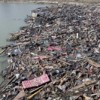
BURMA: One Million Survivors Not Yet Reached – U.N.
U.N. officials are giving the impression that the world body is making headway in helping the millions of survivors in Burma’s cyclone-hit Irrawaddy Delta.
HEALTH-AFRICA: UNICEF Reports Five Million Child Deaths Every Year
When four-year-old Alice Were suddenly developed a fever, her mother Miriam took her to the local medicine woman close to her house in Kangemi, a poor, cramped settlement on the outskirts of the Kenyan capital, Nairobi. Two days later, Alice was unconscious. Her frantic mother rushed to hospital with the child in her arms. But it was too late. Alice died of malaria.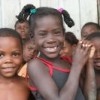
LATIN AMERICA: Food Price Inflation Threatens Children
Child malnutrition in Latin America and the Caribbean will be aggravated by global food shortages, even though the region produces much more food than it consumes, say experts and officials.COLOMBIA: Therapeutic Abortion – A Right in Name Only?
A woman in Pasto, the capital of the western Colombian province of Nariño, found out that the baby she was expecting was severely deformed. But when she went to the provincial university hospital for an abortion, the chief obstetrician gynaecologist told her that "If your son is born deformed, take him to a circus."« Previous Page — Next Page »





The Week with IPS

NEXT STOP - SDGs
Tracking global progress towards a sustainable world
Tracking global progress towards a sustainable world
