Languages
Sunday, November 8, 2026



News and Views from the Global South
Millennium Development Goals (MDGs)
MADAGASCAR: Applying Local Resources to Sanitation
"We're calling on all citizens," said Riovoarilala Rakotondrabe, putting the final touches on a giant poster announcing a massive community clean-up for the coming Sunday.
LIBERIA-COTE D’IVOIRE: Border Villages Sharing the Little They Have
This Butuo man only knows one phrase in French: Viens manger. Come eat. That's what they said to him years ago, when he was one of hundreds of thousands who fled to Côte d'Ivoire to escape the brutal 14-year civil war in Liberia.SOUTH AFRICA: Who Says Research Can’t Be Dramatic?
In the early 1990s, a group of researchers set off for a small rural village in the eastern part of South Africa. Their intention was simple: teach the community how to rehydrate sick babies.South African Farmers Set Up in Congo
In the hope of strengthening its agricultural production, the Republic of Congo has handed over 80,000 hectares of arable land to a company owned and operated by 14 South African farmers.
DR CONGO: Beauty of a Bean Wins Farmers’ Hearts
Smallholder farmers in Bandundu Province are boosting their harvests with the help of the sweetly-named velvet bean.
INDIA: EU Trade Deal May Curb Affordable Drug Supply
As India prepares to seal a sweeping trade and investment deal with the European Union (EU) in April, civil society groups are campaigning to limit the agreement's repercussions within the local generic drug industry here upon which millions of people around the globe depend.
ZIMBABWE: Fighting Past Fear to Treat TB
In the dusty streets of Bulawayo’s densely populated townships, Susan Nkiwane is making house calls today. She is one of a group of twelve women who form a fragile web of support for TB sufferers in her community.Q&A: Studying Kenyan Farmers’ Efforts to Adapt
Climate change has become an important part of the development agenda. In Africa, farmers and consumers alike are feeling its effects on productivity and food security.
KENYA: Women Hold the Key to Rural Prosperity
John Kyalo Mulwa couldn't support his family from his six hectare farm, so he quit farming to open a bar. But he turned the land - and decision-making on it - over to his wife. Turns out she's a better farmer than he ever was.UGANDA: Bicycles at the Heart of Empowerment Scheme for Rural Women
The bicycle has become a symbol of hope for hundreds of women in Uganda who have been trained in repairing one of life’s favorite transport modes.
PAKISTAN: Citizens and NGOs Step Forward to End Illiteracy
The man known as ‘Master Ayub’ holds classes for free, between three and seven o’clock. His classroom is a public park, and his students are street children six to 16 years of age who otherwise would be picking trash, begging, or slowly becoming petty thieves.
Q&A: “Microfinance Is Much More Than Just Credit”
A day after U.S. assistant secretary of state for south and central Asian affairs Robert Blake appealed to the Bangladeshi government to reconsider its dismissal of 70-year-old microfinance guru Muhammad Yunus from the Grameen Bank, IPS spoke with the president and CEO of Women's World Banking (WWB), currently the most comprehensive network of microfinance institutions (MFIs) in the world.
MOZAMBIQUE: Linette Olofsson – A Life Spent in Politics
There is no way one can have a conversation with Linette Olofsson without being dragged into her collection of images about her community agricultural project in central Mozambican Province of Zambezia.
SOUTH AFRICA: Firebrand Politician Enters Mayoral Race
The woman described by former South African President Nelson Mandela as his "favorite opposition politician", Patricia de Lille, has thrown her hat in for the position of mayor of Cape Town.
BOLIVIA: Cochabamba Still Thirsty
There is still no apparent solution to the unsatisfied demand for drinking water in Cochabamba, 11 years after this central Bolivian city made international headlines with a popular uprising that halted the privatisation of water service.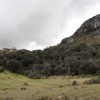
ECUADOR: Water Management Transcends “Public or Private” Debate
For one day, civil servants are trading their desks for the chilly highland plains in a rural community 3,500 metres above sea level on the outskirts of the Ecuadorian capital, where they are helping to plant native trees.Peak Water Has Already Come and Gone
Canadian Kevin Freedman is celebrating World Water Day Tuesday by living on 25 litres of water a day, instead of the North American average of 330 litres per day. And he has enlisted 31 others in his "Water Conservation Challenge" to go water- lean, using just 25 litres per day for cooking, drinking, cleaning, and sanitation for the entire month of March.SRI LANKA: Parliamentarian Breaks Silence on Domestic Violence
She became famous playing the role of ‘Pabha’, a poor young girl in love with a rich man in a long running hit television series here. But these days, Upeksha Suwarnamali is better known for her real-life role: A victim of domestic violence turned champion of abused women.
ZAMBIA: Young Voters Push Grassroots Issues to the Fore
Concina Haajila was only a year old in 1991 when Zambia turned from 27 years of autocracy and dictatorship to political pluralism and democratic governance. During the past 20 years she and millions of her peers have grown to adulthood and become disenchanted with the politics of their nation which have swung from an issue base to hero worship and personal purse enlargement.
MALAWI: Enterprising Approach Underlies New Sanitation Campaign
The market can do better: a sanitation and hygiene campaign to be launched in Malawi plans to apply this tenet to improve cleanliness and public health in the country's cities.
LATIN AMERICA: Wave of Water Privatisation Over; Coverage Challenge Remains
Now that the wave of water privatisation of the 1980s and 1990s has let up, the main challenge facing water utilities in Latin America is expanding coverage of high-quality water services.« Previous Page — Next Page »





The Week with IPS

NEXT STOP - SDGs
Tracking global progress towards a sustainable world
Tracking global progress towards a sustainable world
