Languages
Tuesday, November 10, 2026



News and Views from the Global South
Millennium Development Goals (MDGs)

NICARAGUA: Literacy Campaign Changing Women’s Lives
Lorena Castillo was 10 years old when she was told that her lot in life was to become a good homemaker and a devoted wife and mother. But she would learn none of that at school, her father said when she asked to be allowed to go with her brothers to the school in her rural Nicaraguan village.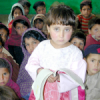
RIGHTS-PAKISTAN: Back to School in Swat, But for How Long?
Tiny Sheema is happy to be back in school in Swat, a volatile northern district in the North West Frontier Province (NWFP).HEALTH-ASIA: Taiwan Blazes a Trail to Help Drug Users with HIV
Taiwan is emerging as a beacon of hope for countries across Asia grappling to stop the spread of the AIDS epidemic among injecting drug users (IDUs), a major risk group.ECONOMY: Crisis Pushing Key Poverty Goals Out of Reach
The global economic crisis has created a "development emergency" that will put at least some of the U.N.'s key poverty-reducing 2015 Millennium Development Goals (MDGs) out of reach for many countries, especially in sub-Saharan Africa and South Asia, according to a new report released Friday by the World Bank and the International Monetary Fund (IMF).HEALTH: Final Push to Control Malaria by 2015
About one million people die every year from malaria, including a child every 30 seconds. Half a billion people are infected annually. Africa alone, according to studies, loses 12 billion dollars in productivity and to treating the disease. And almost all of it is easily preventable.POLITICS-US: Overcoming Toxic Legacy of Bush-Style Democracy
A massive overhaul of U.S. development assistance is needed, says a new report from an influential Washington think tank.SOUTH AFRICA: Activists Ask Government to Integrate Men and Boys in Gender Policies
Gender activists are calling on the new South African government to improve the country’s gender legislation. Current gender policies focus on women, ignoring the rights, roles and responsibility of men and boys, they say.
HEALTH-ZAMBIA: Sanitation Backlog To Blame for High Child Mortality
Dehydration caused by severe diarrhoea is a key cause of infant deaths in Zambia, a country with one of the highest child morality rates in the world, according to a new report by Zambia’s health department.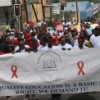
SWAZILAND: Govt Pleads for More Time On Free Primary Education
"This demonstration is close to my heart because the cause we’re fighting for affects me directly," said Thabile Ngwenya, a teacher at a rural primary school teacher in central Swaziland.
CLIMATE CHANGE: Native Peoples Sound Dire Warning
Humanity's hot carbon breath is not just melting the planet’s polar regions, it is disrupting natural systems and livelihoods around the world, indigenous people reported this week at a global meeting on climate change in Anchorage, Alaska.HEALTH-SWAZILAND: TB: ‘Indeed We Have a Problem’
The Swazi government's slow response to a fast-growing tuberculosis epidemic has eroded the possibility of controlling it.
BRAZIL: Pilot Project Helps Men Abandon Violence
Some men interpret an overly long glance from another man as "a gay thing," others as "a provocation" to fight - ideas that are part of the "machista" mindset that a government initiative in Brazil is trying to break down.DEVELOPMENT: World Bank Steps Up Funding for “Safety Nets”
The World Bank plans to triple its lending for social safety nets in poor countries to 12 billion dollars over the next two years in order to better protect the most vulnerable people from the worst effects of the global economic crisis, the bank announced Tuesday.
SOUTHERN AFRICA: Climate Change to Shrink Agricultural Production by Half
Environmental researchers predict Southern Africa will be hit heavily by climate change over the next 70 years. Agricultural production is projected to be halved - a development that will threaten the livelihoods of farmers in a region where 70 percent of the population are smallholder farmers.SOUTH AFRICA: Communities Draft Health Map to Push for Better Services
The quality of South African public health services cannot improve if community-based organisations (CBOs) are not given a greater role in shaping, developing and implementing national and provincial health policies.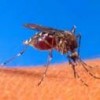
HEALTH-LATIN AMERICA: Dengue Spreading and Increasingly Lethal
The population's susceptibility to suffering more severe forms of dengue is worrying health experts, as the epidemic in South America expands in Argentina, Bolivia, Brazil and Paraguay.DEVELOPMENT: IMF, Reform Thyself, Groups Say
Ahead of the annual meetings of the world's biggest international financial institutions this weekend, calls are growing for the United Nations to take new initiatives on financing for development in poor countries.
HAITI: Hunger Still Severe on Food Riots Anniversary
A year after riots over soaring food prices in Haiti made headlines around the world, conditions for many in this impoverished country have only worsened.WATER-GUINEA BISSAU: Neglecting Infrastructure at the People’s Peril
The most recent cholera outbreak in Guinea-Bissau killed 225 people before it was brought under control in February; 14,000 people were infected by the water-borne disease, most of them in the capital, Bissau.DEVELOPMENT: Making Sanitation Sexy
Though the issue of human excreta is often taboo in polite company, human waste and sanitation are starting to take their rightful place in debates about development and human health.ECONOMY: U.N. Summit Seeks Collective Response to Crisis
The president of the 192-member U.N. General Assembly, Miguel d'Escoto Brockmann, dismisses the G20 bloc of economically advanced countries as unrepresentative of the international community.« Previous Page — Next Page »





The Week with IPS

NEXT STOP - SDGs
Tracking global progress towards a sustainable world
Tracking global progress towards a sustainable world
