Languages
Tuesday, November 10, 2026



News and Views from the Global South
Millennium Development Goals (MDGs)
CHILE: Portrait of Community Leaders in Slums
Over 70 percent of community leaders in Chilean shanty towns are women. Their average age is 42, and most of them do not identify with any political party. Forty-five percent believe that the prevailing economic system makes the rich get richer and the poor get poorer.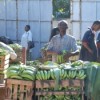
DEVELOPMENT-AFRICA: A Msg of Hope to Farmers
Mobile phones are being used to diagnose and treat crop diseases that cause massive losses to farmers, presenting an opportunity to increase yields as location-specific information about disease threats is made available.
PERU: Where the Poor Pay More for Water
In Lomas de Manchay, an area of slum-covered hills outside of the Peruvian capital that is home to 50,000 people, mainly poor indigenous migrants from the highlands, clean water is worth gold – almost literally.
HEALTH-SWAZILAND: 'Role Models in the Community'
She is popularly known as sitjifiri (beautiful and well-kempt woman in SiSwati). Sylvia Khuzwayo travels across the Shiselweni region in the southern part of the Kingdom of Swaziland, giving testimonials to communities on her experience of living with HIV.GENDER-ZIMBABWE: Religion and Poverty Force Girls into Early Marriages
While her peers get ready to go to school each morning, 14-year-old Matipedza (not her real name) of Marange district in Manicaland has to stay behind to prepare breakfast for her 67-year-old husband.PERU: Bailout of Mining Co. Eclipses Environmental Disaster
The Peruvian government refused to bail out the U.S. mining and metallurgical company Doe Run, which has caused severe pollution in the highlands city of La Oroya, from its severe financial troubles.DEVELOPMENT: U.N. Triples Allotment for Population
The 1994 landmark International Conference on Population and Development (ICPD), held in the Egyptian capital of Cairo, fixed a target of 20.5 billion dollars for investments in population programmes worldwide for the year 2010.DEVELOPMENT: U.N. Offers New Political Profile for Sanitation
When the United Nations concluded its International Year of Sanitation (IYS) last December, it left behind some 2.5 billion people worldwide waiting in line for toilets that did not exist or were in short supply.
PARAGUAY: Women Growing in Politics – at Pace Set by Men
The global tendency towards greater participation by women in politics has reached Paraguay, but the pace continues to be set by men, and there are still tough barriers to equal access to elected posts.
HEALTH-UGANDA: Shifting the Weight to Bear the Burden
There is no lunch break for the staff at the Kiswa Health Centre. With the closure of the nearby Mbuya hospital for renovation earlier this year, the six-room centre is offering pre- and antenatal services, HIV/AIDS testing and general healthcare to 400 patients a day.
HEALTH-SOUTH AFRICA: Returning Sick – HIV, Illness, Death and Migration
It's a Wednesday afternoon at the Joe Gqabi bus terminus in Philippi, Cape Town, and ticket touts scramble to recruit passengers wanting to travel to the rural Eastern Cape, a 1,000 kilometre, 16-hour haul away.
HEALTH-SOUTH AFRICA: Bringing HIV Testing Where It's Needed
In the ten months since the Tutu Tester's mobile clinic began touring Cape Town neighbourhoods offering quick, confidential tests for a number of chronic diseases including HIV/AIDS, more than 7,000 people have climbed into its colourful camper-van for testing and counselling.
UGANDA: Village Health Teams – First Draft of a Solution
Primary health care in Uganda is hampered by a shortage of doctors and nurses, but trained volunteers from the community are stepping into the breach.DEVELOPMENT-SOUTHERN AFRICA: Helping the Most Vulnerable Households
A new tool to accurately measure the vulnerability of rural households to the impact of shocks such as the illness or death of a household member from AIDS has been developed by a Southern Africa regional policy network, the Food Agriculture and Natural Resources Policy Analysis Network (FANRPAN).ECONOMY-EL SALVADOR: Passing the Poisoned Chalice
Warnings about the dire state of the Salvadoran economy and its weak position for coping with the global recession were ignored by outgoing President Antonio Saca for political reasons in an election year, analysts say, as they point out the difficulties that lie ahead for the new government.
HEALTH-ZIMBABWE: Government Promises to Rebuild Health System
The resuscitation of Zimbabwe’s health care system has been identified as one of the major challenges facing the country by the country’s new unity government.NAMIBIA: U.S. Poverty Grant – Blessing or Curse?
More than $300 million foreign aid will flood Namibia in the next five years through the Millennium Challenge Account (MCA), a development fund governed by the United States government-owned Millennium Challenge Corporation (MCC). But the jury is still out on whether the grant is a blessing or a curse.PARAGUAY: Debt for Education
The start of the new school year in Paraguay in March once again highlighted the serious shortcomings plaguing the educational system, like rundown school buildings and a shortage of classrooms. But an agreement to swap debt for education will help the government begin to address the problems.HEALTH-SOUTH AFRICA: 'Our Lives Are Most Important'
The Fourth South African AIDS conference ended in Durban Friday with optimism over progress in research and policy on AIDS prevention but serious concerns over finding the resources to effectively implement the country's national strategic plan of action.
BRAZIL: Walling Off the Slums…or ‘Eco-Barrier’?
While the government of the state of Rio de Janeiro insists that a wall being built around a poor neighbourhood is designed to protect what remains of Brazil’s Atlantic rainforest from further encroachment by the slum, human rights groups say it is designed to further separate the rich and poor.G20: Give or Take a Trillion or Two
The ease with which leaders spoke of trillions of dollars at the G20 summit in London Thursday was no doubt intended to signal to the world just how serious leaders are about getting the economy right again. That these fabulous figures may never add up is another matter.« Previous Page — Next Page »





The Week with IPS

NEXT STOP - SDGs
Tracking global progress towards a sustainable world
Tracking global progress towards a sustainable world
