Languages
Wednesday, November 11, 2026



News and Views from the Global South
Millennium Development Goals (MDGs)
AUSTRALIA: Concerns Rise Over Leak at Uranium Mine
The revelation that a substantial amount of contaminated water is leaking each day from a tailings dam at a uranium mine, located in a World Heritage Site, has sparked protests from environment activists.CLIMATE CHANGE: Farming Could Be Friend or Foe
Don't forget about agriculture in the upcoming global negotiations to combat climate change, experts warn. Not only is farming most at risk in an increasingly variable and tempestuous climate, it is also a major emitter of greenhouse gases.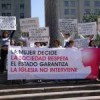
CHILE: Therapeutic Abortion – Hot Election Issue
The debate on the decriminalisation of therapeutic abortion has been revived ahead of the December presidential elections in Chile, one of the few countries in the world where abortion is illegal even under extreme circumstances, such as risk to the mother's life or a severely deformed foetus.
SOUTH AFRICA: Nurses Should Be Backbone of ARV Treatment
Effectively scaling up South Africans’ access to antiretroviral (ARV) treatment will require decentralisation of health services from hospitals to clinics and allowing nurses to manage and eventually to initiate ARV treatment and care.HEALTH-ARGENTINA: Dengue Haemorrhagic Fever Is Here
While the authorities squabble over what or whom to blame, Argentina is suffering its worst epidemic of dengue fever since 1998 in terms of the number of people and the size of the area affected. And on top of that, the most dangerous form of the illness, never recorded here before, has made its appearance.ZAMBIA: Diminishing Returns on Agriculture Subsidy
Responding to years of complaints over the management of the Fertiliser Support Programme (FSP), the Zambian government has now proposed that the private sector takes over its running to reduce cases of corruption.RIGHTS: Engaging Men in Gender Equality Efforts
How many men work in day care centres, looking after children? How much paternity leave are men entitled to? How many government programmes to combat domestic violence include violent men themselves as part of the treatment?POPULATION: Global Financial Crisis Threatens Family Planning
The spreading global financial crisis is threatening to undermine another one of the U.N.'s major development and health goals: family planning.
HEALTH: Using ARVs to Prevent as well as to Treat HIV
Researchers are now investigating if antiretroviral (ARV) drugs can play a role in not just treating HIV, but in preventing infection. Mitchell Warren, executive director of the AIDS Vaccine Advocacy Coalition (AVAC), called it "a pivotal moment in HIV/AIDS research".NICARAGUA: Universal Primary Education Still Far Off
Damaris Aguilar had to pull her daughter out of school this year. "My oldest child is already in fifth grade; now we're waiting for the situation to improve so that she can go on learning," says the 34-year-old Nicaraguan mother of two.DEVELOPMENT: More Urgent Measures Needed from IDB
The financial, environmental and social crises shaking the world today face the Inter-American Development Bank (IDB) with demands and expectations it cannot meet, because of the limitations seen at its 50th annual meeting, which ended Tuesday in this Colombian city.SOUTH AFRICA: Implementation, Not Money the Obstacle to Scaling Up HIV Treatment
The money to scale up HIV treatment is there, but implementation of programmes to curb the pandemic is a problem, health experts said at the opening of the Fourth South African AIDS Conference in Durban.
Q&A: Sanitation Must Be Owned by Local Communities
The world's developing nations, particularly in Asia and Africa, are struggling to cope with two of the basic necessities of life: fresh water and adequate sanitation.POLITICS-THAILAND: Back to Street Protests
Any hope of political peace returning to Thailand has been shattered by a week of street protests, exposing an emotional fault line that runs through this South-east Asian nation. What began in Bangkok on Mar. 26 had spread to 10 provinces by Mar. 30.ECONOMY: Zoellick Seeks New Trade Fund Amid Grim Outlook
For the first time since the Great Depression, global economic production will decline in 2009, according to the latest estimates by the World Bank, which also predicted a tough and uncertain 2010.
HEALTH-LESOTHO: Migration Calls for Cross-Border Health Policies
The mountain kingdom of Lesotho faces a number of unique hurdles with regard to HIV and AIDS.LATIN AMERICA: IDB Capital Boost – Drop of Water in Sea of Crisis
The United States’ cautious backing has cleared up doubts about a new increase in the Inter-American Development Bank’s (IDB) capital, which has been called for by the multilateral lending institution’s governors as well as by the countries of Latin America.NAMIBIA: Gender Legislation Futile If Not Implemented
Namibian women’s rights activists say existing gender legislation has failed to improve women’s lives because it is not being implemented widely enough. Last August, Namibia signed the Southern African Development Community (SADC) gender protocol but politicians have yet to ratify it.DEVELOPMENT: Global Coalition Backs New U.N. Gender Body
An international coalition of over 300 women's organisations and human rights groups, representing more than 50 countries, is lending its support to a proposal aimed at creating a strong new women's body at the United Nations.DEVELOPMENT: IDB Falls Short of Its Name, Say Activists
The 50th annual meeting of the Inter-American Development Bank (IDB) has drawn harsh criticism from a parallel civil society counter-assembly in this Colombian city.
RIGHTS-SOUTH AFRICA: Women Farmworkers Threaten Election Boycott
Women from South Africa's three Cape provinces have marched to parliament in Cape Town to denounce the country's "slow and unbalanced" land redistribution programme. The protesters said if they are not given greater access to land, they will not vote in the country's Apr. 22 general elections.« Previous Page — Next Page »





The Week with IPS

NEXT STOP - SDGs
Tracking global progress towards a sustainable world
Tracking global progress towards a sustainable world
