Languages
Wednesday, November 11, 2026



News and Views from the Global South
Millennium Development Goals (MDGs)
RIGHTS-BENIN: Support for Women Facing Violence
Judges and gynaecologists in Benin have undergone training on the interpretation of forensic evidence in cases of violence against women, as well as in investigative procedures when dealing with rape cases.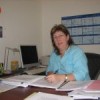
Q&A: Gaps in Gender Equality in Cuba
United Nations resident coordinator in Cuba Susan McDade is the first woman to hold that post, and considers herself fortunate to have been assigned the position in a country where women’s rights are enshrined in the constitution, even if it does have a "machista" reputation.LATIN AMERICA: Half Century of Failed Development Policies – NGOs
As it gets ready to commemorate its 50th anniversary at an assembly in Medellín, Colombia, the Inter-American Development Bank (IDB) has come under heightened criticism from civil society groups which argue that its financing often goes against sustainable development and effective measures to overcome poverty.SOUTH AFRICA: Food Banks to Curb Hunger
In yet another attempt to bolster food security in the country, a charity organisation has opened a food bank in Cape Town which will operate like a huge warehouse from which food is handed out to the poor.
SOUTH AFRICA: Activists Lament Lack of HIV/TB Co-Treatment
Despite repeated calls for integrated HIV and tuberculosis (TB) health services from medical experts and AIDS activists, most of South Africa’s public health facilities continue to treat the diseases independently. Co-infection presents a major risk to the lives of people living with HIV.
HEALTH-PAKISTAN: Spacing Births for Mother and Child
Health experts in Pakistan are now concentrating on getting women from all strata of society to space births.
Q&A: Civil Society Shows Its Muscle
Governments made their pledges over the Millennium Development Goals agreed in 2000, but it is civil society that could, more than anyone else, hold them to that promise. Salil Shetty, a civil society man coming as the head of ActionAid to head the UN millennium campaign, believes civil society has moved in from the margins; it is now at the heart of the world campaign for delivering these, and other rights.
ZIMBABWE: Researchers Developing New Ways to Purify Water
Scientists at Bulawayo's National University of Science and Technology (NUST) have embarked on research to develop simple and affordable water purification methods, as more than a billion people live without safe drinking water in developing countries.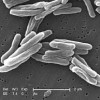
HEALTH: HIV/TB Convergence Sparks Calls for New Strategy
On World Tuberculosis Day Tuesday, the World Health Organisation (WHO) released a report showing that new surveillance techniques and more complete country reports reveal the incidence of tuberculosis (TB) co-infection with HIV to be almost double what was previously thought.HEALTH-BOLIVIA: Dengue Epidemic Overwhelms System
Dengue fever has claimed 24 lives so far this year in Bolivia, in what experts are calling the worst epidemic in the country’s history. The mosquito-borne disease has spread fast due to high summer temperatures combined with rainfall, a weak public health system and poor collection of garbage.
NAMIBIA: Food Security Hangs in the Balance
Don't talk about food prices in Namibia. Wedged between costly imports from South Africa and failing projects to achieve food security, Namibians are upset, and hungry.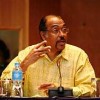
Q&A: Meltdown a Challenge for HIV/AIDS Programmes
The global financial crisis has created a space for a vigorous debate on the life-prolonging drugs needed for people living with HIV, says Michel Sidibe, the new head of the Joint United Nations Programme on HIV/AIDS (UNAIDS).
MALAWI: Bringing TB Testing and Treatment To Those Who Need It
Malawi does not have accurate statistics that define the extent of tuberculosis (TB) cases within its borders, and there are fears that only half of those infected with the disease are able to access testing and treatment.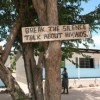
SOUTHERN AFRICA: Politicians Fail to Address HIV
Parliamentarians across the Southern African Development Community (SADC) have failed to put HIV on the political agenda.MEDIA: Fashion Advice and Info for HIV-Positive Women
The colourful new magazine of the International Community of Women Living with HIV/AIDS (ICW) in Latin America and the Caribbean has a modern look and provides not only information but articles on fashion and entertainment. It is also the perfect size to carry in a purse.
SOUTH AFRICA: Water Meters for the Poor: New Name, Old Problems
Many poor communities in South Africa continue to struggle for their constitutional right to clean, safe drinking water.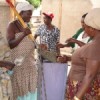
WATER-UGANDA: Creating a ‘Safe Water Chain’
Uganda spends close to $10 million each year treating waterborne diseases; the productive time lost to illness and caring for the sick has an even greater financial impact. But residents of Katosi village on the shores of Lake Victoria aren't waiting for the government to find a solution.
ECONOMY: Namibia Gets BIG on Poverty
There was no mention of a special grant to tackle poverty in the Namibian national budget speech delivered on Mar. 19, much to the disappointment of campaigners for a Basic Income Grant (BIG) for all citizens.
CHILE: Agricultural Boom Passes Women Farmers By
Although agricultural exports are among the most productive and steadily growing sectors in Chile, rural women continue to face precarious jobs, low wages, little access to land and the growing dominance of agribusiness.
AGRICULTURE-MALAWI: Water Makes the Difference
Water has become the very essence of economic development for a rural community of Ngolowindo, in Malawi’s lake district of Salima, where households are reducing poverty thanks to irrigation.
Q&A: ‘Meltdown Not the Only Crisis in the World’
Muhammad Yunus, who claimed the 2006 Nobel Peace Prize founding Grameen Bank, which has lent out more than six billion dollars to mostly poor women, says the global recession presents a historical opportunity for change.« Previous Page — Next Page »





The Week with IPS

NEXT STOP - SDGs
Tracking global progress towards a sustainable world
Tracking global progress towards a sustainable world
