Languages
Wednesday, November 11, 2026



News and Views from the Global South
Millennium Development Goals (MDGs)
POLITICS-MADAGASCAR: Rajoelina Assumes Power
After 24 months as self-declared head of a transitional authority, the deposed mayor of Antananarivo, Andry Rajoelina, was confirmed as the new president of Madagascar by the Constitutional Court on Mar. 18.PERU: Few Benefits from Boom for Poorest Mining Districts
The poorest district in Peru is in an area of intense mining activity, in a country where the mining industry accounts for nearly 60 percent of all export revenues. But the people of Ongón receive no benefits from that activity.ENVIRONMENT: Coping in a World of “Peak Water”
As more than 20,000 people meet in Istanbul for a major week-long conference on future management of the world's water supplies, women's groups are working to ensure that policy decisions about this critical natural resource take their concerns into account.POLITICS: Form of New U.N. Women's Entity Still Nebulous
When a high-level panel of former political leaders and senior government officials released a study in late 2006 on ways to eliminate duplication and strengthen coordination among the U.N.'s myriad bodies, it also recommended the creation of a specialised agency for women aimed at consolidating gender-related activities under a single umbrella.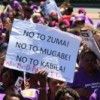
RIGHTS-SOUTH AFRICA: Election Campaign Silent on Violence Against Women
With its emphasis on gender equality, the South African constitution is regarded as a great example for many other developing countries. Yet, despite laws intended to protect the rights of women like the Sexual Abuse Act and the Domestic Violence Act, women in the country still suffer indignities at the hands of police and in court.
ENVIRONMENT-NAMIBIA: Ten Dollars for a 200-Year-Old Tree
Despite the investment of millions of donor dollars, the permit system in Namibia’s Community Forests has failed dismally, say biodiversity experts. Illegal logging in the inland Kavango is more alive than ever.LATIN AMERICA: Movement for Basic Income for All
The global financial crisis could present an opportunity to move towards the creation of a universal basic income for all citizens, say advocates of the system in Latin America.RIGHTS-BRAZIL: Law Still Not Saving Women’s Lives
Rosemary Fracasso, a 37-year-old mother of two teenagers, was murdered by her ex husband with a machete. During the attack he cut off her fingers and arms and left her heart visible through a gaping chest wound.RIGHTS-MOROCCO: Renewed Efforts to End Violence Against Women
The campaign against violence towards women has been the focus of media attention in Morocco recently, in order to press for an end to gross abuses committed by men against women and make victims aware of the need to break the silence which allows it to continue.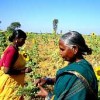
ENVIRONMENT-INDIA: Women Farmers Ready to Beat Climate Change
A collective of 5,000 women spread across 75 villages in this arid, interior part of southern India is now offering a chemical-free, non-irrigated, organic agriculture as one method of combating global warming.NICARAGUA: Cleaning Up ‘World’s Biggest Toilet’
After dumping its untreated wastewater into lake Managua for more than 80 years, the capital of Nicaragua has started to clean up the huge source of water in this country, where 80 percent of fresh water sources are polluted.ICELAND: Shake-Up At the Top Improves Gender Equality
Iceland’s new Prime Minister Johanna Sigurdardottir is determined to reverse the country’s disastrous economic slide and bring its banks on track after they crashed last year. She has appointed a woman, Anne Sibert, to the Central Bank of Iceland’s Monetary Policy Committee.CULTURE: Ethiopian Film Takes Top Honours at FESPACO
Filmmaker Haile Gerima’s Ethiopian movie "Teza" has won the Golden Stallion of Yennenga at the 21st Panafrican Festival of Cinema and Television (Fespaco) in Ouagadougou, Burkina Faso.
BRAZIL: Child Rape Case Revives Debate on Abortion
The case of a nine-year-old girl who was raped and impregnated by her stepfather has revived the debate in Brazil on sexual violence, the need to reform the abortion law, and the shortcomings of the health system when it comes to dealing with the few cases in which abortion is legal.
ENVIRONMENT: 'Capital Shapes the Creation of Waste'
The South African government has been heavily criticised by environmental justice NGO groundWork for failing to produce accurate data on the production of waste in the country.MIDEAST: Women Migrant Workers With HIV Get Raw Deal
Thousands of Asian women flock to the affluent sheikhdoms of the Middle East annually, seeking jobs as domestic workers. For many this quest for a livelihood comes to a humiliating end when they test positive for HIV.ARGENTINA: Bold New Law on Violence Against Women
Argentina now has an ambitious new law to prevent, punish and eradicate physical, psychological and economic violence against women, in both the private and public spheres. But the big challenge, say experts, will be to put it into practice.CARIBBEAN: Culture of Sexual Coercion Exposes Women to HIV
The fight against widespread sexual violence in the Caribbean has been joined by a high-profile new women’s coalition that warns it could be a major reason for the spread of HIV among women and girls in the region.POPULATION: Unchecked Fertility Could Lead to 9 Billion by 2050
The world's population is estimated to top 9 billion people by 2050, and 7 billion by early 2012, with the biggest increase in developing countries of Asia and Africa, says the U.N. population report launched on Wednesday.DEVELOPMENT: World’s Poor Offer Lessons in Bank Study
To be successful, poverty-reducing programmes must be informed by the lives and experiences of the millions of poor people around the world and emphasise economic opportunity, says a study released Wednesday by the World Bank.
Q&A: Women Must Challenge the "Gatekeepers of Culture"
"In order to be a good Muslim, a good Hindu, a good Pakistani, a good woman, you need to act in certain ways," says Aisha Shaheed. "And all these parameters are defined by [male] self-proclaimed cultural leaders."« Previous Page — Next Page »





The Week with IPS

NEXT STOP - SDGs
Tracking global progress towards a sustainable world
Tracking global progress towards a sustainable world
