Languages
Tuesday, November 10, 2026



News and Views from the Global South
Millennium Development Goals (MDGs)
DEVELOPMENT-EAST TIMOR: ‘Big’ Projects To Make Up Oil Losses
With an eye on tourist dollars, the government of East Timor has given the go-ahead to two major developments, including a shopping mall complete with stores, restaurants and the impoverished island nation’s first escalator.
RIGHTS-SIERRA LEONE: Child Miners: Legacy of Conflict
Since the end of the civil war seven years ago, the Sierra Leonean authorities and child welfare agencies have been battling to remove children from the diamond-mining fields, a trend which began at the height of the conflict, when children were abducted by rebel forces and coerced to work in the mines.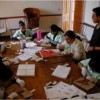
HEALTH-MEXICO: Training Professional Village Midwives
Mexican communications specialist Marla Vargas had her baby in the bathtub at home, attended by a midwife, because, she says, "I wanted a different experience, and a better way for my child to come into the world."HEALTH: WHO Sends Flu Meds to Developing Countries
Poor countries facing the greatest threat from the spread of the H1N1 flu virus – popularly known as "swine flu" – will begin to receive shipments of Tamiflu, the World Health Organisation (WHO) announced.U.S.: Obama's Global Health Plan Disappoints Activists
Global health activists expressed disappointment Tuesday over U.S. President Barack Obama's plans to spend 63 billion dollars over the next six years to fight diseases in poor countries overseas.
ARGENTINA: Hundreds of Thousands of Teenage Girls "in Limbo"
Cintia, 17, already has three children and is trying to go back to school, which she dropped out of several times because of the births and when her kids were sick. But the principal of her high school is not optimistic.
Q&A: “Boosting Agriculture Is Not an Option But an Imperative”
New support from donors will enable the International Fund for Agricultural Development (IFAD) to help about 70 million poor smallholder farmers increase their productivity and incomes over the next five years, the Fund's new president Kanayo F. Nwanze told IPS.BRAZIL: Eco-Friendly (and Bullet-Proof) Homes
Plans to build low-cost housing in shantytowns in this Brazilian city using thermally and acoustically-insulating material, as part of a national plan to bridge the housing deficit, raised unexpected controversy when it came out that the houses would also be bullet-proof.HAITI: Battered and Unready for Looming Storm Season
Haiti’s environmental degradation is a time bomb that needs urgent attention if the country is to preserve its already strained social and economic stability, says a new briefing from the International Crisis Group (ICG).
Q&A: "Paraguayan Women Have Learned to Fight for What They Want"
Women in Paraguay have learned to voice their demands and to fight for them, activist Line Bareiro, whose track record in defence of human rights has earned her nomination for a place on the Committee on the Elimination of Discrimination against Women (CEDAW), told IPS.
Q&A: 'Just Give Money to the Poor'
Cash transfers are the new darlings of proponents of welfare programmes. Mexico, Brazil, Bangladesh, lately New York City, and about two dozen developing countries presently dole out money to poor families, usually with conditions attached, such as taking their children to school and health checkups.LESOTHO: Help At Hand for Orphans
The Lesotho government - battling against the challenges presented by an ever-growing population of orphans whose parents have succumbed to the AIDS pandemic - has embarked on an ambitious programme aimed at alleviating the suffering of these vulnerable children, in partnership with the European Union and UNICEF.
RIGHTS: Against Sexual Violence: Solidarity Among African Women
Increased cases of rape and sexual abuse of women and girls is closely associated with armed conflict and its aftermath in Africa.POPULATION: Asia Faces Lower Birth and Death Rates
Asia has long been touted as the world's largest and most populous continent with over 4.1 billion people, accounting for more than 60 percent of the global population.HEALTH-NAMIBIA: Eight Southern African Countries Team Up to Fight Malaria
Within the next twelve months, eight Southern African countries will synchronise their battles against malaria through cross-border collaboration. They hope to eliminate malaria in four of them by 2015.
MEXICO: Congress Closed to Indigenous Women
No indigenous woman has ever held a seat in the Mexican Congress. But two of them, one belonging to the conservative ruling party and the other representing the leftwing opposition, are trying to change that in the July legislative elections.
MAY DAY-COSTA RICA: Domestics Fight for Eight-Hour Day
Domestic employees in Costa Rica have run out of patience. After 17 years of fighting, they are threatening to report the state to international bodies if their slave-like working hours are not cut back.CLIMATE CHANGE: Two-Degree Rise Ever More Likely, Scientists Warn
Climate scientists are calling for a phase-out of fossil fuels because humans are now pumping so much carbon dioxide (CO2) into the atmosphere that the '2-degree-C climate balloon' will burst otherwise, new studies show.
ANGOLA: No Law to Stop Domestic Violence
Teresa Barros’ problems started last year with the death of her baby.HEALTH-MALAWI: Women’s Group Sues Govt Over Abortion Rights
An influential women rights organisation in Malawi, Women in Law in Southern Africa-Malawi (WILSA-Malawi), is suing the government of Malawi for preventing women from accessing safe abortion.BRAZIL: University Racial Quotas Bogged Down in Congress
Claudio Fernández is able to study law thanks to affirmative action quotas at the Rio de Janeiro State University (UERJ). But a draft law to expand race quotas to all public institutions of higher education is stalled in the Senate.« Previous Page — Next Page »





The Week with IPS

NEXT STOP - SDGs
Tracking global progress towards a sustainable world
Tracking global progress towards a sustainable world
