Languages
Friday, November 13, 2026



News and Views from the Global South
Millennium Development Goals (MDGs)
WEST AFRICA: Stock Farmers Migrate From Difficulties, To Difficulties
No more grass for livestock to graze on. No more water, either. More than 50 stock animals dead. For farmer Samba Diallo, staying in Burkina Faso was no longer an option.BOLIVIA: Requiem for Land in the Hands of the Few
Bolivian President Evo Morales announced new regulations and financing for a land reform law aimed at expropriating idle or ill-gotten land in the hands of large estate owners in eastern and northeastern Bolivia and redistributing it to indigenous farmers.DEVELOPMENT-BURKINA FASO: A Province Too Popular For Its Own Good
Kompienga, in eastern Burkina Faso, is the country's most verdant province - but for how long?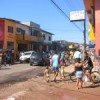
BRAZIL: ‘I’m the Only Gang Member Alive and Free’
Most of them were 15 or 16 years old when they created the gang "Falta de Deus" (Lack of God), a name chosen because "we were all against Christ." Of the 25 members, 10 are dead and 14 are in jail. "I'm the only one still alive and free," says 22-year-old Elias da Silva.CHILE: Arica Residents Tired of ‘Undrinkable’ Tapwater
Residents of the city of Arica, in northern Chile, are demanding regulations to limit the amount of boron in their drinking water, while the authorities are waiting for the results of a study to determine whether it has a harmful effect on human health.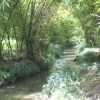
ENVIRONMENT-CUBA: Reforestation Renews a Barrio
Every morning Mario Véliz makes his way through the streets of Pogolotti, a low-income neighbourhood in the Cuban capital, to the milk shop. Those who only know him because he works there are unaware that this thin, wiry man with a face seamed with age is the life and soul of local reforestation.DEVELOPMENT-MAURITIUS: ”Our Sea and Lagoon Are Not For Sale”
‘‘We are selling everything in this country: from our bodies to our land and now our sea and lagoons. Is there anything left for us?’’ asked Jack Bizlall, spokesperson for a nongovernmental network of organisations called Kalipso.TRADE-EGYPT: Out With ‘‘The Pyramids’’, In With Liberalisation
Earlier this year, a group of prominent Egyptian business leaders had gathered at a downtown Cairo hotel to discuss building a successful export industry. A presenter opened the discussion by asking for a show of hands to indicate who was wearing Egyptian-made shirts or shoes.DEVELOPMENT-ZIMBABWE: The City of “Passport Size” Ablutions
The City Council of Bulawayo, Zimbabwe’s second largest city, has issued a warning to residents of a possible outbreak of disease following a massive cut in the city’s water supply. This is the first time in Bulawayo's history such a health warning has been issued.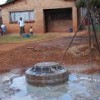
DEVELOPMENT-ZIMBABWE: Water Shortages in Capital Leave Residents Desperate
Taps in the Zimbabwean capital, Harare, are running dry even though the city’s main supply dams are more than 60 percent full, according to figures from the Zimbabwe National Water Authority (ZINWA). With more than half of Harare's three million inhabitants now experiencing water shortages, residents are resorting to desperate measures to find supplies.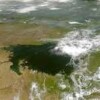
DEVELOPMENT-UGANDA: A Dam That Activists Simply Can’t Make Peace With
As preparations for construction of the Bujagali dam on the Nile River in Uganda gain momentum, a local civil society coalition is calling on the World Bank and the African Development Bank (AfDB) to reconsider their decision to release funds for this hydro-electric project - which the World Bank estimates will cost 799 million dollars.
RIGHTS-KENYA: A Moment of Joy Turned to Ashes
Josephine, young and pregnant, had just felt her water break. She arrived at the doors of St. Mary's Hospital in Langata, Kenya ready to give birth to her first child. But the throbbing pain of delivery was just the start of her troubles.TRADE-ZIMBABWE: Multilateral Still Better Than Bilateral Talks
Kumbirai Katsande, the managing director of a top Zimbabwean horticultural company, is in a buoyant mood. He hopes that his firm, Ariston Holdings, will make a big break in the lucrative European horticultural market where it sells its products.
SRI LANKA: Civilians Pay for Civil War in Supply Shortages
Sri Lankan government forces and Tamil Tiger rebel leaders are gearing up for a massive face-off along the line of control in the north of the island. The rhetoric has already been replaced by mounting body counts - in the last three weeks of July, more than 50 combatants died along the forward defences that separate areas held by the two sides in the north.
EGYPT: Desert Reclamation the Country’s Best Hope – Or a Mirage?
"You can grow anything here," says 76-year-old Mohamed Ahmed, spreading his arms wide to point to the cascading bougainvilleas and an orchard of mango trees drooping with fruit. But, "When I first came here, there was nothing here but sand and more sand."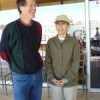
SOUTHERN AFRICA: Blind, Translucent, Vulnerable – And Important For Your Health
An unexpectedly rich variety of organisms can be found in groundwater, a source that more than 37 percent of people in Southern Africa are dependent on, according to the Southern African Development Community's Water Sector Co-ordinating Unit. And, an Australian scientist visiting South Africa believes these tiny animals should be studied more intensively to monitor the quality of groundwater.RIGHTS-MOZAMBIQUE: Law to Stop Human Trafficking
Over 1,000 Mozambicans, including children, are trafficked to South Africa every year where they are forced into prostitution or to provide free or cheap labour. In response, Mozambique’s government last week approved a new law which will make human trafficking a crime punishable with long prison sentences.ARGENTINA: Groups Lobby Congress for Changes to Mining Laws
People from 14 Argentine provinces visited Congress this week to call for changes in the country’s mining code, which grants substantial tax incentives that have drawn foreign corporations with poor environmental records.
MOZAMBIQUE: Agriculture Input Fairs – A Chance to "Live in Dignity"
Despite a chain of misfortunes, 75-year-old Gonçalves Mandlate faithfully works his plot soon after sunrise each day, hoping that his life, and those of the five grandchildren who live with him, will improve.MEDIA: Poverty, Development Goals Hard Subjects to Tackle
Water used to be carried home, usually by women, in large jugs, as is still the case in many poor countries. But now that many people around the world have piped water, they go to the supermarket to buy bottled water.DEVELOPMENT-NAMIBIA: No Water In Babylon
Cardboard and rickety tin structures jostle for space on a barren outcrop in the sprawling suburb of Katutura in Namibia’s capital Windhoek. A putrid smell hangs in the still, afternoon air as flies wing their way over the debris.« Previous Page — Next Page »


The Week with IPS

NEXT STOP - SDGs
Tracking global progress towards a sustainable world
Tracking global progress towards a sustainable world
