Languages
Friday, November 13, 2026



News and Views from the Global South
Millennium Development Goals (MDGs)
TRADE: Italian Delegation Finds More Than Big Five in S. Africa
‘‘Italians used to think of Africa in terms of safari and animals, especially the Big Five. Now they are realising that there’s business potential in South Africa,’’ says Giovanna Roma, secretary general of the Italian South African Chamber of Commerce and Industry of Northern, Eastern and Western Cape.LATIN AMERICA: Enterprising Women Network for Support and Success
Martha Elena González worked hard to make a success of her small family bakery, like many other women in Tegucigalpa, the capital of Honduras. But she only got the support she needed when she met another woman over the Internet, who was carrying out a project of her own thousands of kilometres to the south.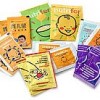
HEALTH: A New Weapon in the Fight Against Anaemia
A nutritional supplement known as Sprinkles, which is a simple powder that parents can easily add to their children's food, reduces childhood anaemia by more than half, according to a recent study published in the Journal of Nutrition.
SRI LANKA: Not All Tsunami Reconstruction Is Equal
It has been 30 months since the waves struck the coasts of Sri Lanka in the morning hours of Dec. 26, 2004. Since then, in a pattern that has become symbolic of the divided nature of the South Asian island, parts of the country have motored ahead with the reconstruction effort, while others have lagged woefully behind.BRAZIL: In Search of Sustainable Ethanol
To curb international criticism of its cane alcohol industry, the Brazilian government announced that it will ban new sugarcane fields in the Amazon region and in the vast Pantanal wetland.
SOUTHERN AFRICA: Unequal Water Resources Present a Challenge
Water resources are unevenly distributed throughout the countries of Southern Africa. The region boasts of some of the world’s largest lakes and rivers, but is also a land of vast deserts.EDUCATION-NICARAGUA: Down, Down with Adult Illiteracy
An adult education programme beginning this month in Nicaragua is part of one of the Sandinista government's most ambitious social projects: to declare this country free from illiteracy in 2009.
HEALTH: ‘Protect Our Future’ – AIDS Drugs Needed for Children
The 4th International AIDS Society (IAS) Conference on HIV Pathogenesis, Treatment and Prevention concluded here Wednesday with a call for antiretroviral drugs developed specifically for HIV-infected children.HEALTH: HIV/AIDS Experts Swear by Circumcision
Male circumcision could prevent millions of new HIV infections a year, delegates at the 4th International AIDS Society (IAS) Conference on HIV Pathogenesis, Treatment and Prevention were told here on Tuesday.
ENVIRONMENT-GREECE: Recycling Begins, At Last
Household waste recycling is on the rise in Greece but there is still a long way to go before the cleanup is complete.CHILE: State Upholds Gender Discrimination Within Marriage
Discrimination against married women under the law providing for joint ownership of marital property led Sonia Arce Esparza to take the Chilean state to the Inter-American Commission on Human Rights (IACHR) in 2001. An amicable agreement reached in March this year has not been implemented.ENVIRONMENT-NIGERIA: Rich in Oil, Dependent on Firewood
It is a paradox of note: the fact that while Nigerians live in the world's sixth-largest oil producer, most of them still rely on wood for their fuel.POLITICS-MALI: Bracing for “Zero to Six” in Parliamentary Elections
A fear has been voiced that the number of women in Mali's parliament could be more than halved during legislative elections that wrapped up Sunday.HEALTH-AUSTRALIA: Focus on Drug Access at HIV/AIDS Meet
Delegates at a major international conference on HIV and AIDS, set to unfold here on Sunday, are expected to urge the developed countries to help guarantee the supply of affordable drugs to combat the virus and the syndrome.LABOUR-PERU: Strike Ends as Teachers and Gov’t Sit Down to Talks
Peru's teachers' union, which has been giving the Alan García administration its worst headache, decided to suspend its protests after 15 days of violence that resulted in three deaths and dozens of wounded across the country. But its battle with the government has barely begun.DEVELOPMENT: EU Confronts Its Unhealthy Policy
The European Union's only directly elected institution is at loggerheads with the bloc's 27 governments over a measure officially designed to ensure that poor countries have access to affordable medicines.PORTUGAL: Epidemic of Conscientious Objection to Performing Abortion
Pleading "conscientious objection," a significant proportion of doctors in Portugal are preventing women from making use of the law authorising abortions up to 10 weeks of gestation, which entered into force on Sunday.FINANCE: U.S. Brokers Afghan Debt Cancellation
The United States, Germany and Russia have agreed to write off one billion dollars in bilateral debts owed by Afghanistan, or 92 percent of the poor nation's debt to the three nations.TRADE: EPAs May Stifle Uganda's Struggling Flower Industry
Uganda's flower industry needs government incentives and preferential European Union (EU) access to succeed, say members of the east African nation's floricultural sector.HEALTH-ZIMBABWE: Running Errands of Mercy in the Age of AIDS
Priscilla Ndlovu feels like she has seen it all. She works as a member of one of myriad community home-based care groups, the prevalence of which shows the extent of HIV/AIDS in Zimbabwe, highlighting the country’s struggle to control the pandemic.DEVELOPMENT-TANZANIA: More Women Dying Preventable Deaths
"I began walking when I felt contractions. I delivered on the roadside five kilometres from the hospital," says the 22-year-old Veronica Joseph.« Previous Page — Next Page »


The Week with IPS

NEXT STOP - SDGs
Tracking global progress towards a sustainable world
Tracking global progress towards a sustainable world
