Languages
Sunday, November 22, 2026



News and Views from the Global South
Politics
ECONOMY: Spain Fights Exclusion from Crisis Summit
The Spanish government is taking strong diplomatic actions, calling on its fellow members of the European Union, Latin American leaders, Asian nations and even the United States presidential candidates, with the aim of not being left out of the financial anti-crisis summit scheduled for Nov. 15 in Washington.
U.S.: A Week Out, Obama and Democrats Poised for Victory
With only one week before the Nov. 4 elections, Democrats are increasingly hopeful that they will emerge next Wednesday with control of the White House and substantially increased majorities in both houses of Congress.DEVELOPMENT: Democracy Comes to World Institutions, Slowly
Power and democracy don't go together well in global governance. The most powerful global institutions are the least democratic, but things are changing. Slowly.
POLITICS-US: Plumbing the Depths of Spin
In the waning days of an interminable United States presidential campaign, a plumber and would-be small businessman bestrides the narrow race like a colossus with a tool belt.ECONOMY: Civil Society Has Something to Say
Governments cannot deal with the current financial crisis on their own, and need the support of the people they govern, which is "best translated by the opinions of the civil society movement," said Werner H. Schleiffer, executive coordinator of CONGO, the global umbrella of NGOs with consultative status with the United Nations.RIGHTS-SRI LANKA: Court Steps in as Governance Falters
Finding themselves up against corrupt politicians and indifferent governance, Sri Lankans are increasingly turning to the country's Supreme Court for relief, even for solutions to everyday issues.
ECONOMY: Asia, EU Leaders Moot Deep Global Reforms
A two-day meeting of European and Asian leaders in Beijing has produced a joint statement pledging a coordinated response to the global financial crisis, but concrete action is seen dependant on the entry of Asia’s emerging economies into global policy-setting institutions.
CAMBODIA: Maoist Bastion Gets Lessons in Market Economics
For ex-Maoist guerrillas in the former Khmer Rouge stronghold of Pailin, close to the Thai border, the last decade has been a crash course in market economics.RIGHTS-BURMA: No Mercy For Women Political Activists
When it comes to throwing pro-democracy activists in jail, Burma’s military regime does not discriminate between the sexes. The junta treats women and men with equal measure of abuse.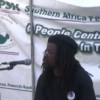
AFRICA: Financial Crisis May Increase Pressure for Debt Repayment
The collapse of the financial markets may force the World Bank, the International Monetary Fund (IMF) and the United Nations Development Programme (UNDP) to come down hard on African countries to repay their debts because the huge rescue packages for collapsing banks will need to be recuperated.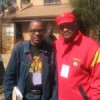
SOUTHERN AFRICA: More Debt But Still No Development
Shupikai Machinya, a Zimbabwean cross-border trader who attended the recent Southern Africa Social Forum in Manzini, Swaziland, is one of the many delegates who wanted to understand just how a country ends up in debt.ENERGY: Harsh Blow for OPEC
In an unexpected reaction, oil prices continued to slide, by up to six percent Friday, despite OPEC’s decision to cut output by 1.5 million barrels a day as of Nov. 1.ARGENTINA: New Movement to Combat Poverty
A new movement formed by a host of political, social, labour and cultural organisations of Argentina launched an action plan Friday to reduce poverty and child mortality and to promote more equal distribution of wealth.CUBA-EU: One Step Closer
Cuba and the European Union have agreed to reestablish development cooperation, interrupted five years ago, in another step towards overcoming differences, following the resumption of political dialogue in Paris last week.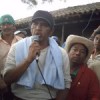
Q&A: "We Are not Subversives, and We Demand Respect"
Colombian President Álvaro Uribe admitted that the security forces opened fire on indigenous protesters in the southwestern province of Cauca, but denies that they were responsible for the deaths of three demonstrators, said Daniel Piñacué, a leader of the Nasa community.POLITICS-US: Online Poll Shows Obama a Hit in China
Beijing has a tradition of sound relations with Republican presidents of the United States, but the latest China poll shows popular opinion bucking the trend with Democratic presidential candidate Barack Obama becoming an "overwhelming hit" with ordinary Chinese.PHILIPPINES: 'Women Take the Brunt of Climate Change'
Filipina farmer Trinidad Domingo views the coming rice harvest season with trepidation. A typhoon destroyed much of her crop and Domingo estimates that her two-hectare plot will produce less than the usual 200 sacks of rice.YEMEN: Govt Holding More Than 1,000 Political Prisoners
A new report by Human Rights Watch (HRW) urges Yemeni President Ali Abdullah Saleh to launch an independent commission to investigate arbitrary arrests and disappearances and to hold those responsible to account.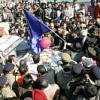
INDIA/PAKISTAN: Trade Through Kashmir Can Heal Rift
After decades of confrontation and rigidity over Kashmir, India and Pakistan seem to be looking at trade through the disputed territory as a path to peace.
INDIA: Water Privatisation – 'No Need For Costly Consultants'
The Indian corporate conglomerate, Tata, says it is ready to provide water services in this vast country and also prove that privatisation does not have to involve expensive foreign consultants and providers.
COLOMBIA: Uribe Agrees to Talks with Indigenous Protesters
"The police did fire" on indigenous protesters, said Colombian President Álvaro Uribe, who yielded to pressure to meet next Sunday with the leaders of a two-week-long demonstration by native groups.« Previous Page — Next Page »


The Week with IPS

NEXT STOP - SDGs
Tracking global progress towards a sustainable world
Tracking global progress towards a sustainable world
